
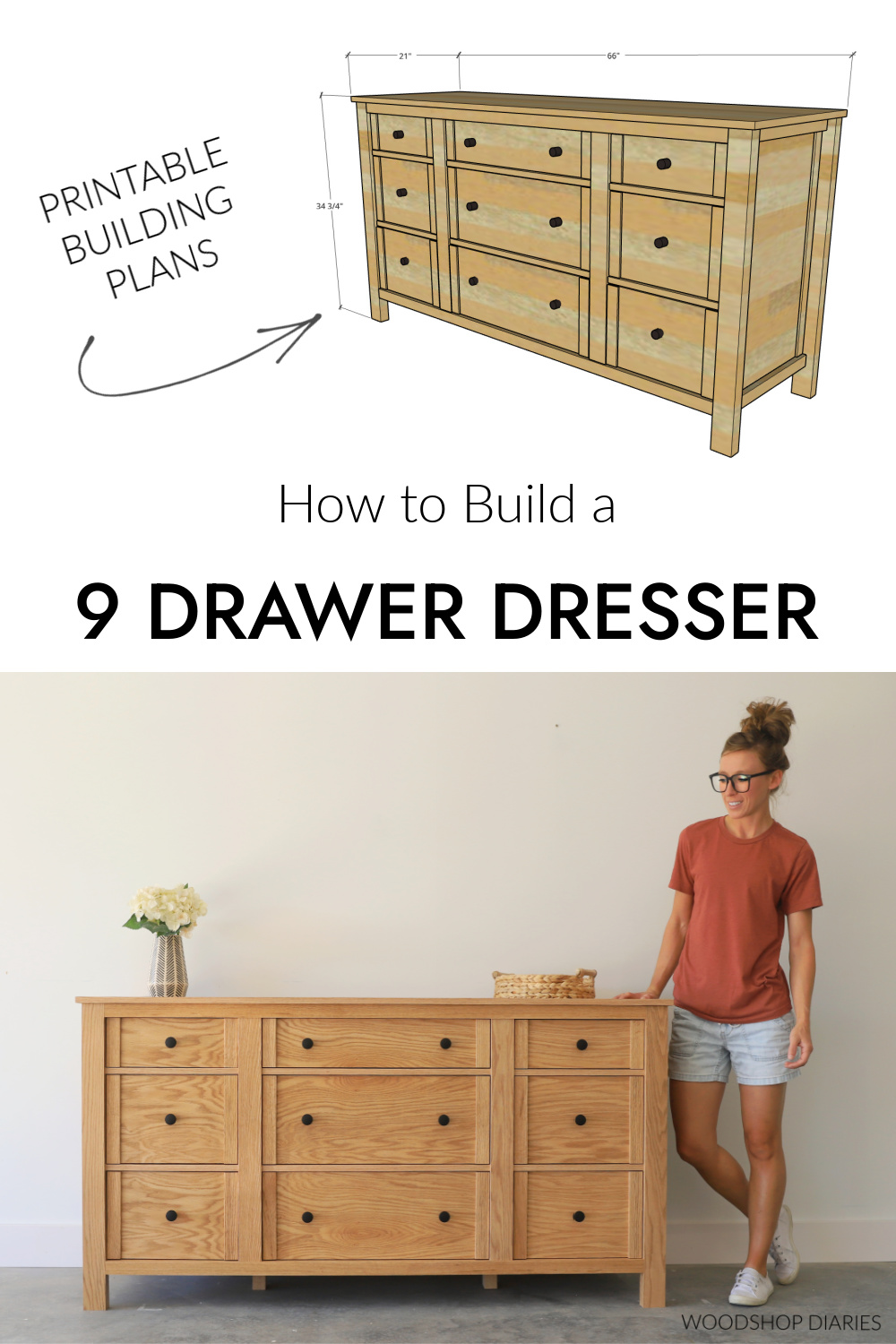
In this post, I’m sharing how to build a simple modern 9 drawer dresser with basic tools and materials!
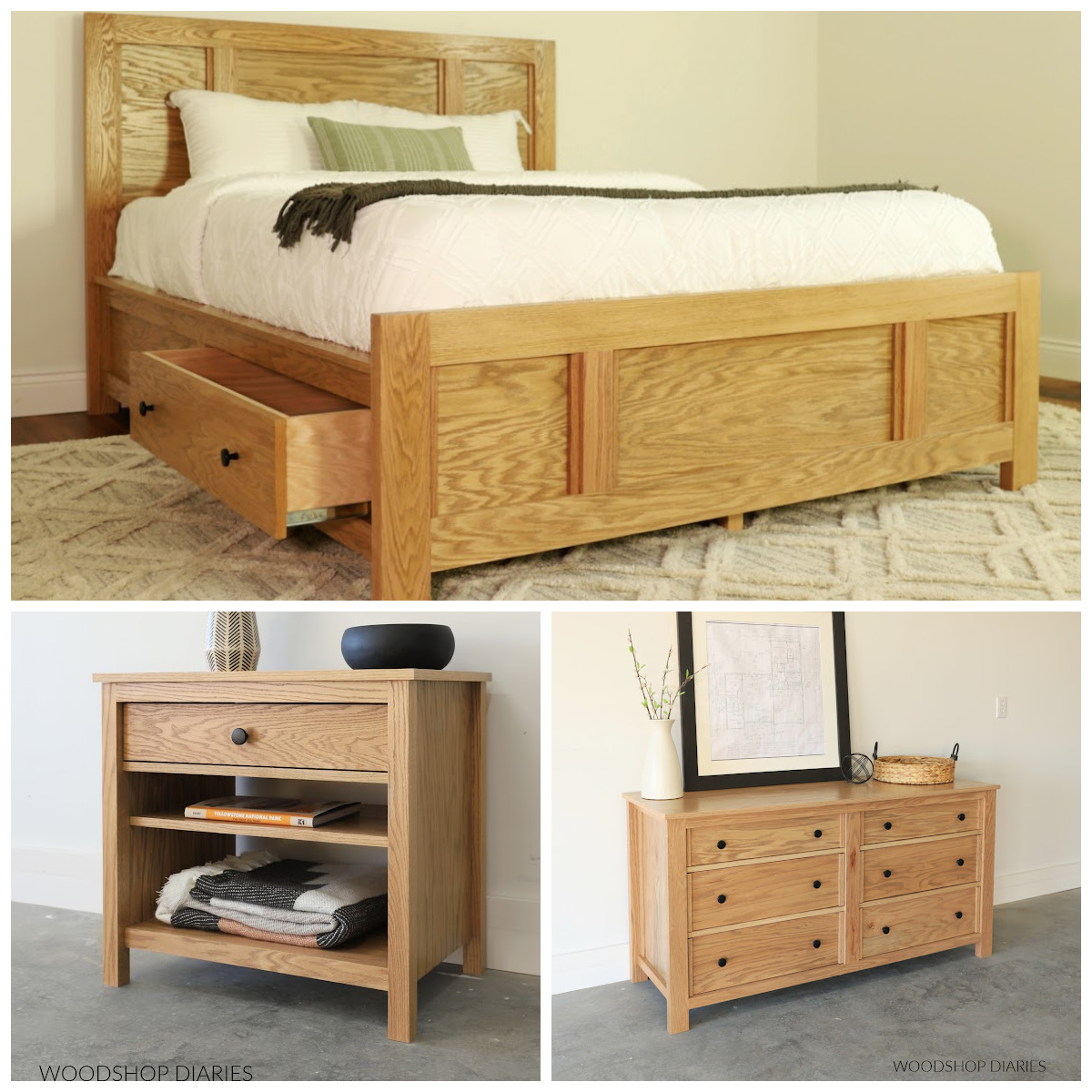
This 9 drawer dresser design is part of a matching bedroom furniture set that I shared a few months ago.
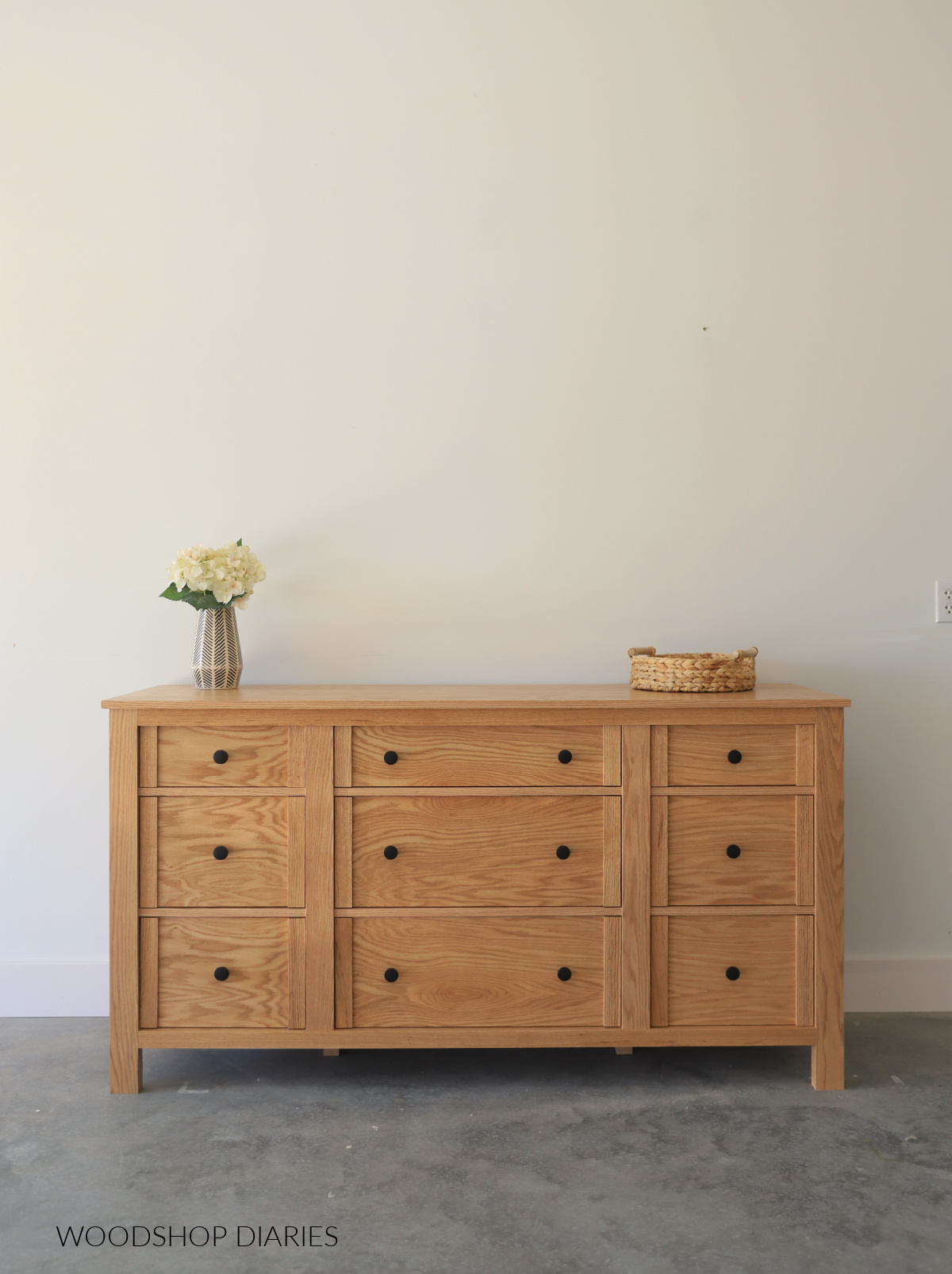
After building a modern 6 drawer dresser for that set, I got to thinking that a 9 drawer version would actually match the bed a little better. So I wanted to add that option to the collection, too.
I know that dressers can be an intimidating project for some–especially one with so many drawers! But, I like to think of dressers as a box (the dresser frame) with a bunch of smaller boxes inside (the dresser drawers).
So if you can build a box, you can build a dresser. You got this, friend! I’ll show you how to build this modern 9 drawer dresser in the post below.
*This post contains affiliate links. See website polices.
What to know before building this Dresser
Because there are a lot of parts and pieces that require some careful measuring (learn how to accurately use a tape measure here), I’d consider this an intermediate build.
It’s definitely not difficult, but it might not be the best option for a very first build.
What Type of Wood To Build a Dresser With
This dresser build is made entirely from plywood except for the front and back frames, which are solid lumber. I used red oak for this particular dresser, but any wood type you prefer would work fine.
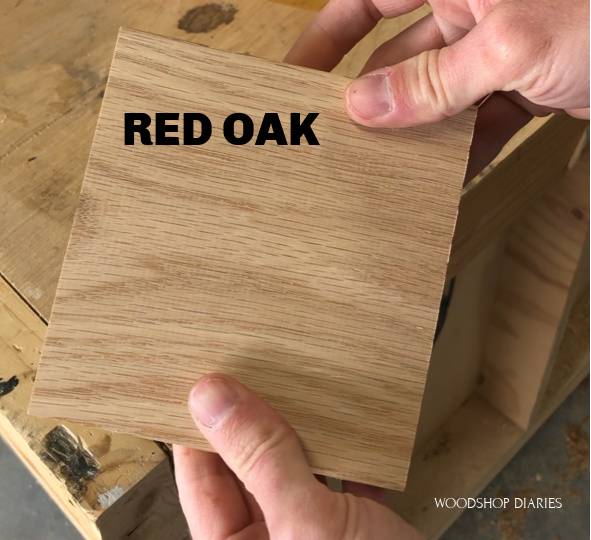
Construction lumber (like pine, spruce, fir) and birch plywood is a more budget friendly option that would work great as well.
For plywood thickness, I prefer using ¾″ plywood for everything except drawer bottoms (I use ¼″ plywood for those).
If you want to, you can save a little money and weight by using ½″ plywood for the drawer boxes, but for supports and side panels on the main dresser body, I definitely recommend the added strength of ¾″ thick plywood.
If you’re new to DIY, check out this post to learn more about choosing plywood for your projects and this post about how and where to buy lumber.
Material Sizing Notes
This plan calls for using 2x2s and 2x3s. (Did you know 2x2s aren’t 2″ x 2″? Learn more about understanding lumber sizing here.)
However, in many cases, 2x3s are difficult to find precut in the stores. Sometimes you can find them in the construction lumber aisle, but not every store carries them.
So I recommend ripping the 2×2 and 2×3 pieces down from 2x4s and/or 2x6s if you have a table saw.
RELATED: How to cut your own 2x2s
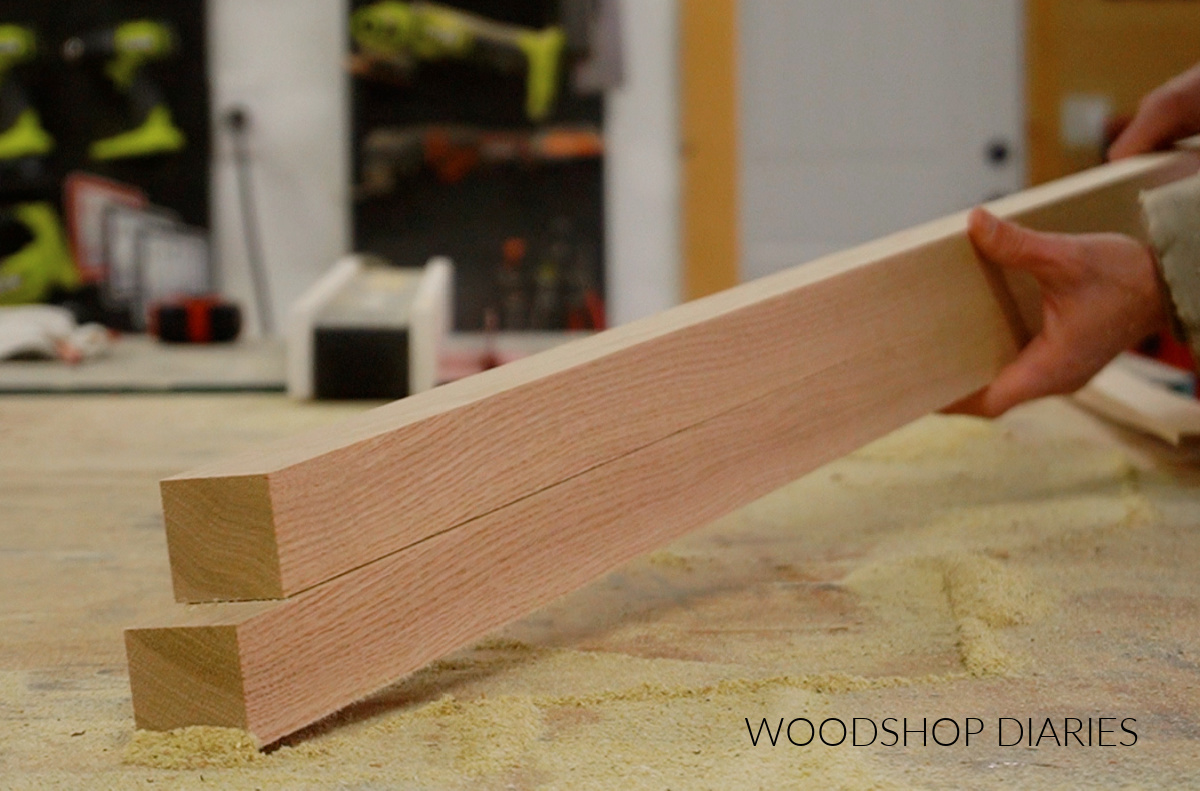
This saves on materials and you can reuse the off cuts for trim on the sides, too! See tutorial video for more information.
Matching Bedroom Furniture Set
If you’re looking to build the whole set, you can find the plans for the matching pieces here:
Overall Dimensions
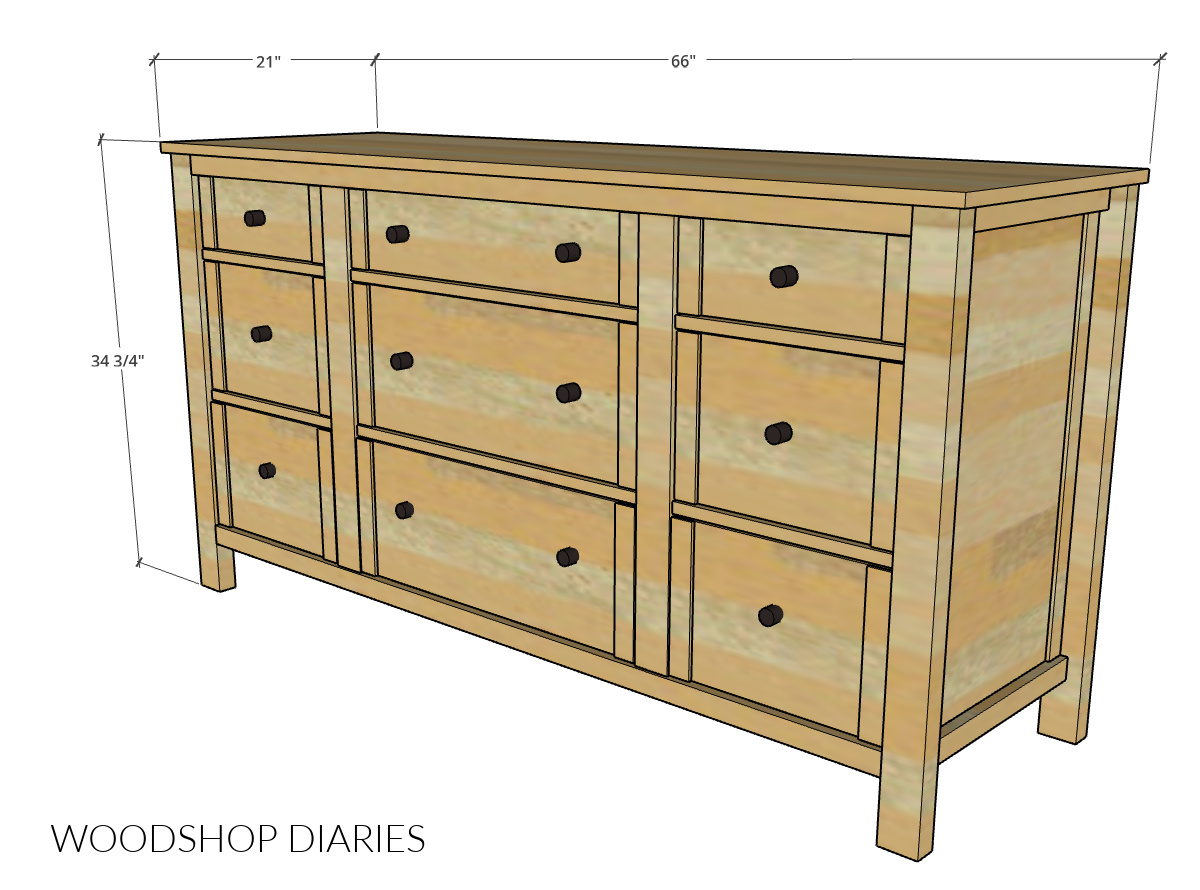
Overall dimensions of this dresser as shown in the plans below are 21″ deep x 34 ¾″ tall x 66″ wide.
Helpful Resources for the Build
If you’re new to building drawers, don’t worry! I’ll walk you through the entire drawer building process from start to finish in this drawer building series (with videos!). I’ve broken it down into four parts:
- How to measure for and size drawer boxes
- How to assemble a drawer box
- How to install drawer slides
- How to install drawer fronts
Prefer to print the whole series? Grab the Ultimate Drawer Building Guide which includes all four parts in a printable e-book you can take to the shop with you.
Additional helpful resources for this build:
Are DIY projects your thing? Sign up for our newsletter for priority access to the latest projects and build plans!
How to Build a Modern 9 Drawer Dresser
I’ve included the step by step building instructions below along with printable building plans. But, if you prefer to watch, I’ve also included a build video as well.
Check out the video for tips, visuals, and some extra clips from behind the scenes!
Love watching how-to videos? Subscribe to my YouTube channel for plenty more where that came from!
Prefer to print? Grab the printable modern 9 drawer dresser building plans here:
Tools & Materials:
Tools:
- Drill/Driver
- Circular Saw
- Cutting Guides (optional): Kreg Rip Cut & Kreg AccuCut
- Pocket Hole Jig
- Miter Saw
- Dowel Jig (optional)
- Clamps
- Table Saw (optional)
Materials:
- (2 ½) 4’x8′ sheets ¾″ plywood
- (1) 4’x8′ sheet ¼″ plywood
- (3) 2x4x8 boards
- (1) 1x2x8 board (optional for side trim)
- ¼″ x 1 ½″ lattice trim (optional)
- 1 ¼″ pocket hole screws
- Dowel Pins (optional)
- 2″ Wood Screws
- Wood Glue
- (9) Pair 18″ Drawer Slides
- Edge Banding
- Knobs/Drawer Pulls
Step 1: Glue Up Front & Back Frames
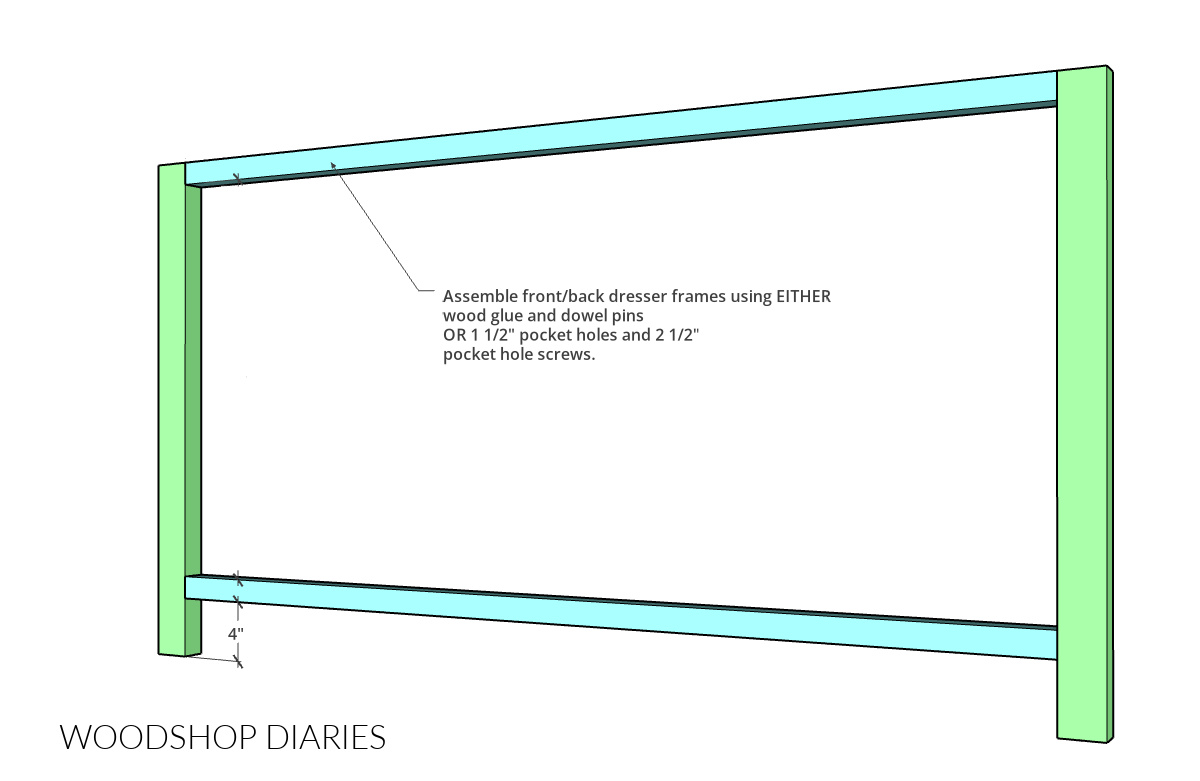
To start this build, first, I needed to assemble two frames for the dresser. These are the parts of the build that are made from solid wood and will be the front and back.
I used 2x3s for the legs and 2x2s to go between them at the top and about 4″ up from the bottom. So first, I ripped these pieces down from 2×4 boards (see notes above), and trimmed them to length.
Note: 2x4s are 3 ½″ wide and 2x3s are 2 ½″ wide. So if you rip these down, you’ll have a ~1″ thick piece left. And if you rip down 2x2s (which are 1 ½″ wide), you’ll have a ~ ¼″ thick piece left. Save these pieces to use as trim later!
All the dimensions, cut diagrams, and cut lists can be found in the printable building plans here.
Then, I assembled the two identical frames using dowel pins and glue. But, you could also assemble using 1 ½″ pocket holes and 2 ½″ pocket hole screws if you’d rather.
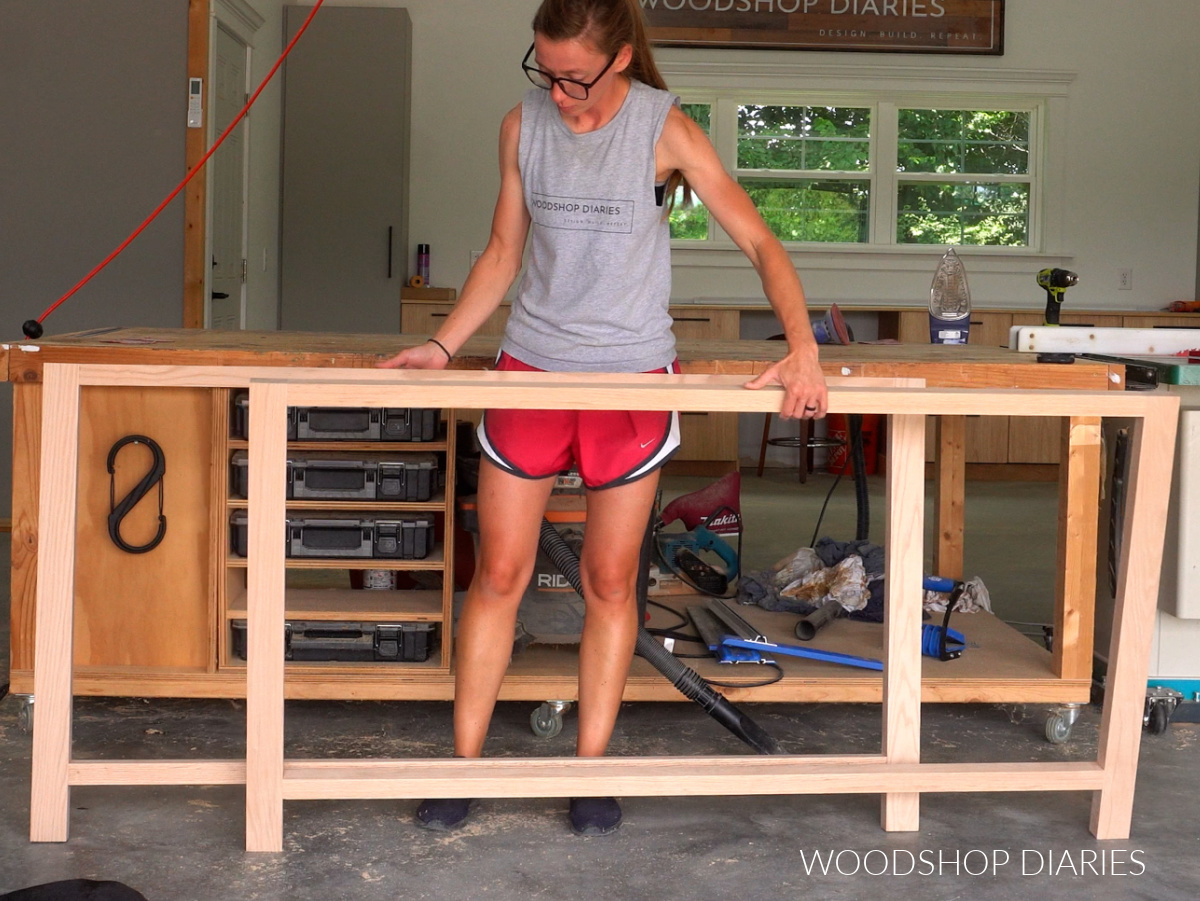
NOTE: If you don’t have a table saw, you can use precut 2x2s and just use full width 2x4s (if you can’t find 2x3s) for the legs. Keep in mind that using 2×4 legs will make the dresser body 2″ wider.
Step 2: Assemble 9 Drawer Dresser Frame
From here, the rest of the dresser build is assembled with plywood. So I cut two ¾″ plywood side panels to attach between the frames from step 1 using pocket holes and screws.
RELATED: How to use a pocket hole jig
Be sure if driving into hardwood, like oak, you use fine thread pocket hole screws!
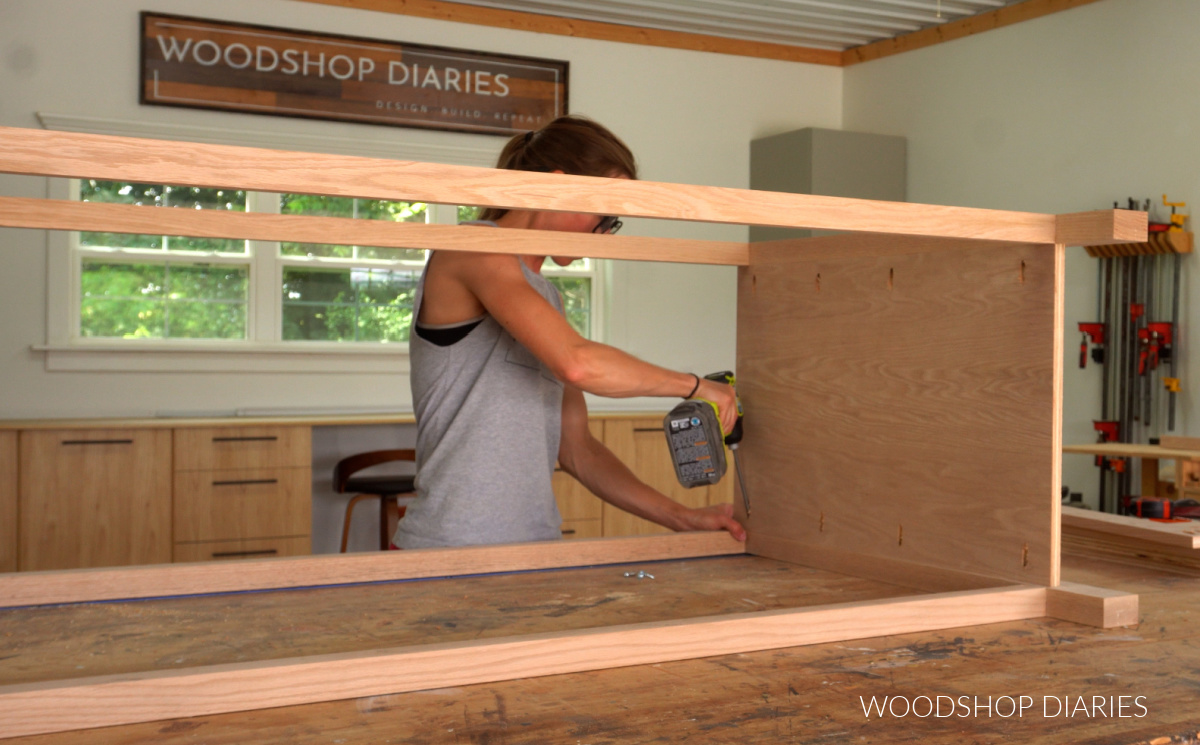
I divided this dresser into three sections–a smaller left and right section and a wider center section. To separate them, I installed four strips (2 ½″ wide) between the top and bottom 2x2s–two at the front and two at the back.
These are installed using pocket holes and screws and it’s important to make sure the dividers at the front are in line with the dividers at the back (equal distance from the legs).
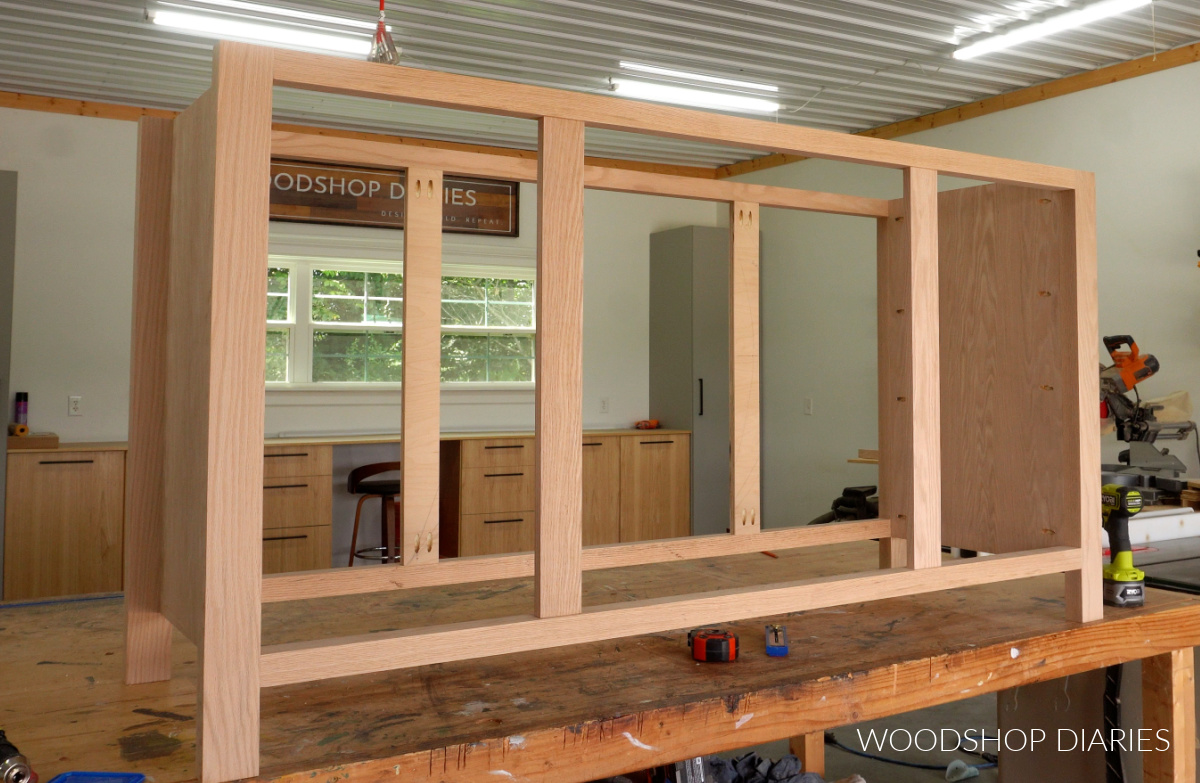
I inset the front dividers ¼″ from the front of the 2×2 to add some extra dimension.
Then, I attached 12 plywood strips (what I’ll call “runners”) between these pieces like shown below–6 between the left dividers and 6 between the right dividers.
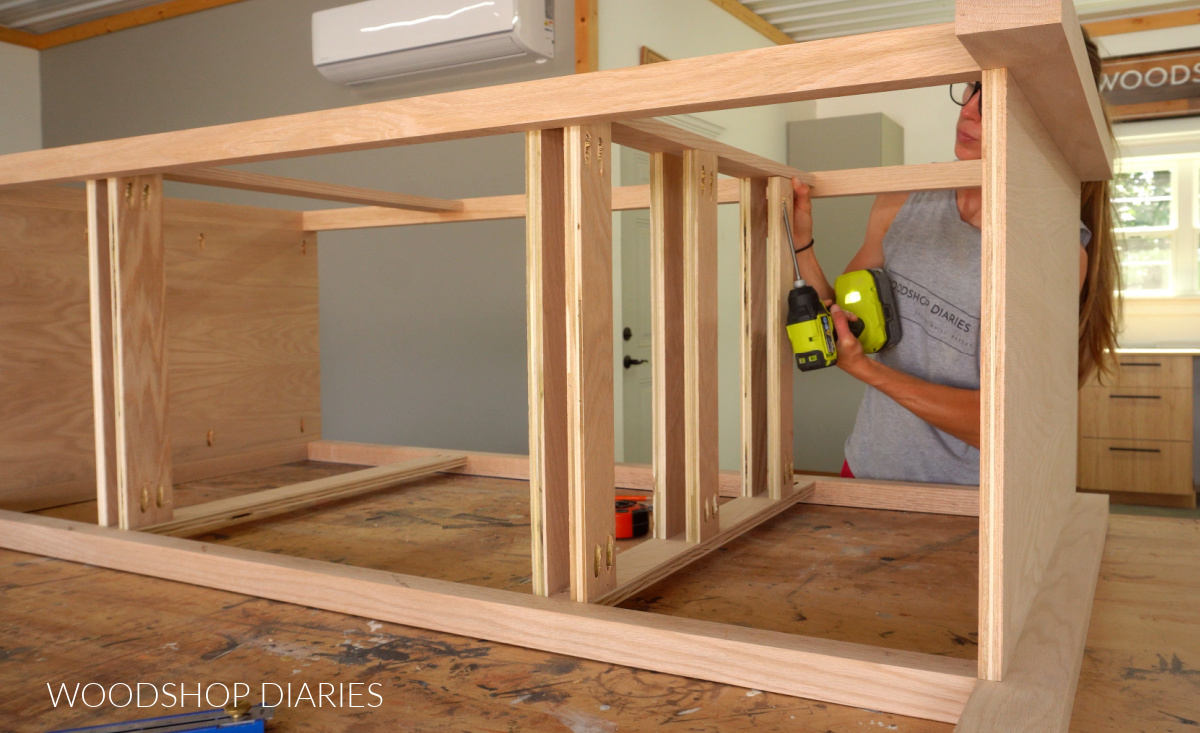
These will be used to mount the drawer slides onto, so they need to be placed where the slides will go. Dimensions are detailed in the printable plans.
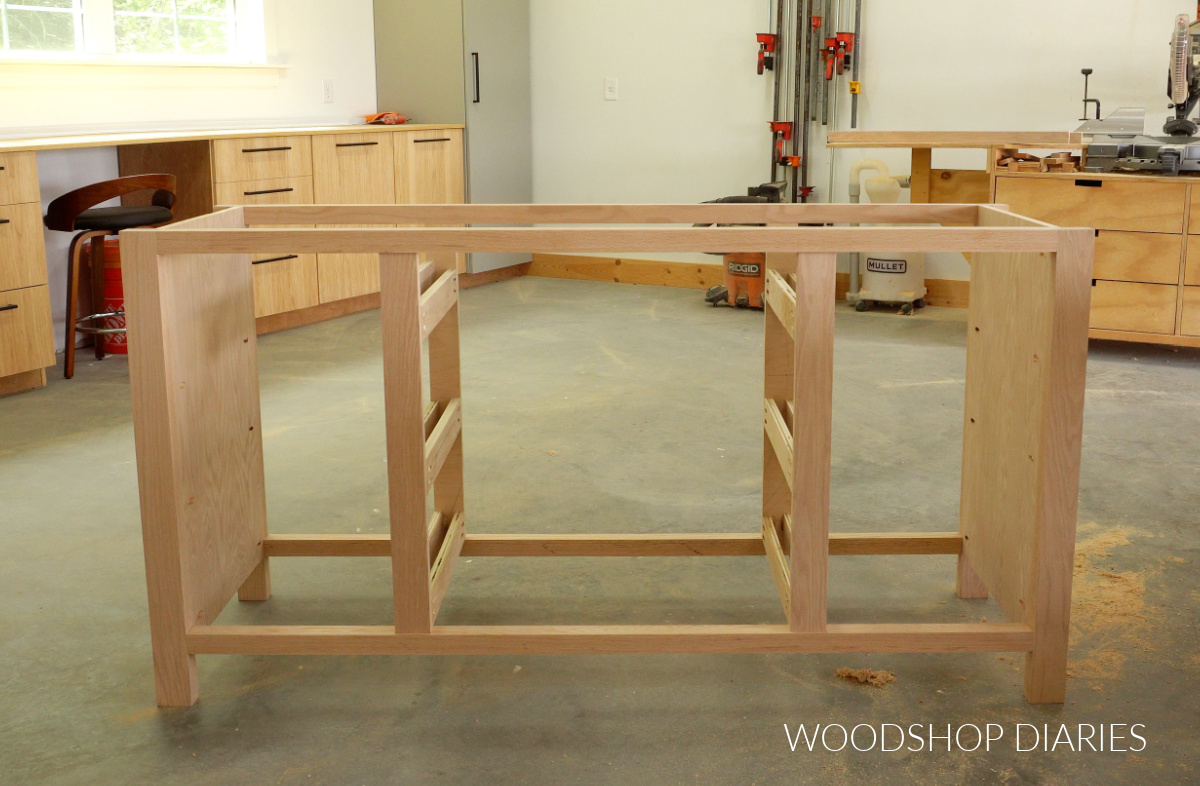
I also added some dividers to separate out the 9 individual drawers. These were simply plywood strips I cut and installed with pocket holes and screws.
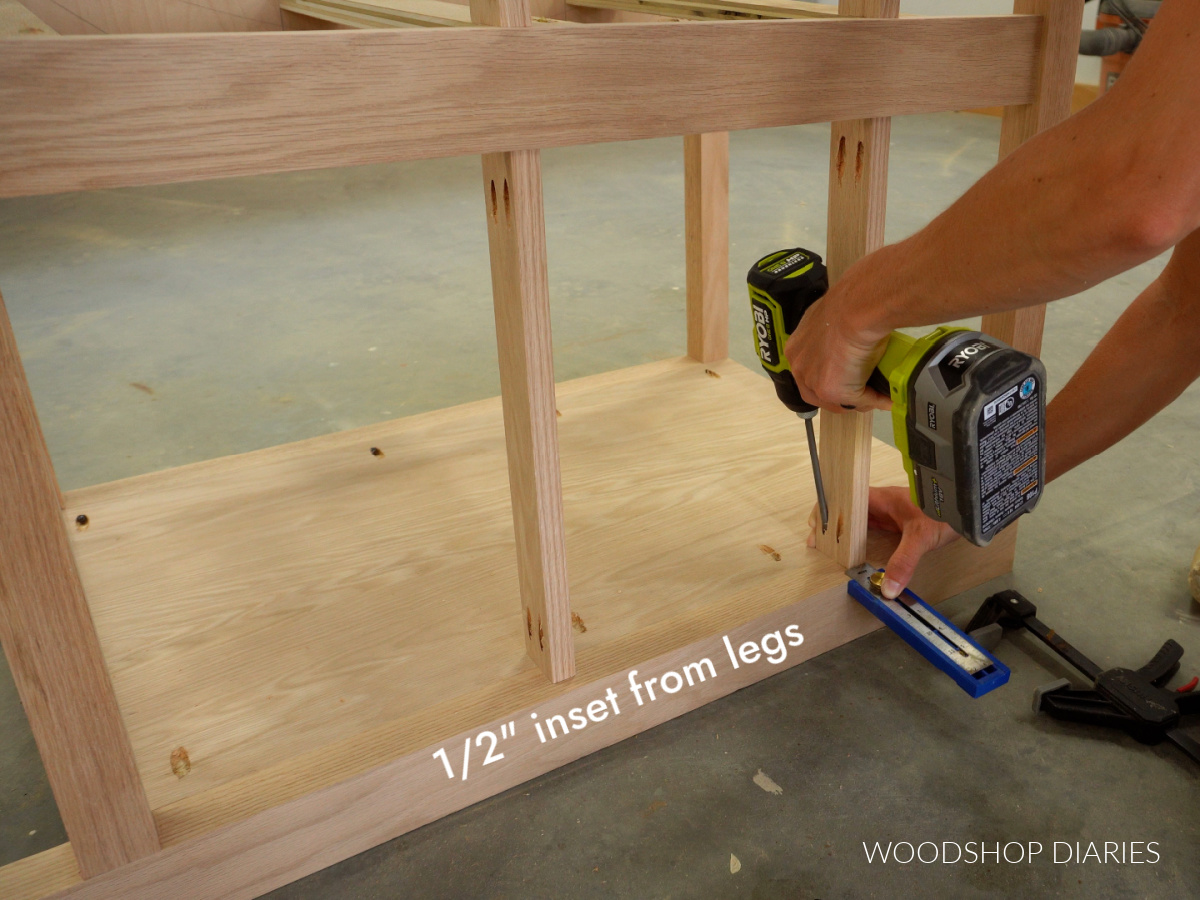
To add some extra dimension (like I did with the front dividers), I inset these drawer dividers another ¼″ in from the vertical dividers.
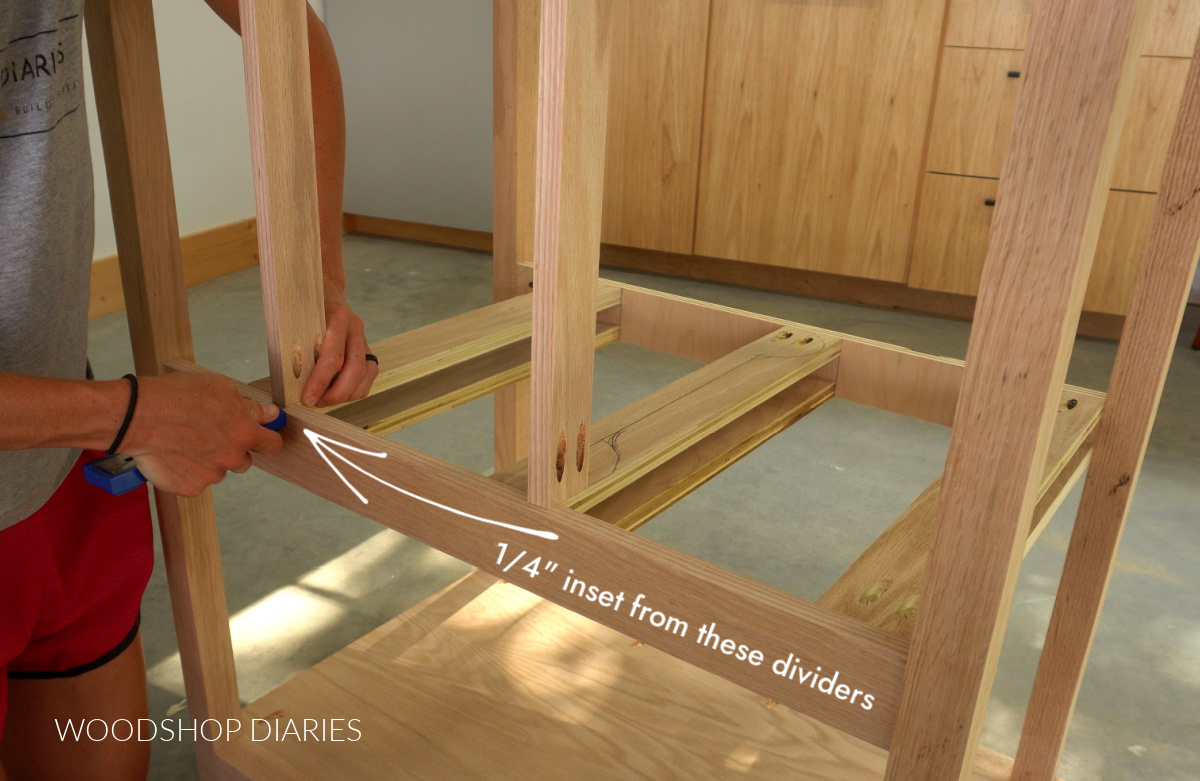
But I had to pay careful attention because that means that they should be ½″ inset from the front legs to keep them square.
Step 3: Install Drawer Slides
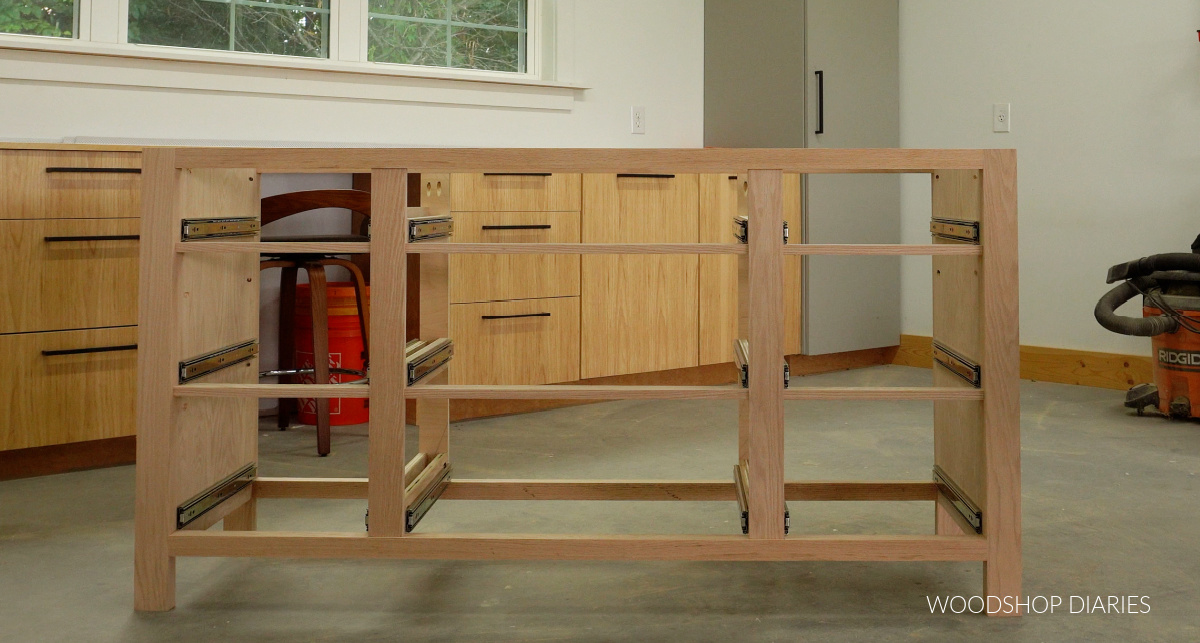
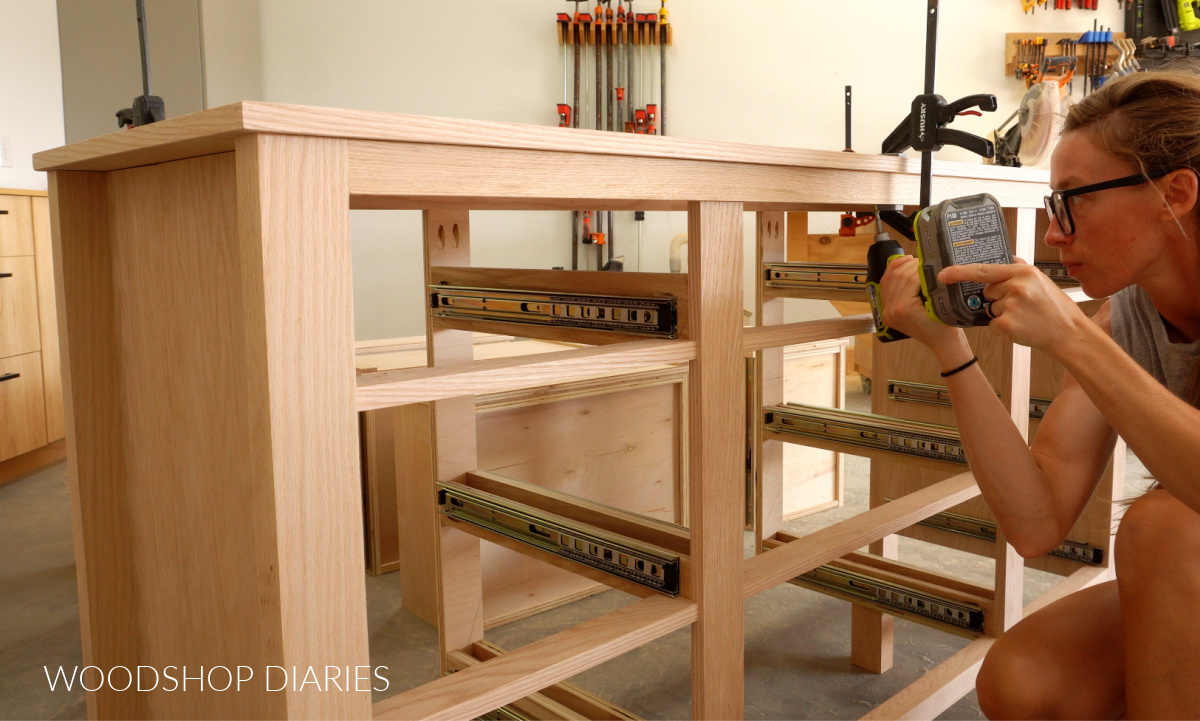
I installed nine pair of 18″ ball bearing drawer slides into the dresser to mount the drawers to.
These drawers will be inset and the drawer front will be ¾″ plywood with a piece of ¼″ lattice trim on the front (more on that in just a minute), so it will be 1″ thick total.
PS this Kreg MultiMark tool is super handy to have in the shop for quick measurements and offsets.
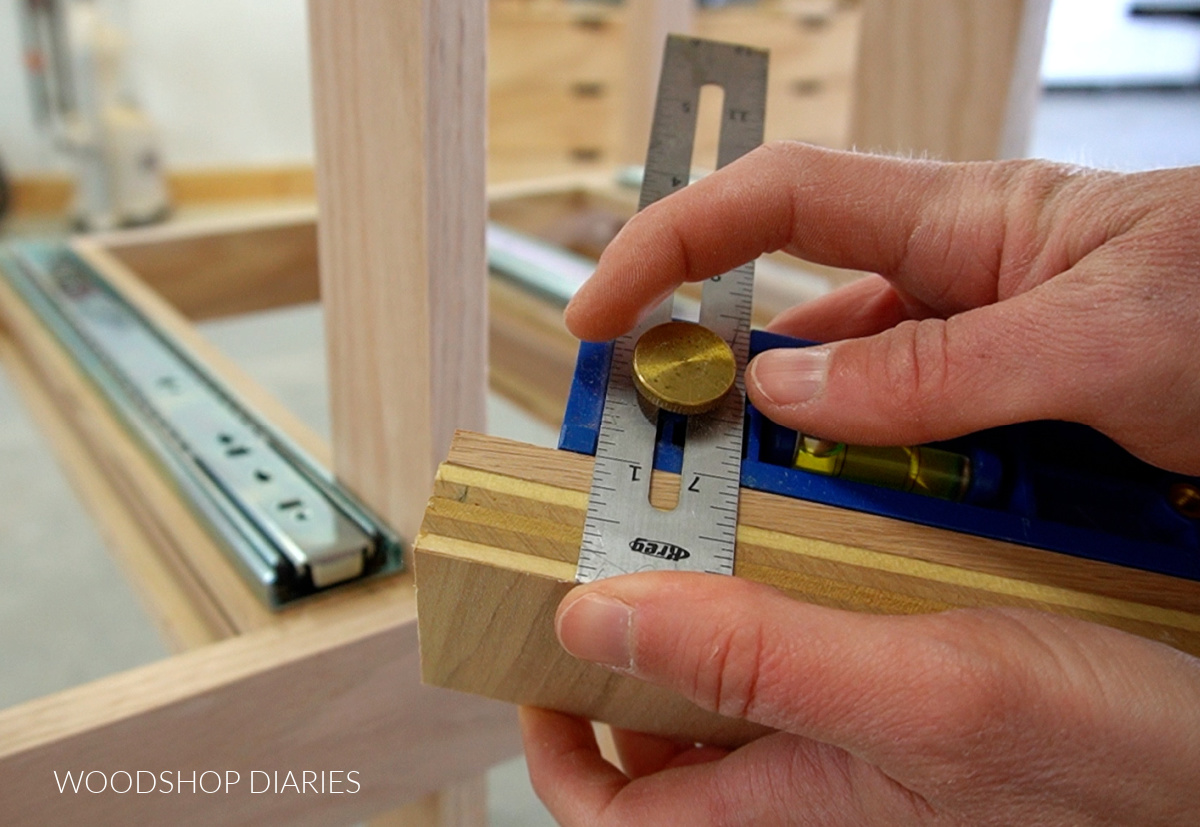
So I installed the slides 1″ inset from the drawer dividers so that the drawer fronts will be flush to them once installed.
RELATED: How to install drawer slides
Step 4: Add Dresser Supports
Before adding the drawers into the dresser, I needed to add some additional support to handle the weight (9 drawers will be HEAVY!).
So I glued and screwed a couple pieces of 2×3 to a couple strips of plywood and placed these under the bottom drawer runners of the dresser.
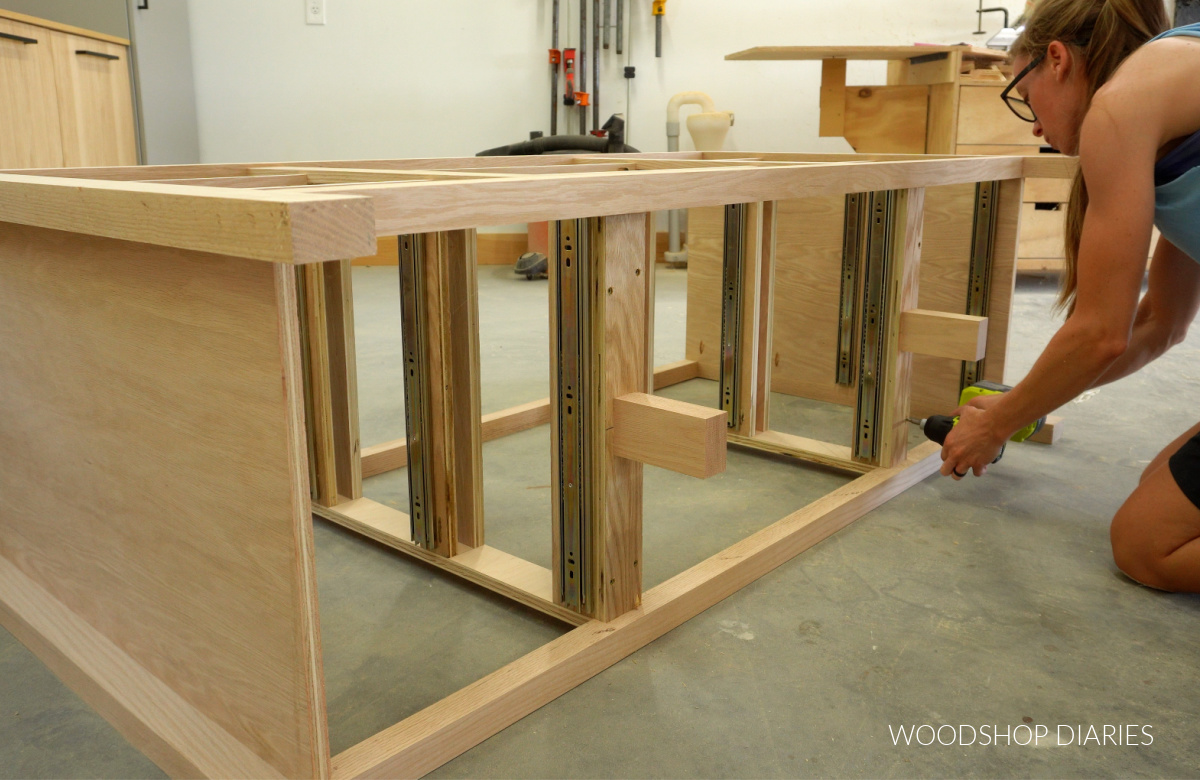
I secured these to the runners with screws. This will help prevent the dresser frame from sagging once the drawers are in place.
Step 5: Build and Install 9 Dresser Drawers
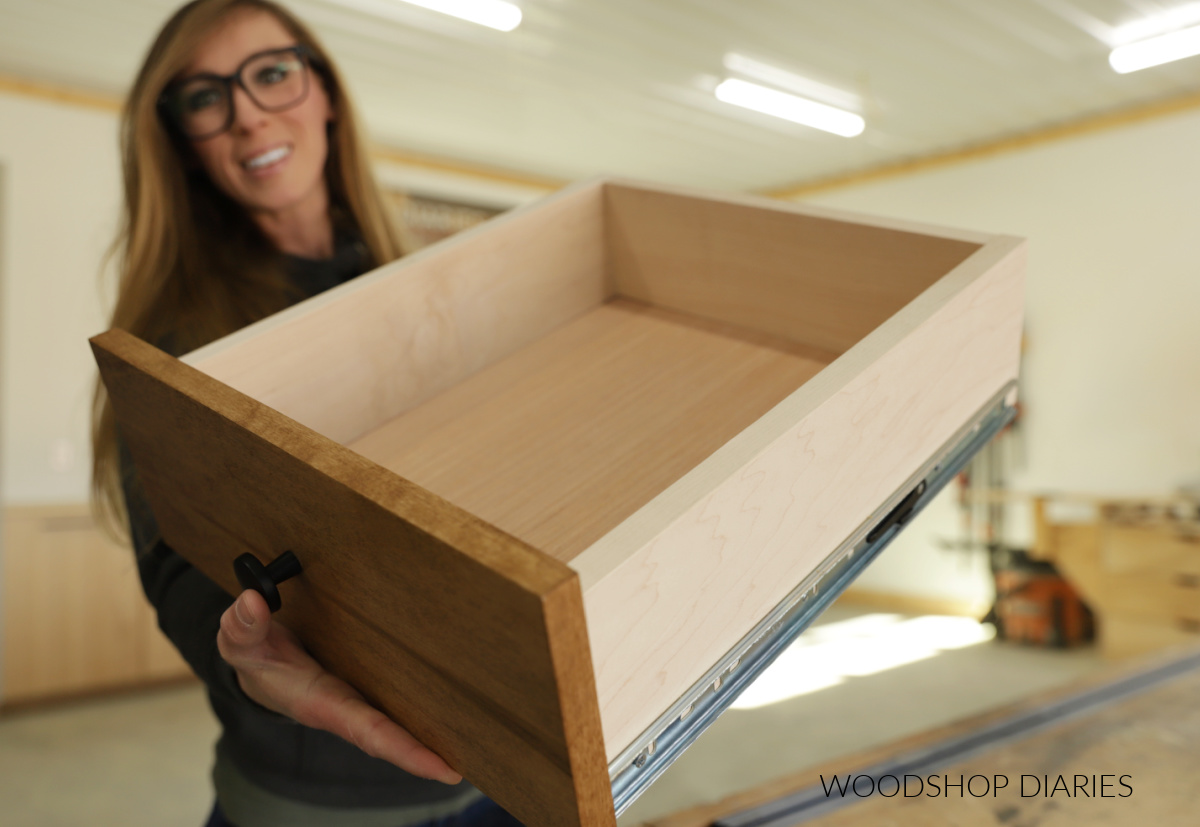
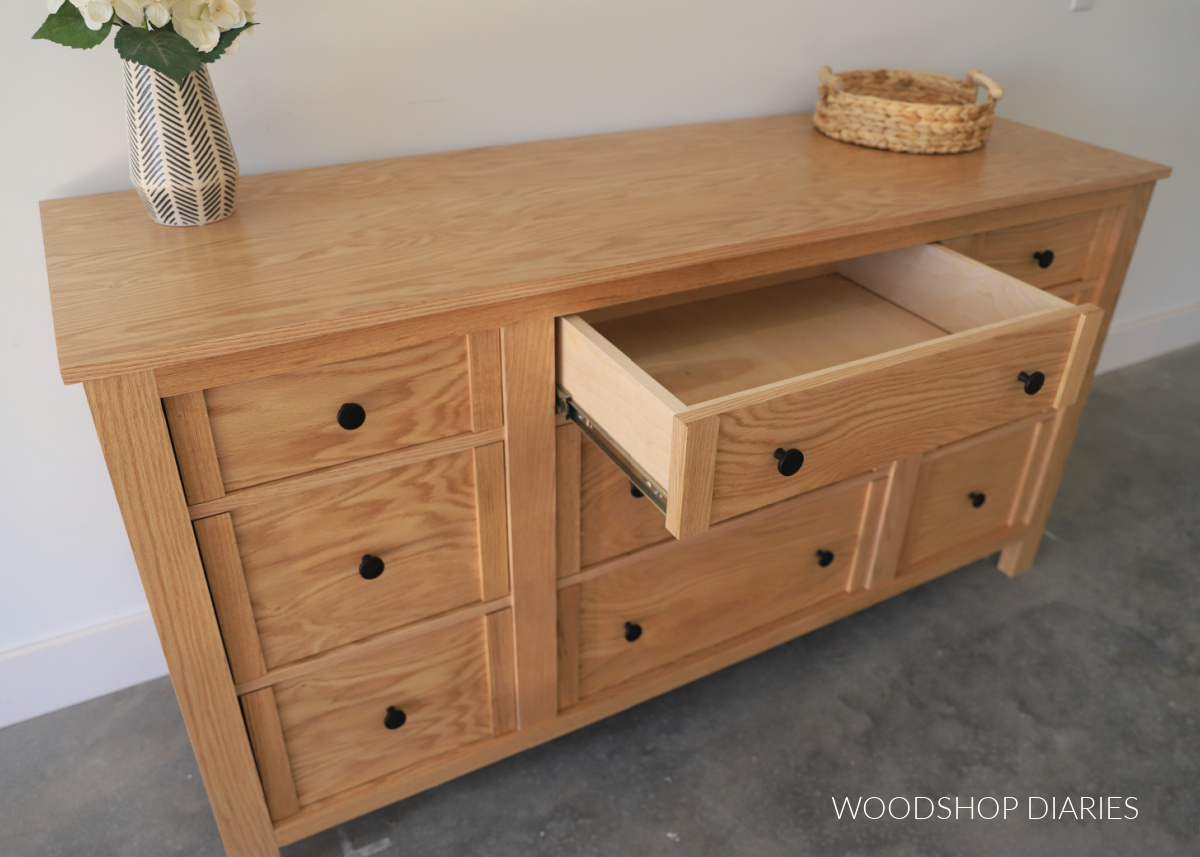
I made 9 drawer boxes to fit into this dresser–4 deep, but narrow drawers for the left and right bottom, 2 deep and wide drawers for the bottom center, 2 shallow and narrow drawers for the top left and right, and a shallow but wide drawer for the top center.
It got a bit confusing haha. So here’s a color coded map.
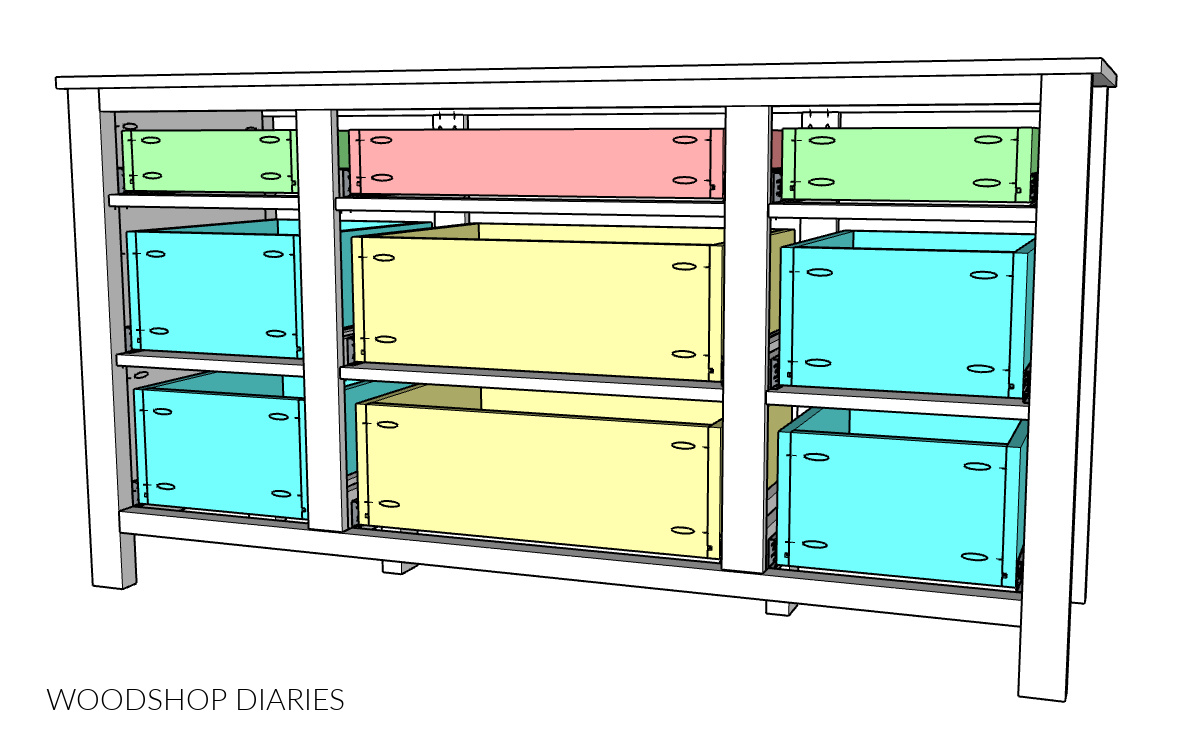
RELATED: How to determine drawer sizing for any project
I assembled the drawer boxes from ¾″ plywood (for the sides) and ¼″ plywood (for the bottom) using pocket holes and screws.
Check out how to assemble drawer boxes here.
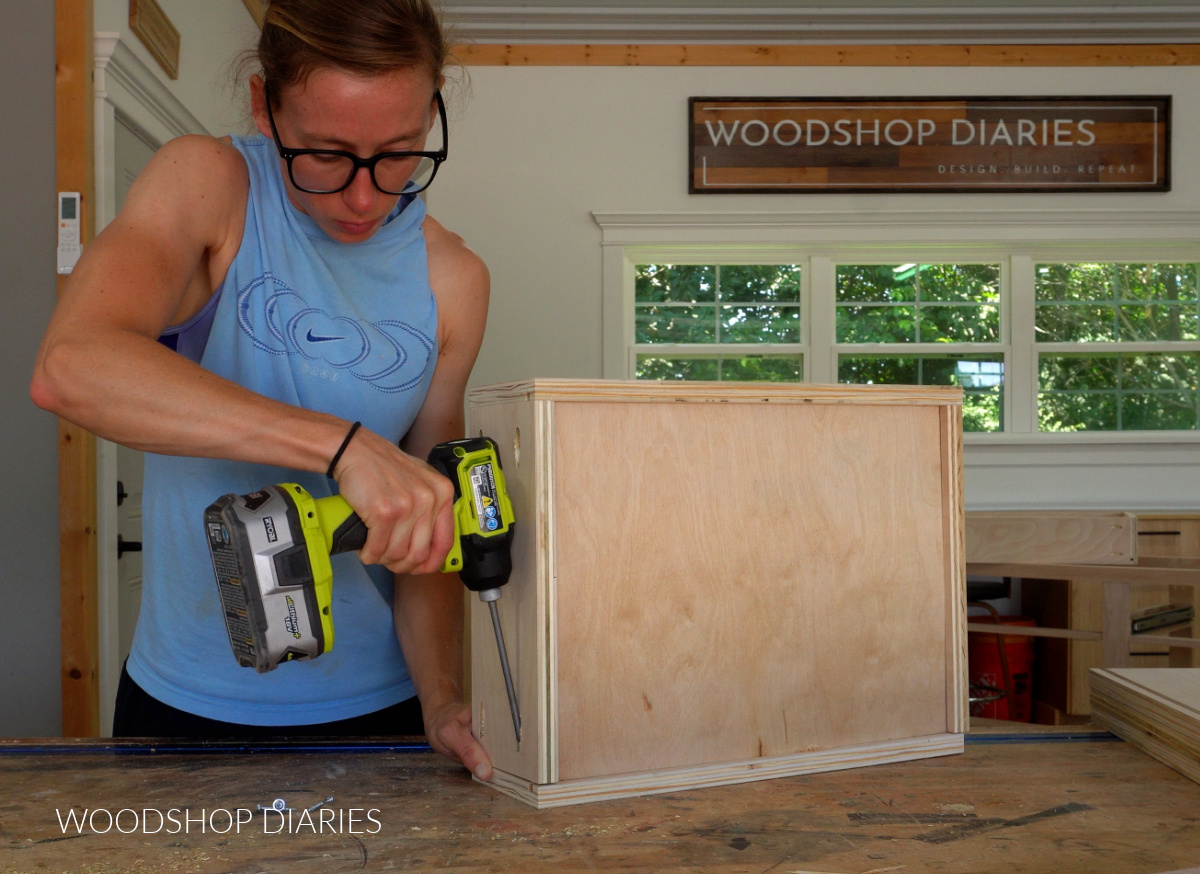
Then, I installed the drawer boxes into the dresser. There are several ways to install drawer boxes, but I like to place some ¼″ scrap plywood pieces on the divider below the drawer, pull the slides flush to the front, and simply screw them in.
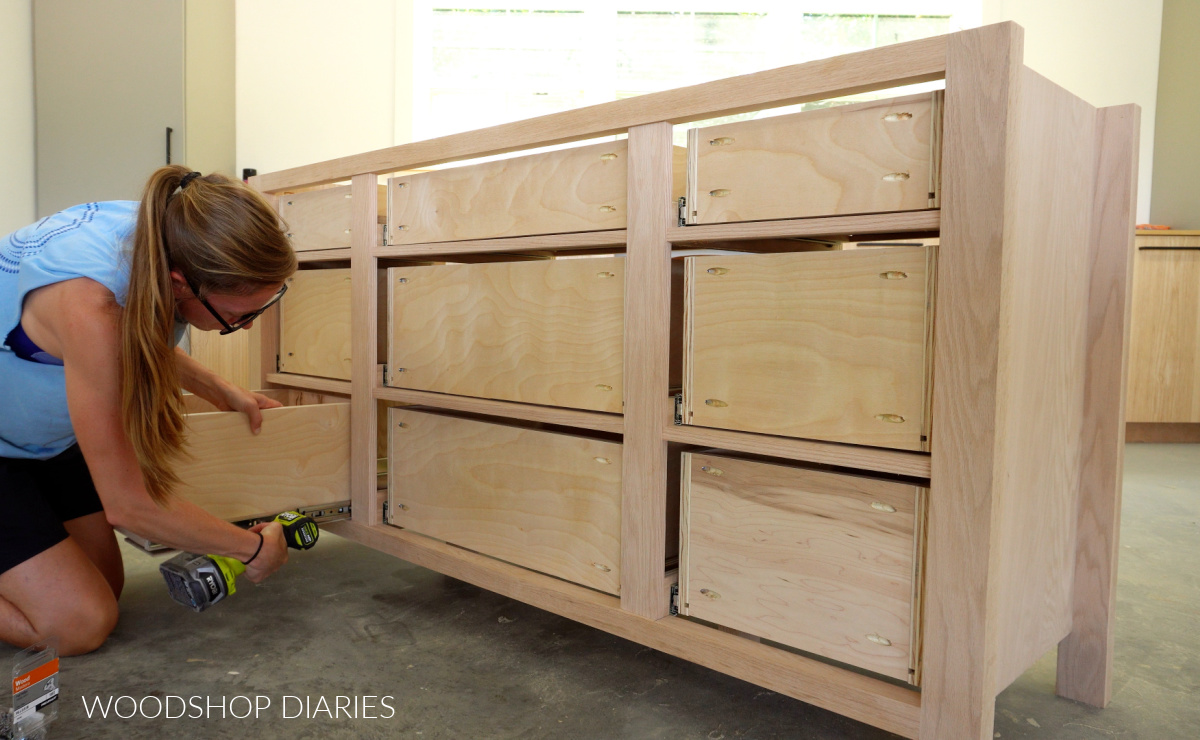
This is a quick and easy way to do it that gives you consistent spacing and maximizes the space above for storage.
Step 6: Attach Drawer Fronts
Once the boxes were in, I cut drawer fronts from ¾″ plywood to fit the openings. They should be ¼″ shorter and ¼″ narrower than the opening.
Then I applied iron on edge banding to the sides. Edge banding is optional, but it makes plywood edges look really nice–like solid wood! Learn how to apply edge banding here.
To give the drawer fronts some extra detail, I cut some ¼″ thick x 1 ½″ wide strips to glue onto the front flush to the left and right edges.
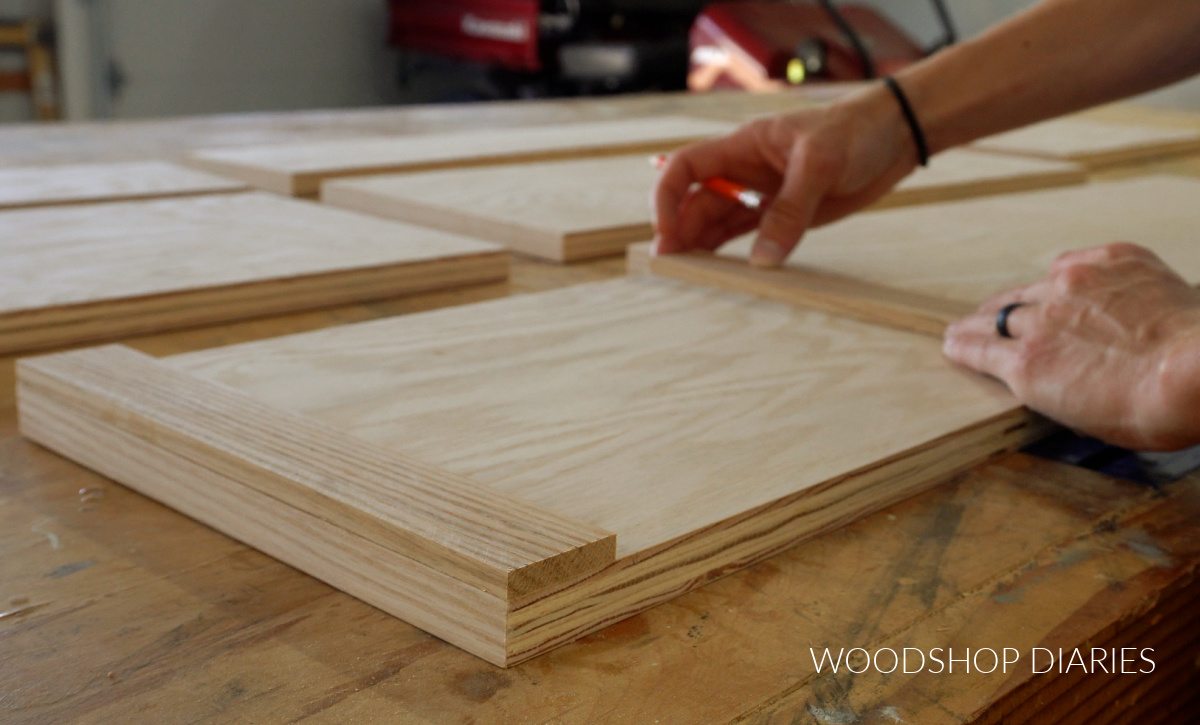
Then I placed these into the openings, made sure the gaps on all sides were even (⅛″), and screwed them in from the inside of the drawer box.
Step 7: Add Dresser Top & Trim
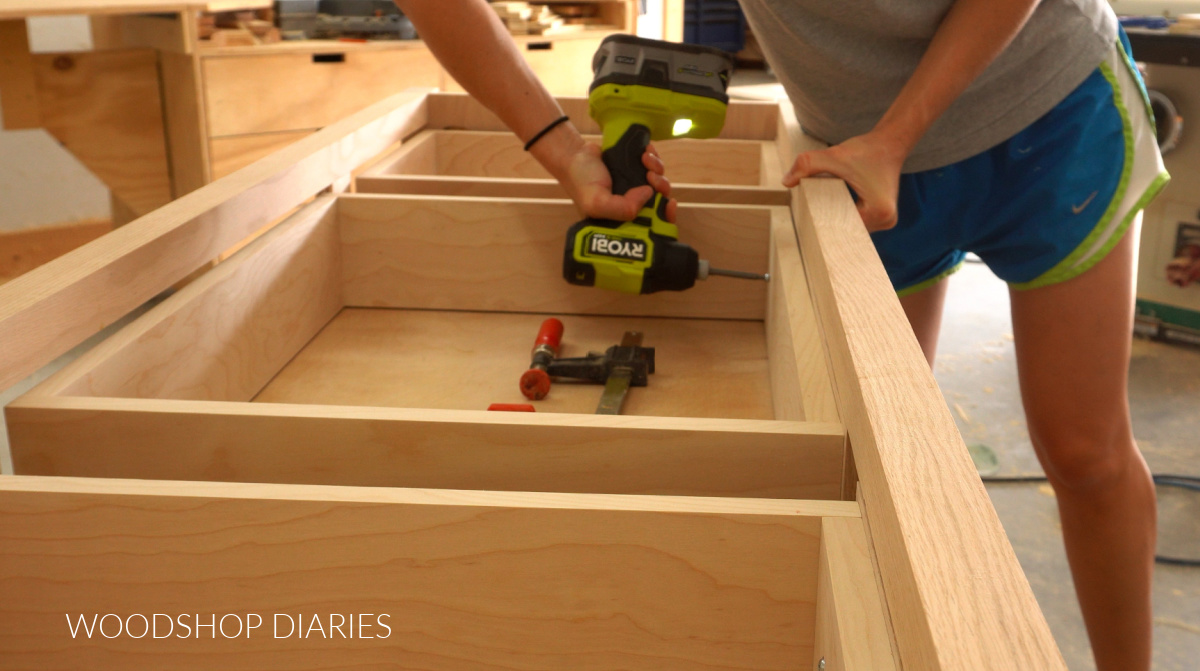
I trimmed a piece of ¾″ plywood 1″ wider and ½″ deeper than the dresser base and edge banded the front and sides. This will be the dresser top.
I placed it on the dresser frame with ½″ overhang on the sides and front and screwed it in from the bottom side. (You’ll have to remove the drawer boxes to have room for the drill/driver.)
Adding trim onto the sides is optional, but helps dress this up a little. Remember those off cuts I mentioned that will be left if you cut your 2x2s and 2x3s from a 2×4 board?
This is where those come back into play! I cut to fit the thicker strips to go along the top and bottom of the side panels and the thinner strips to go vertically between them.
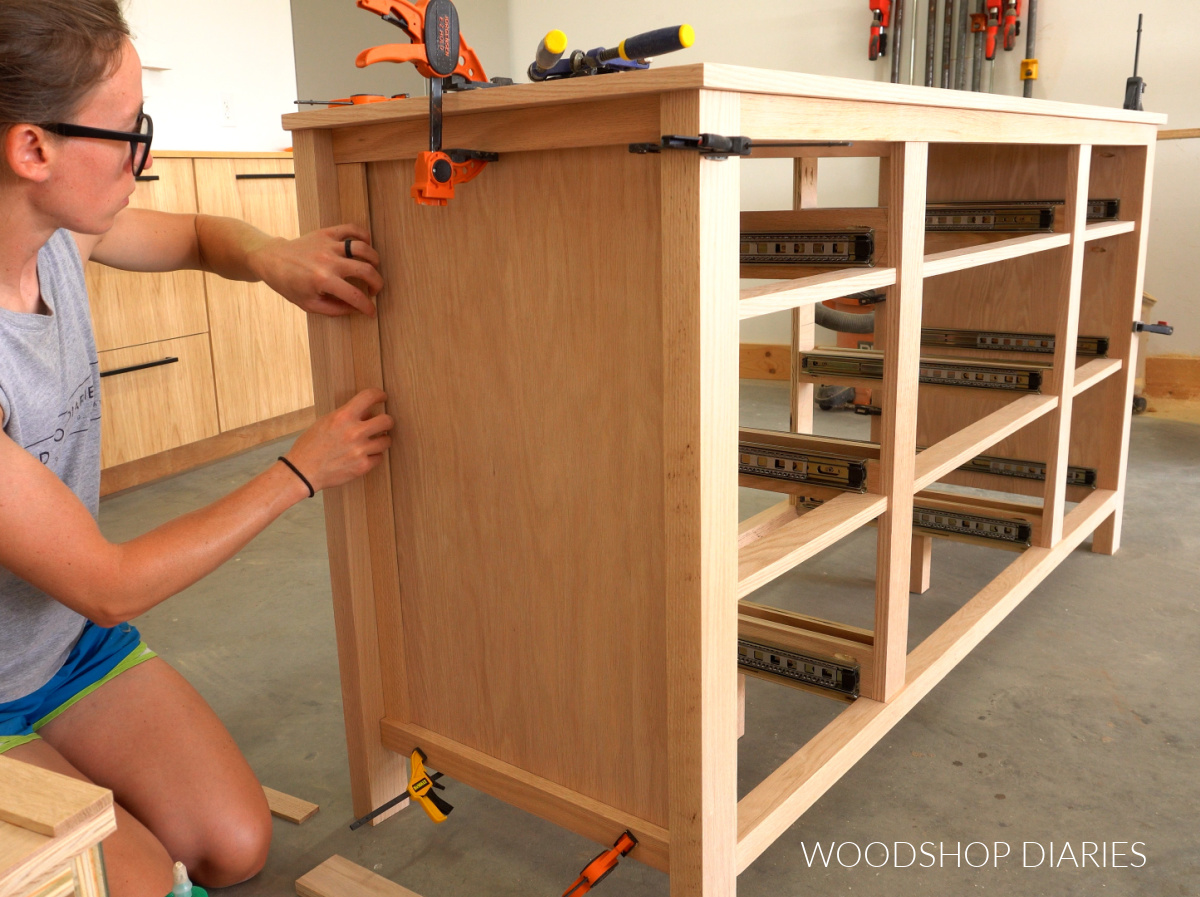
I just glued and clamped these in place until they were dry on each side. If you didn’t rip your boards and you don’t have these pieces, a simple 1×2 and some precut lattice trim would work just as well!
Step 8: Finish 9 Drawer Dresser
While the drawers were still out, I applied a wood stain (Minwax Weathered Oak) to the drawer fronts and the dresser body, then sealed it with a few coats of Minwax Polycrylic.
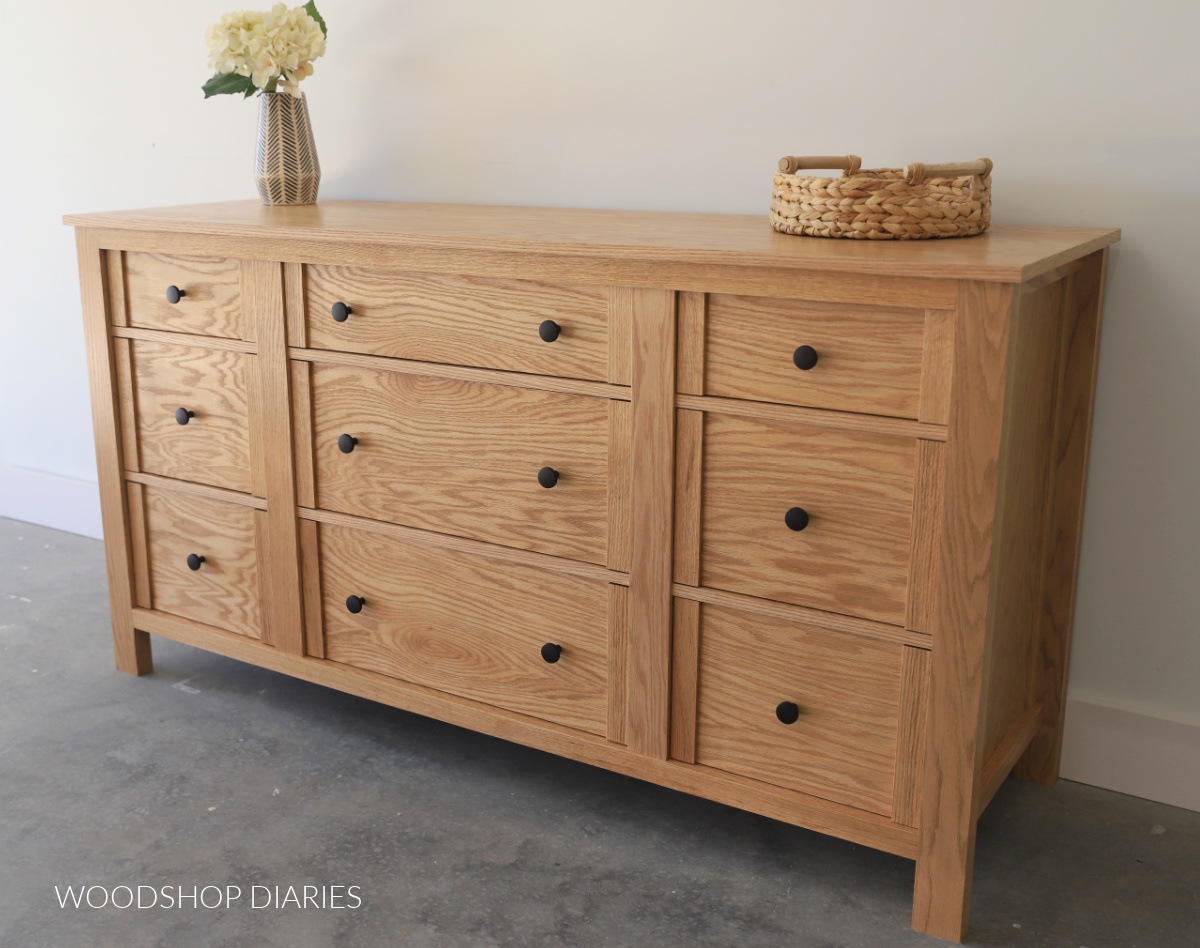
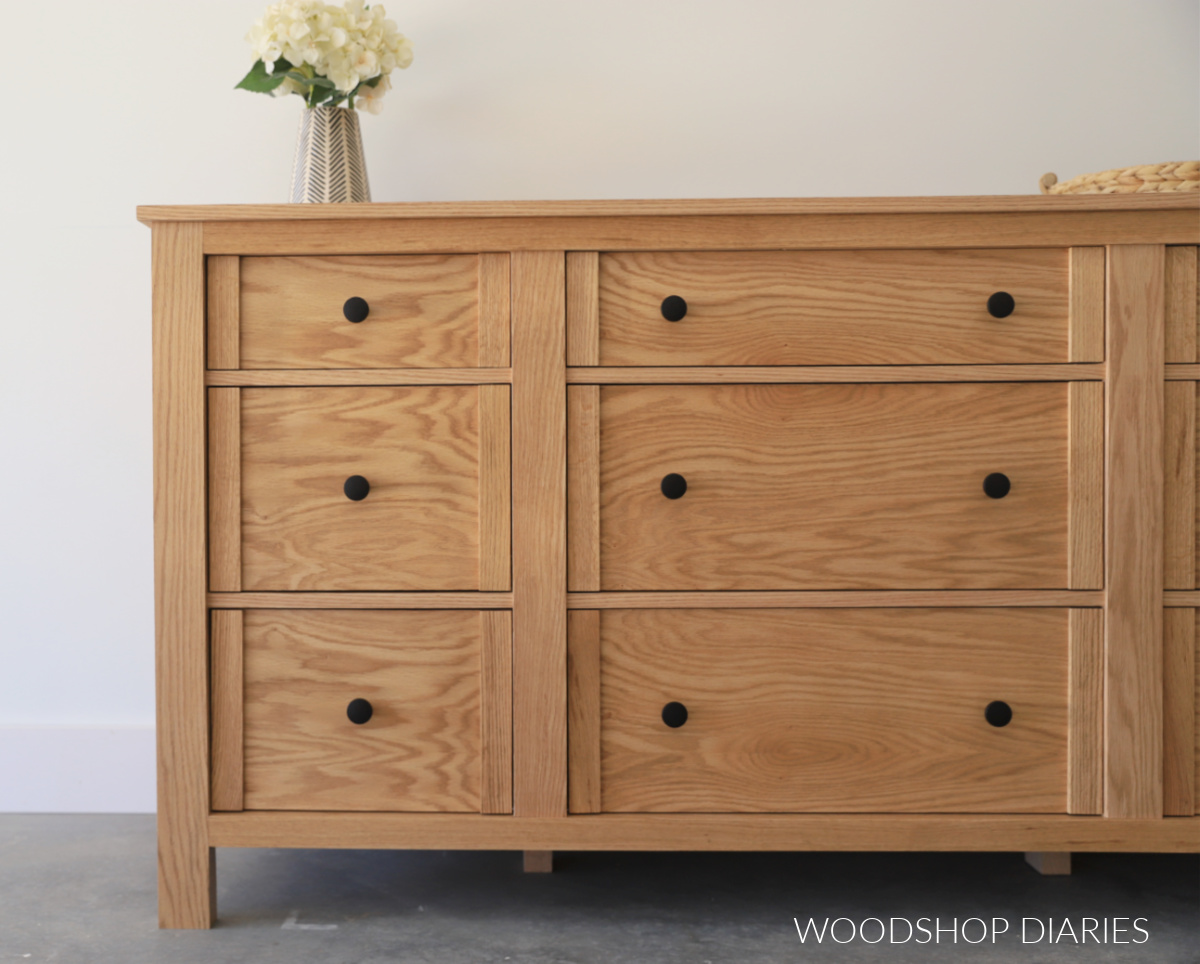
Once that was dry, I slid the drawers back in place and added some simple black knobs to finish it up.
I’m really loving how this version matches the head and footboard of the storage bed with the drawer spacing.
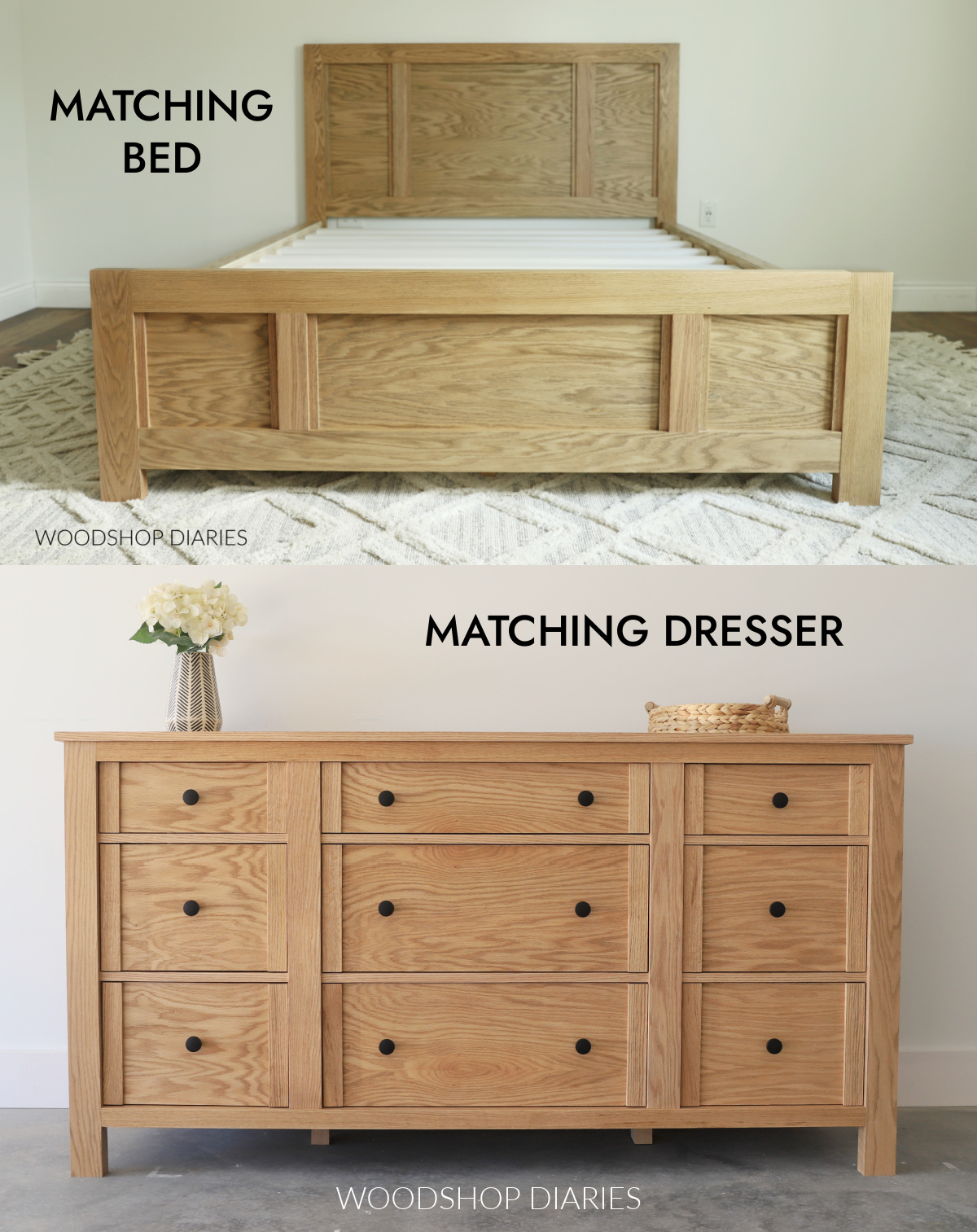
I think it’s the perfect combination for a simple, modern, and classic bedroom set.
If you want to build your own, don’t forget to grab the printable plans for this 9 drawer dresser here. Or if you want to build them all, grab the bedroom build plan bundle with all the pieces.
Looking for More Dresser Builds?
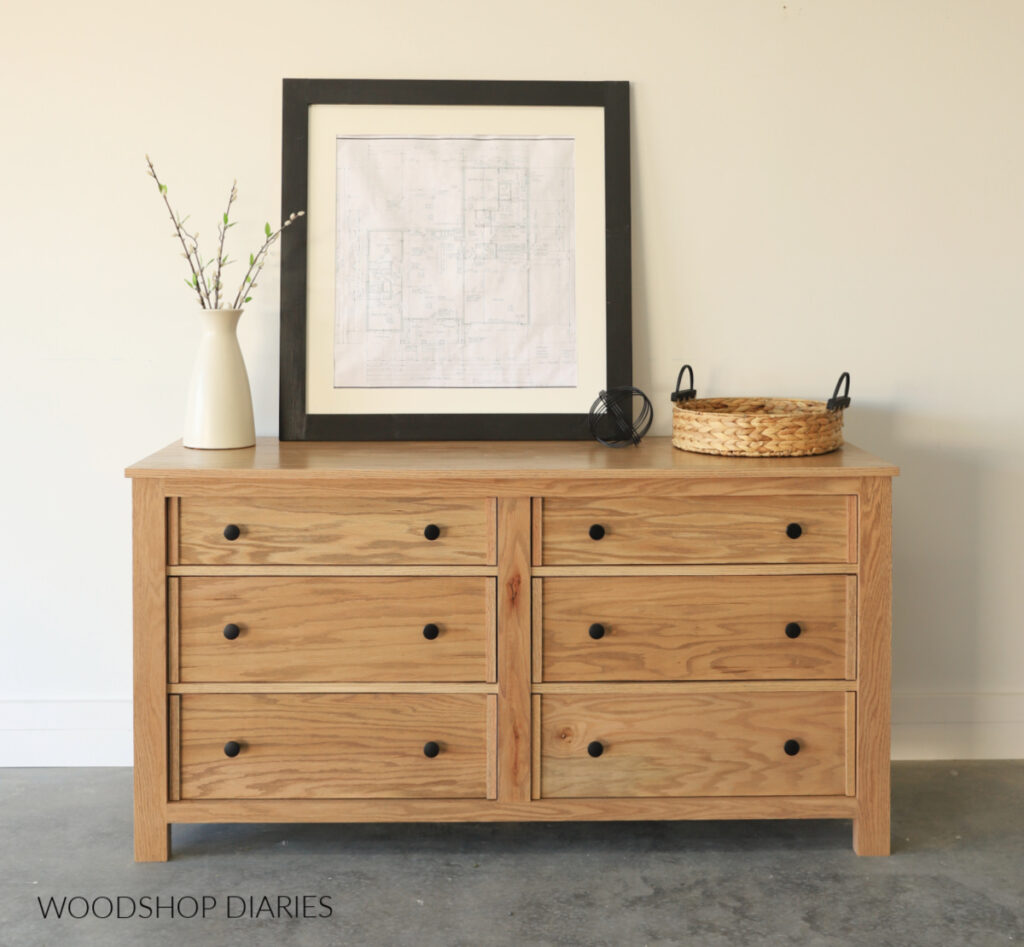
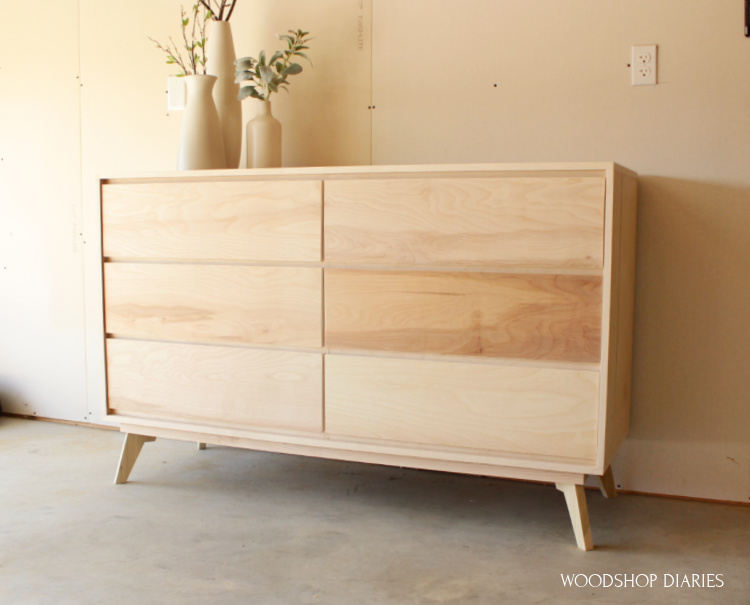
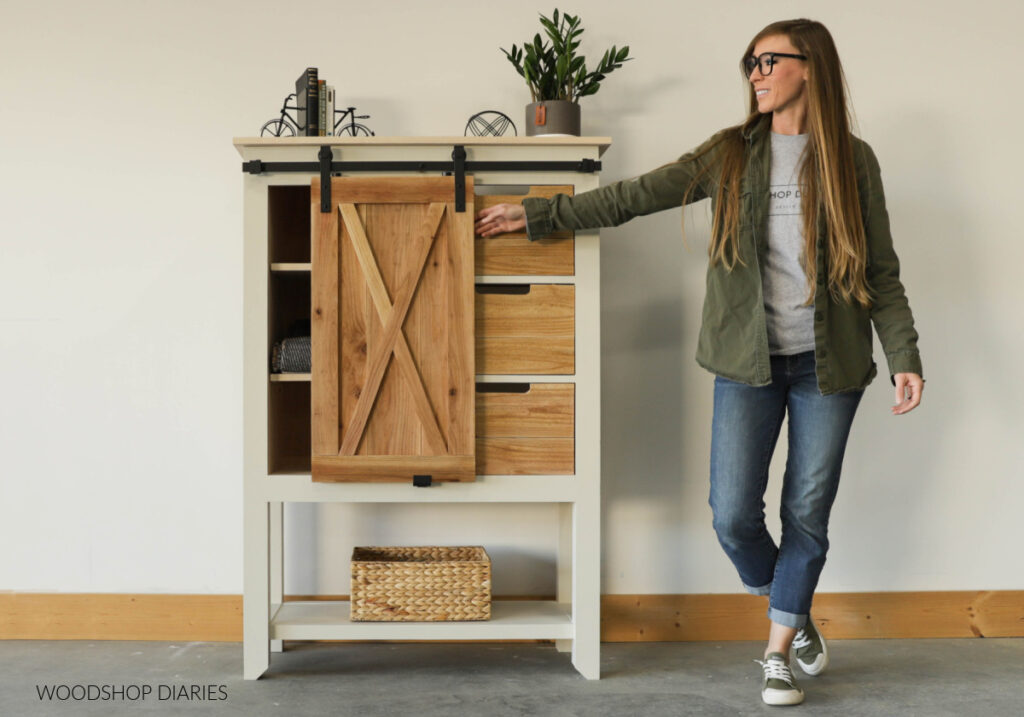
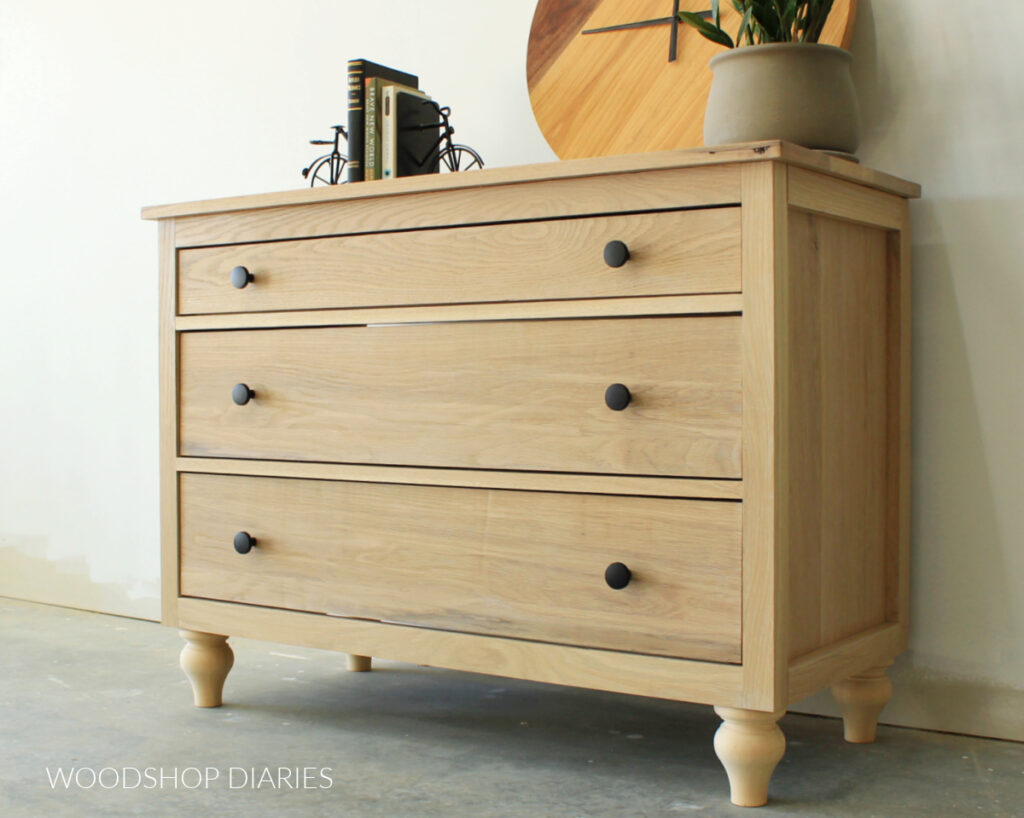
Dressers are my favorite projects to build! So I have several fun styles and sizes to choose from if you’re looking for more DIY dresser ideas.
Here are a few of my personal favorite dresser builds you may enjoy browsing:
If you enjoyed the post and want to save it for later, don’t forget to pin it or share to your favorite social channel!
Until next time, friend, happy building!