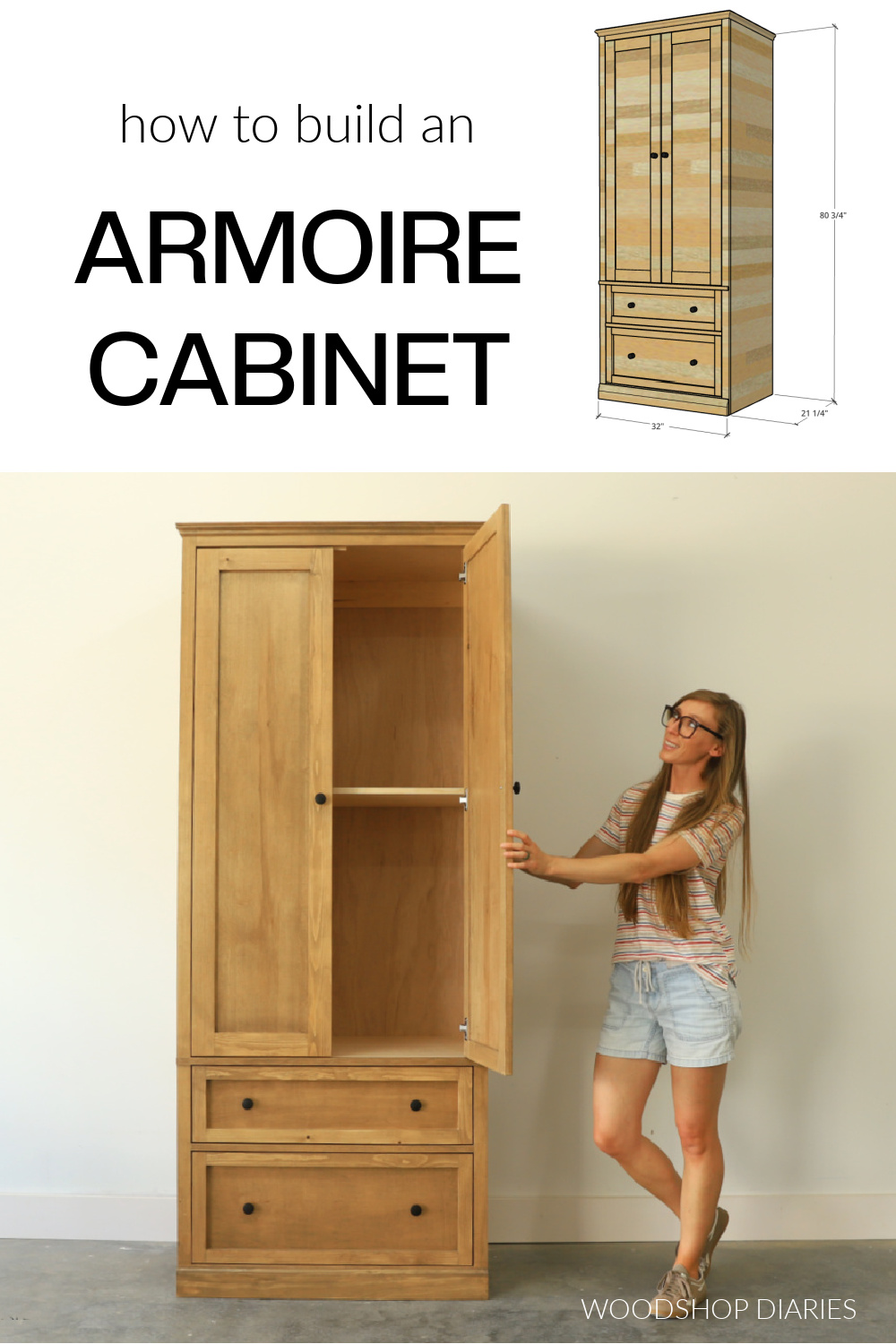
In this post, I’m sharing how to build a simple wardrobe cabinet with drawers!
This project makes an excellent stand alone storage cabinet, but can also work great as a built in.
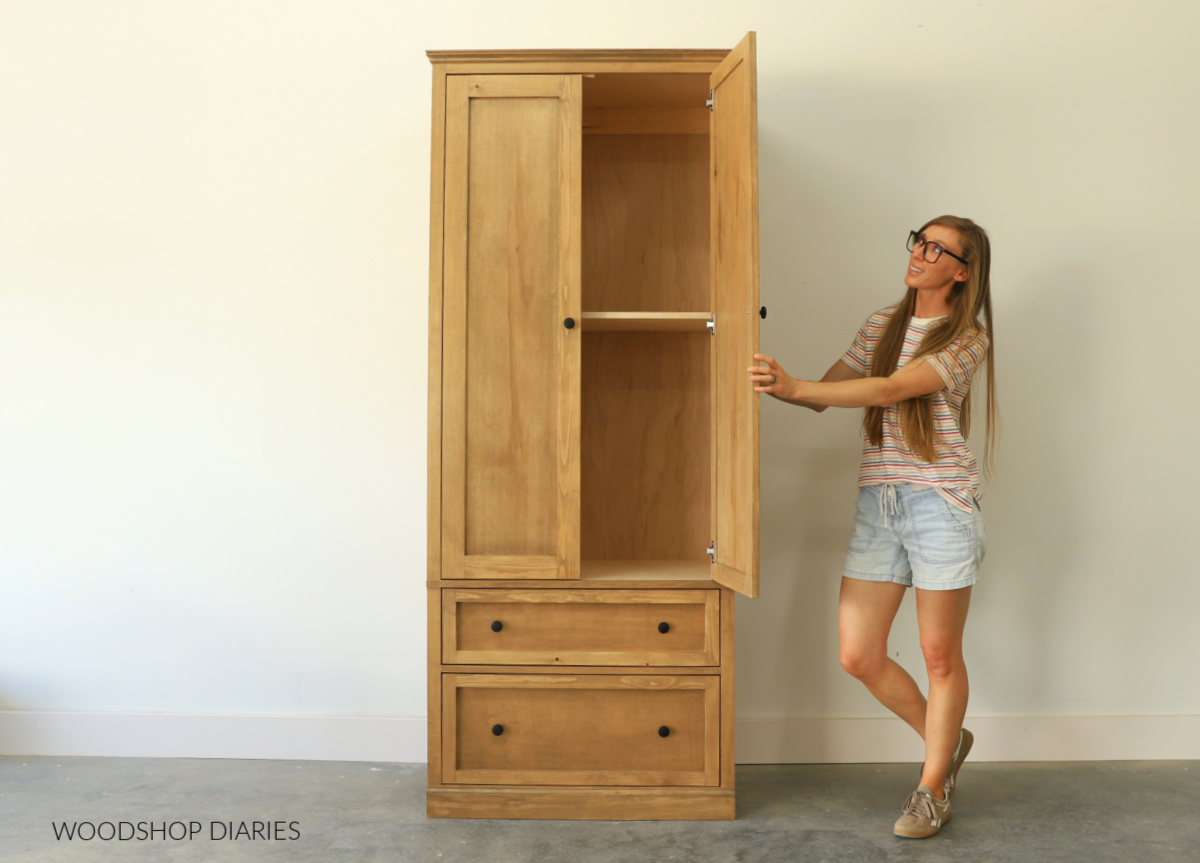
The large top section can house either shelving (which is shown here) or a hanging rod if you wanted to use if for clothes.
This classic style tall storage cabinet could be used as a closet, pantry, linen cabinet, home office built ins…you name it. It’s simple, versatile, and (the best part?) easy to build.
Let’s dive in and I’ll show you how below.
*This post contains affiliate links. See website policies.
What to know before building
I designed this armoire cabinet as part of a modular furniture system that allows you to mix and match various pieces to create your own built ins, media consoles, office storage, and more.
So while this particular piece can work well on its own, it can also be added onto. Here’s a peek at what I mean:
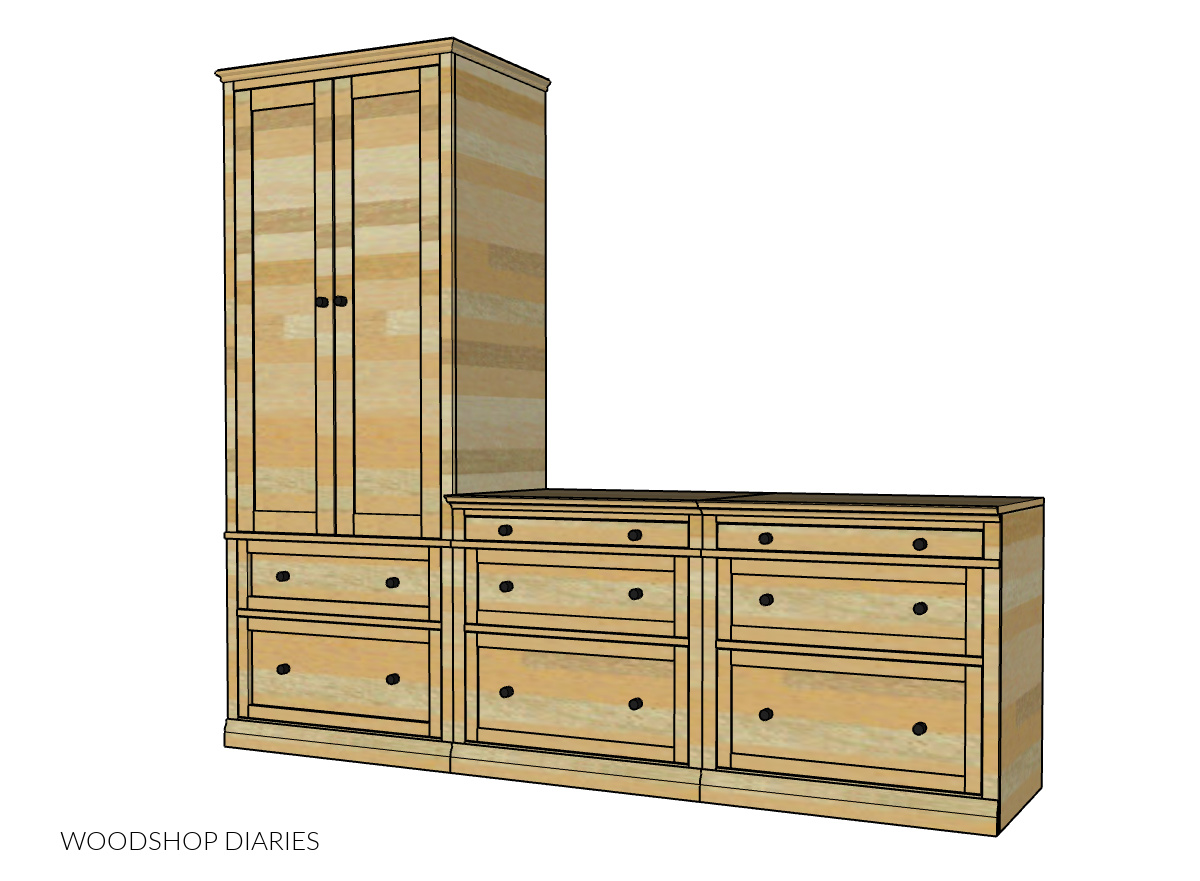
This tall cabinet is the first part of the series, so stay tuned. I’ll be sharing the matching pieces to go with it soon!
Overall dimensions
The overall dimensions of this project are approximately 21 ¼″ deep x 32″ wide x 80 ¾″ tall.
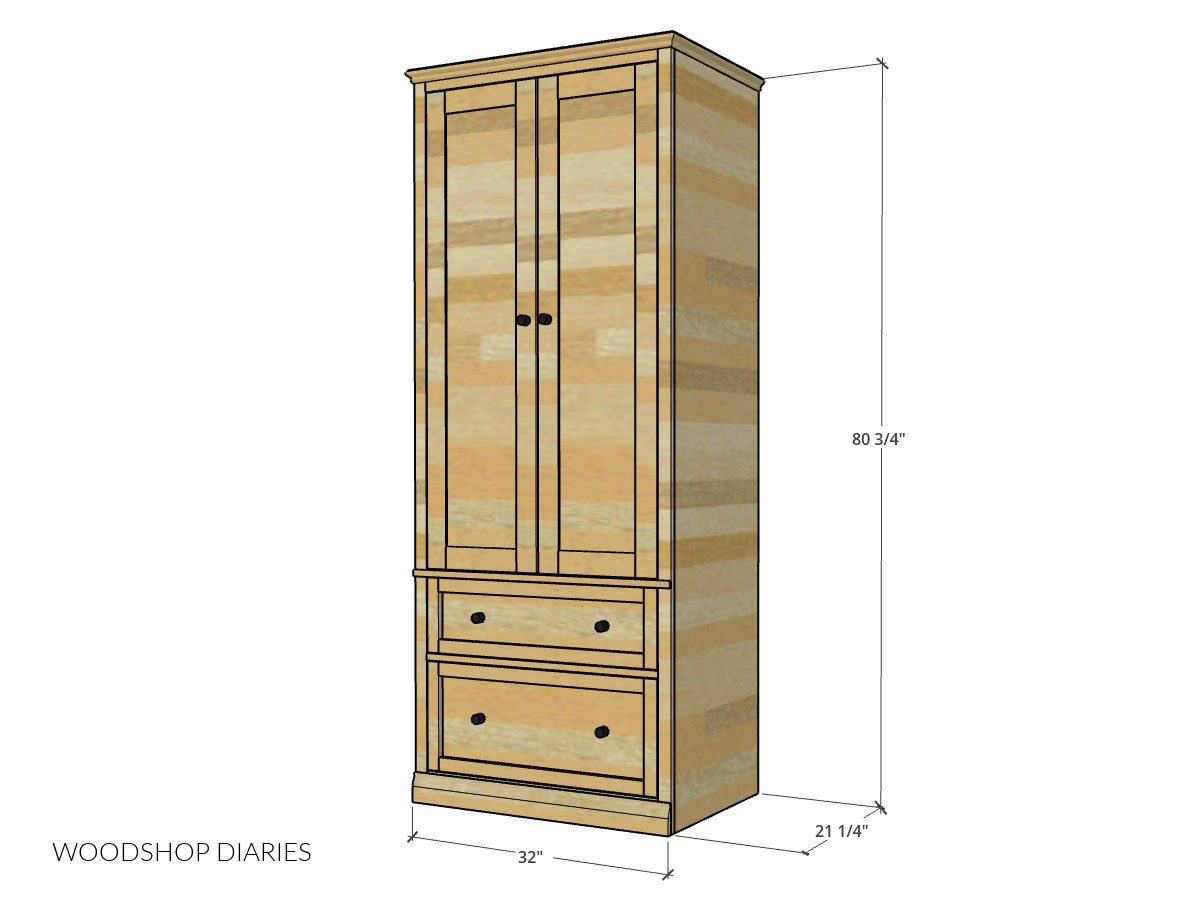
Note that the dimensions so not include the additional trim/moldings. Overall dimensions will vary depending on type/style/size trim used.
Helpful resources for this project
If you’re new to building drawers, don’t worry! I’ll walk you through the entire drawer building process from start to finish in this drawer building series (with videos!). I’ve broken it down into four parts:
- How to measure for and size drawer boxes
- How to assemble a drawer box
- How to install drawer slides
- How to install drawer fronts
Prefer to print the whole series? Grab the Ultimate Drawer Building Guide which includes all four parts in a printable e-book you can take to the shop with you.
NOTE: The drawer boxes for this project were assembled using screws through the sides instead of my usual method of pocket holes. The reason is because the frames I used for drawer fronts would not have have covered the pocket holes. This is discussed in more detail in the video linked below.
You may find these posts helpful throughout the project:
Enjoy DIY projects and woodworking plans? Sign up for priority access for the latest posts on Woodshop Diaries!
How to build a Armoire Cabinet with Drawers
If you prefer to watch, I’ve shared the full build video with tons of tips, behind the scenes, and additional details on my YouTube Channel here.
Love watching how-to videos? Subscribe to my YouTube channel for plenty more where that came from!
Prefer to print? Grab the printable armoire cabinet building plans available here:
Tools & Materials
Tools:
- Drill/Driver
- Circular Saw and plywood cutting guides–Kreg Rip Cut & Kreg AccuCut (optional)
- Miter Saw
- Pocket Hole Jig (standard & micro sized recommended, but micro is optional)
- Brad nailer
- Table saw (optional)
- ⅜″ Dowel Jig
- Router with ⅜″ rabbeting bit (optional)
- Shelf Pin Jig
- Concealed Hinge Jig
- Chisel
- Clamps
Materials:
- (2) 4’x8′ sheets ¾″ plywood
- (1) 4’x8′ sheet ¼″ plywood
- (4) 1x2x8′ boards
- (4) 1x3x8′ boards
- (1) 1x4x4′ board
- (1) ¾″ square dowel 6′ long
- Trim/Molding (as desired)
- (2) pair 20″ drawer slides
- Wood Glue
- 1 ¼” brad nails
- 1 ¼” pocket hole screws (100 count box)
- (16) ⅜″ x 1 ½″ dowel pins
- 1 lb box 1 ¼” wood screws
- (6) pair inset frameless concealed hinges
- Shelf Pins
- Edge banding (optional, but recommended)
- Drawer pulls, knobs
Not sure what type of wood to use for this project?
1x LUMBER: If painting, preprimed pine, spruce, or poplar are great budget friendly options. And if staining, usually, you want to use the same wood type as your plywood or something that will stain similarly so that they match. Check out this post to learn how to shop for and purchase lumber for your project.
PLYWOOD: I recommend using cabinet grade hardwood plywood (like birch, maple, oak, etc). Check out this post to learn how to choose the right plywood for your project.
This project was built with maple plywood and pine/spruce for the 1x material and moldings.
Step 1: Assemble Armoire Cabinet Box
Like most cabinet assemblies, this one started with cutting down the plywood to assemble the main box.
I built the cabinet body using ¾″ plywood, so I cut down two sides, a top and middle panel, and three plywood strips. All the dimensions and cut diagrams can be found in the printable plans.
RELATED: How to cut plywood sheets
Then, I drilled pocket holes into the ends of the strips and panels to assemble the armoire cabinet box like shown below using pocket hole screws.
RELATED: How to use a pocket hole jig
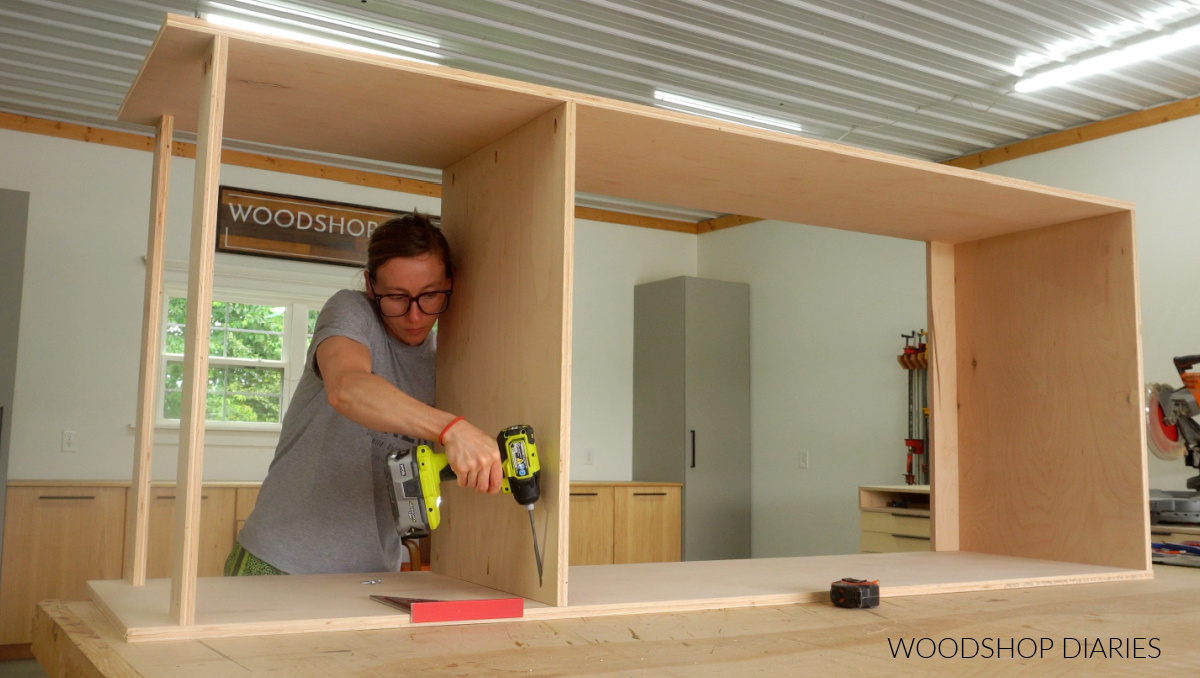
You can see that I placed the top panel at the top, the middle panel toward the middle (so that makes sense haha!), and I placed two of the plywood strips at the bottom and one at the top flush to the back.
NOTE: Because I’ll be adding drawers into the bottom section, I just saved some lumber by using strips at the bottom instead of a full panel.
Next, I routed a rabbet around the top opening on the back side of the cabinet to install a ¼″ plywood back panel into.
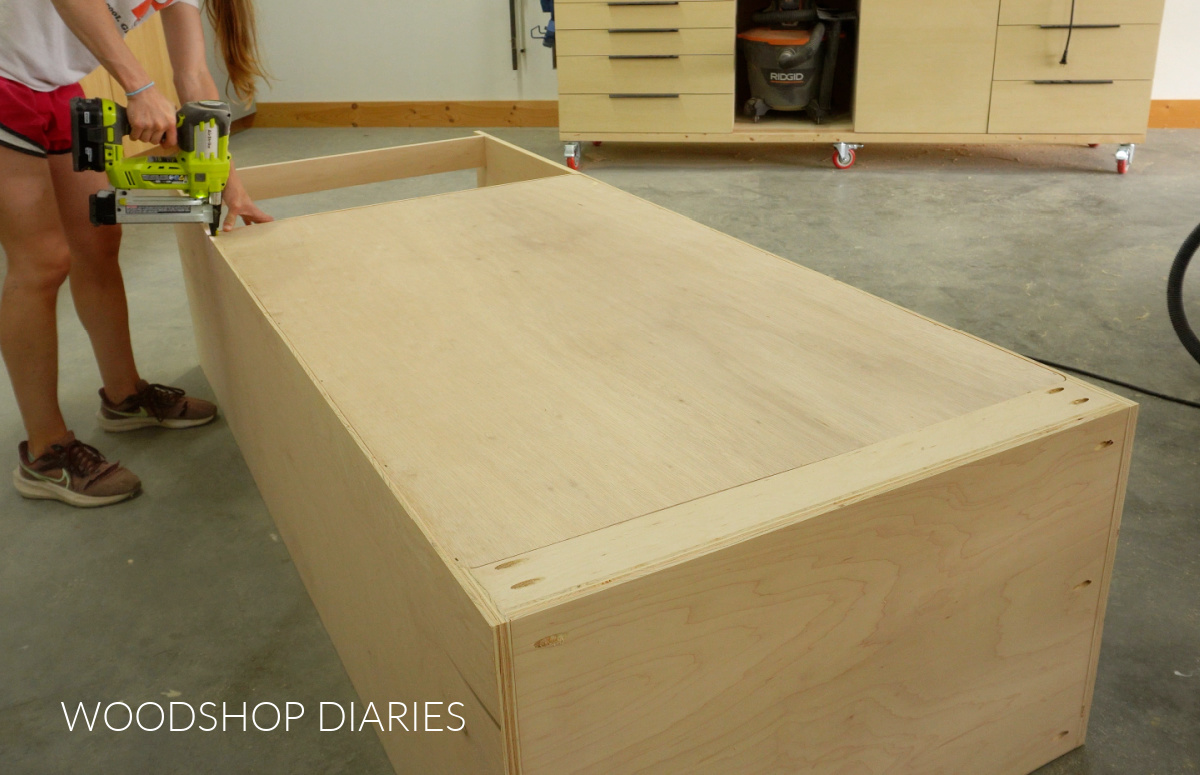
TIP: You could definitely skip routing and just staple (or nail) the back directly to the cabinet, but recessing the panel hides the edges from being seen on the sides.
I only added a back panel into the top section 1. to save on lumber and 2. because the drawers will cover the bottom section. But if you wanted to add a full back, feel free.
Next, I assembled a simple face frame using pocket holes and screws. I used 1x2s for the sides, a 1×3 for the top, a 1×4 for the bottom, and ¾″ square dowels for the drawer divider pieces in the middle.
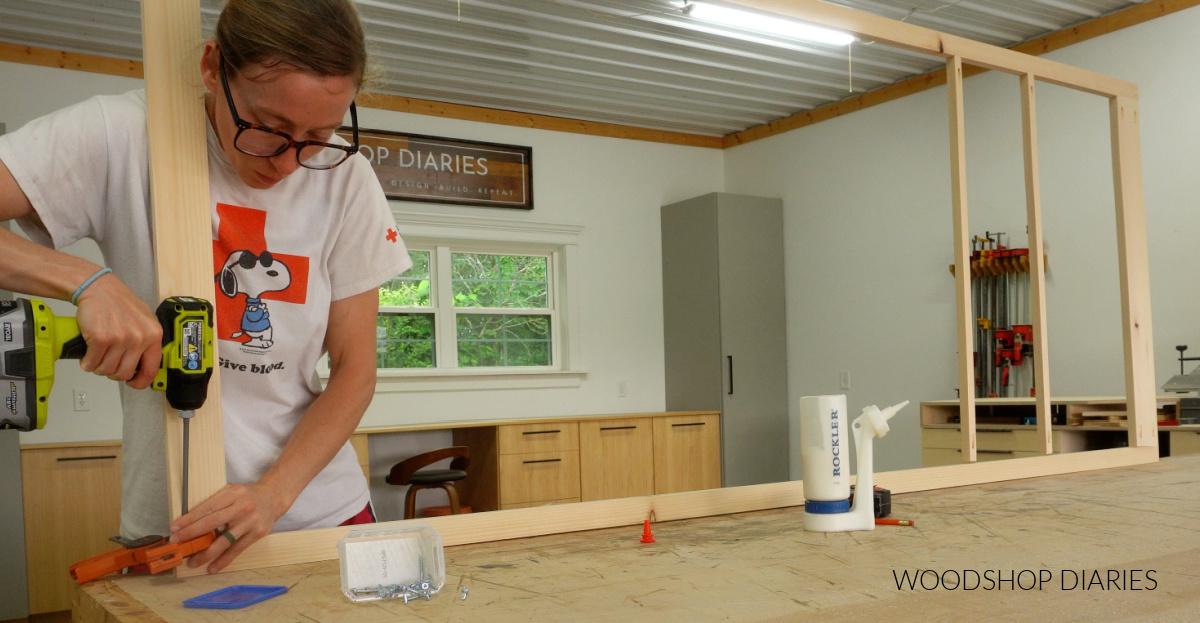
For the ¾″ dowel pieces, because they’re so small, they only fit one pocket hole on each end. So when I attached them on the face frame, I used wood glue on the ends to keep them from twisting.
TIP: A standard size pocket hole jig can work if you’re careful, but I recommend using a Kreg Micro Jig for these face frame pieces with pan head pocket hole screws. The smaller holes and screws are less likely to cause splits.
Learn how, when, and why to use the Kreg Micro Pocket Hole Jig here.
Then I glued and brad nailed the face frame onto the front of the cabinet box.
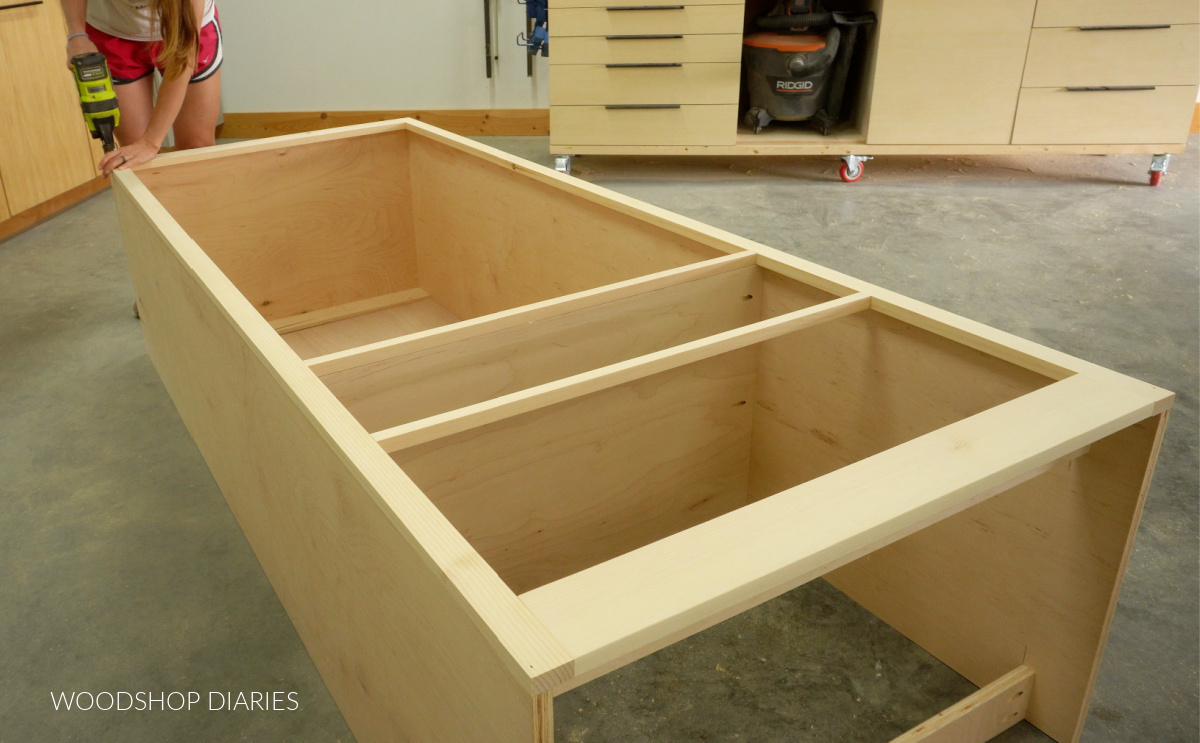
Prefer to print? Grab the printable building plans for this project here.
Step 2: Add Trim Details
Once of the reasons for the different size pieces for the face frame is because of the trim details I planned to add.
I needed a wider piece at the bottom to accommodate the 3 ¼″ baseboard piece that I added across it.
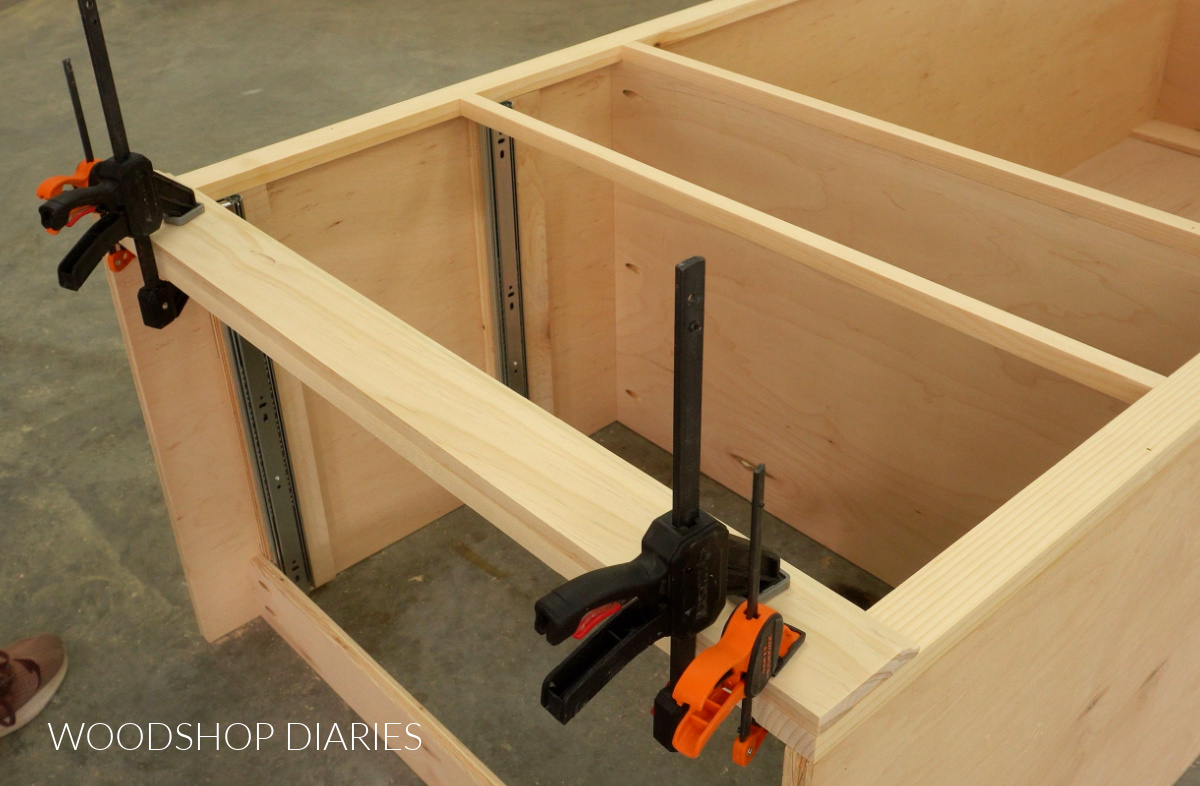
NOTE: Because this is a modular piece and I planned to butt cabinets next to it later, I cut the ends of the baseboard trim square at the bottom. If you wanted, you could miter the corners and wrap it around the sides.
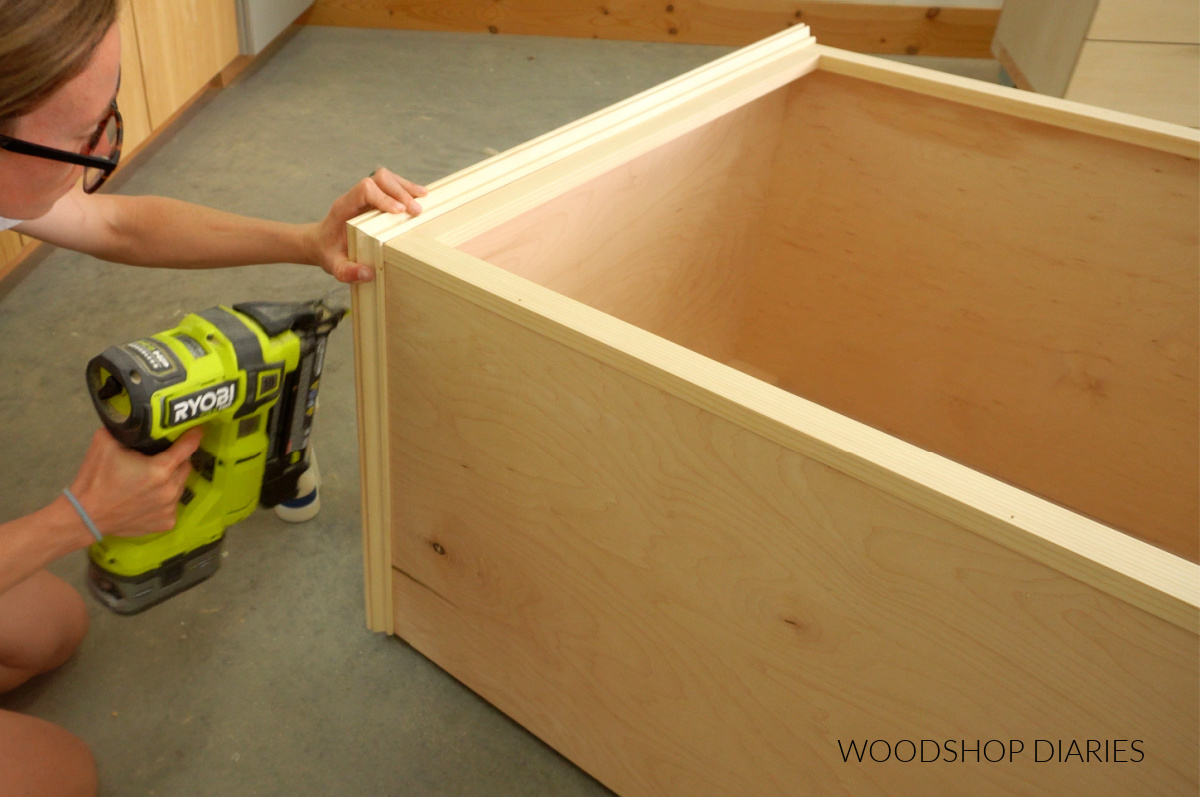
I wrapped 1 ⅜″ base cap molding around the top of the cabinet like shown below. I could have cut this square like the baseboard, but I didn’t plan to butt anything to this cabinet at the top, so I thought the trim would look nice on the sides, too.
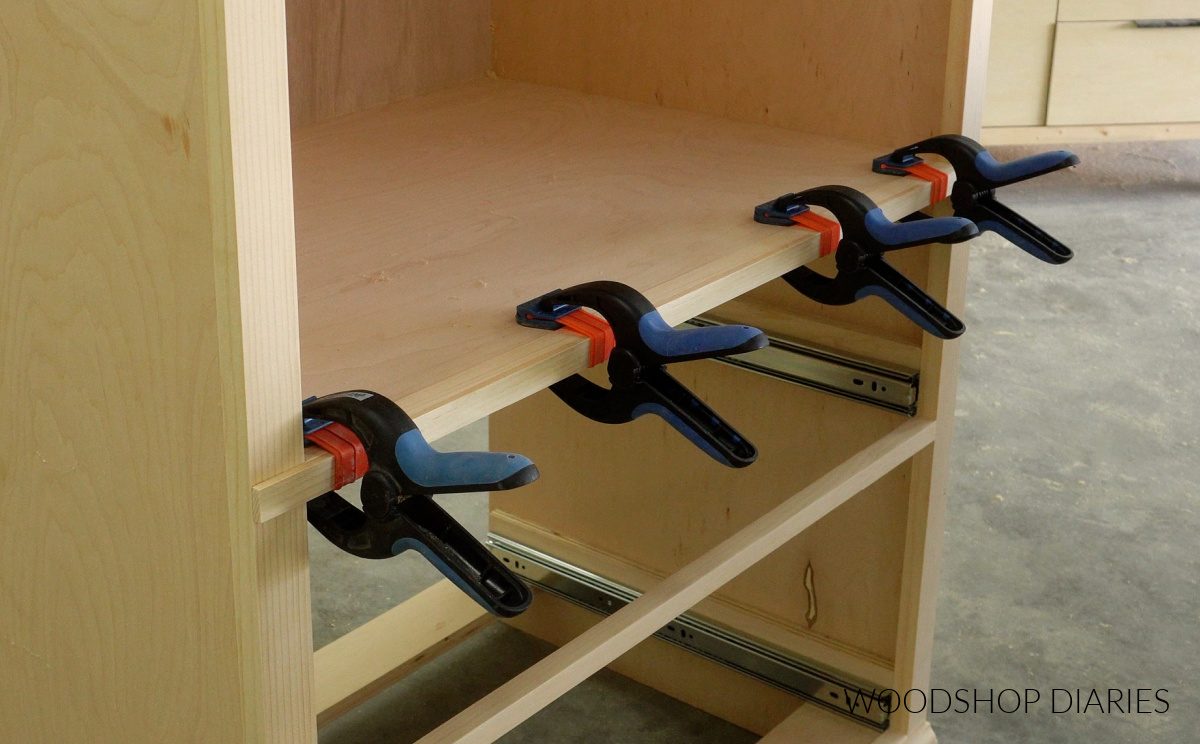
Lastly, I added a thin strip of wood (⅜″ x ¾″) across the front where the middle panel is. This just adds a little detail to help separate the top door section from the bottom drawer section.
All of the trim here is super customizable so feel free to adjust/modify to fit your style.
Step 3: Build and Install Drawer Boxes
Next, I added two pair of 20″ side mount slides into my cabinet. But, because I had a face frame, I first had to screw some ¾″ plywood strips to the cabinet sides to mount the slides.
These spacers help to “push” the slides out so they’re flush with the face frame opening.
RELATED: How to install drawer slides
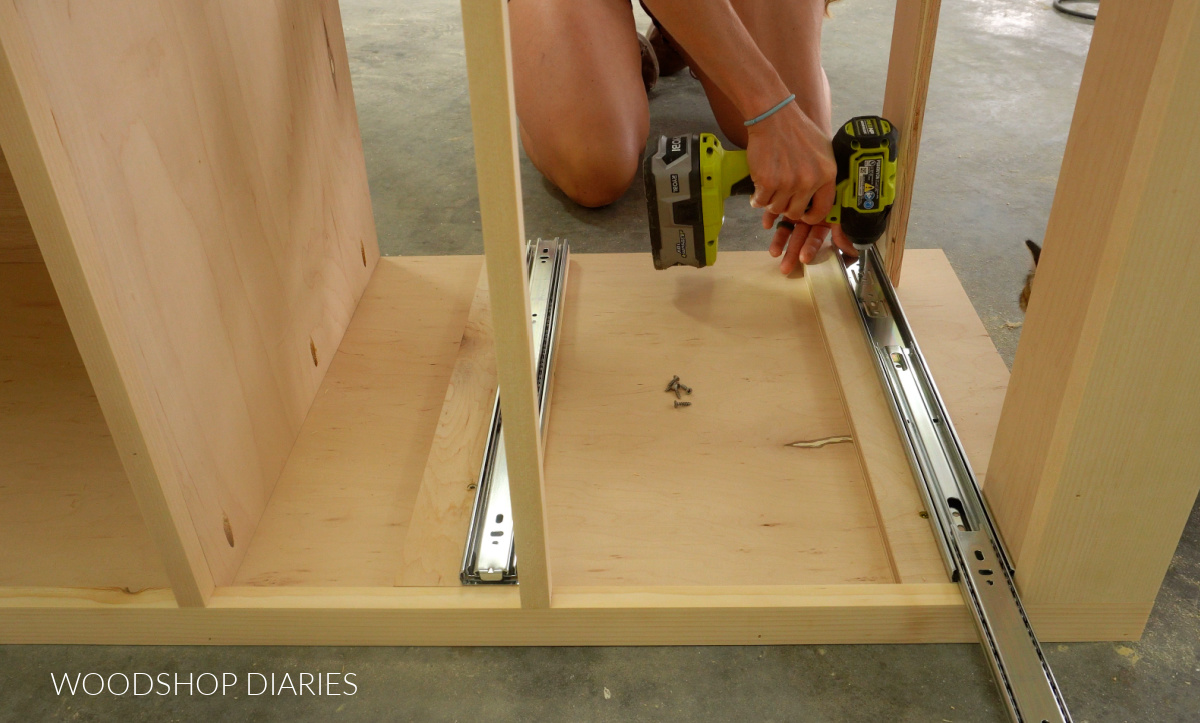
Once the slides were installed into the cabinet, I assembled two drawer boxes. I made the top drawer slightly smaller than the bottom (in height), but these could be identical in size, if desired.
RELATED: How to build a drawer box
I cut ¼″ dadoes into the sides of my drawer boxes to install ¼″ plywood bottom panels, but if you don’t have a table saw or a router to cut dadoes, that is OKAY!
Alternatively, you can simply glue and staple or nail the ¼″ plywood panels onto the bottom of the drawer box sides. Dadoes aren’t necessary.
Normally, I assemble my drawer boxes using pocket holes and screws on the front and back sides. The pocket holes are then covered by the drawer fronts…usually.
However, this time, I wasn’t installing solid drawer fronts, so the pocket holes wouldn’t be covered. So instead of pocket holes, I just screwed these boxes together using wood screws through the sides.
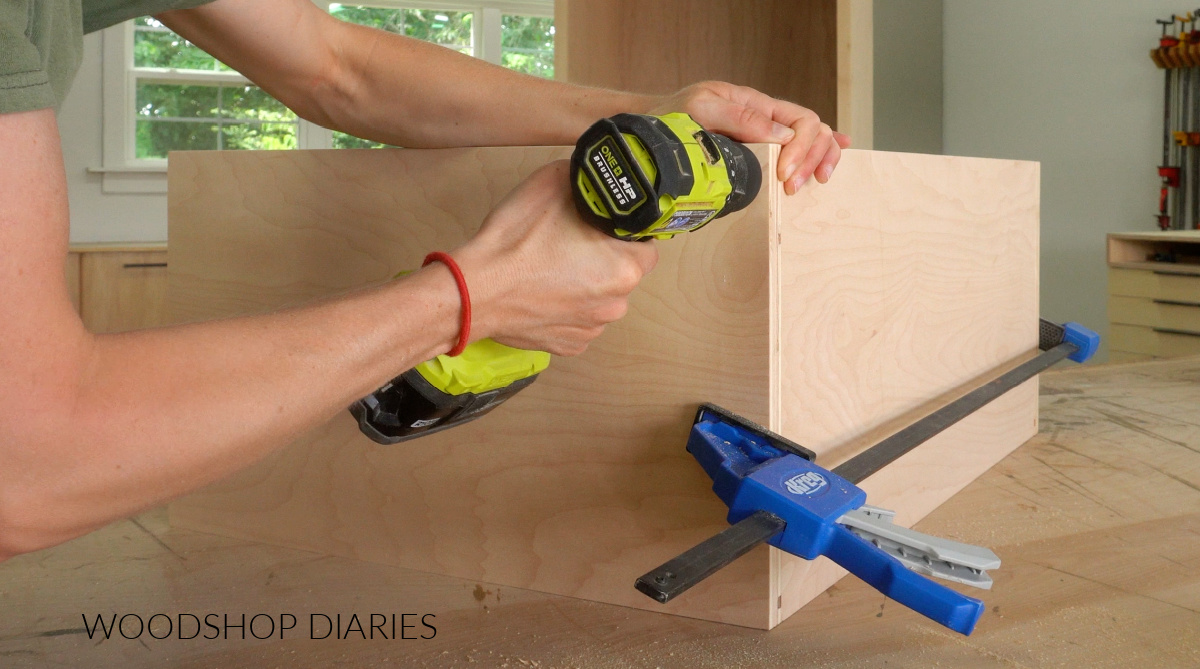
That way the fronts stay “clean.”
Once the drawer boxes were together, I installed them into the cabinet. I found it easiest to remove the section of the drawer slide that mounts to the box and screw this directly to each side of each drawer.
Then, I could slide these right into the cabinet.
RELATED: How to install drawers
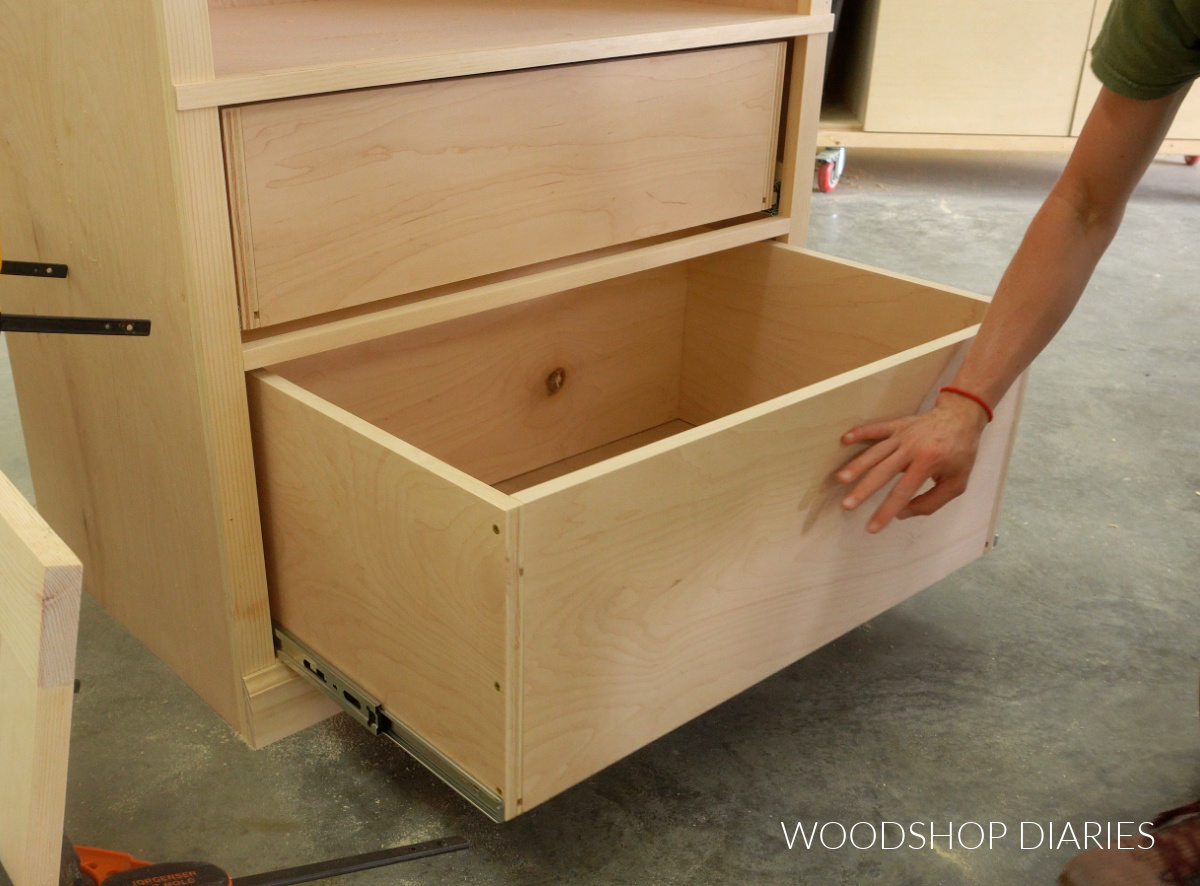
Step 4: Attach Drawer Fronts
Then, I assembled two drawer front “frames”…one for each drawer box.
I mentioned that I didn’t opt for solid drawer fronts in this case.
Instead of assembling a solid front, I just built frames from 1x2s using pocket holes for the drawer fronts.
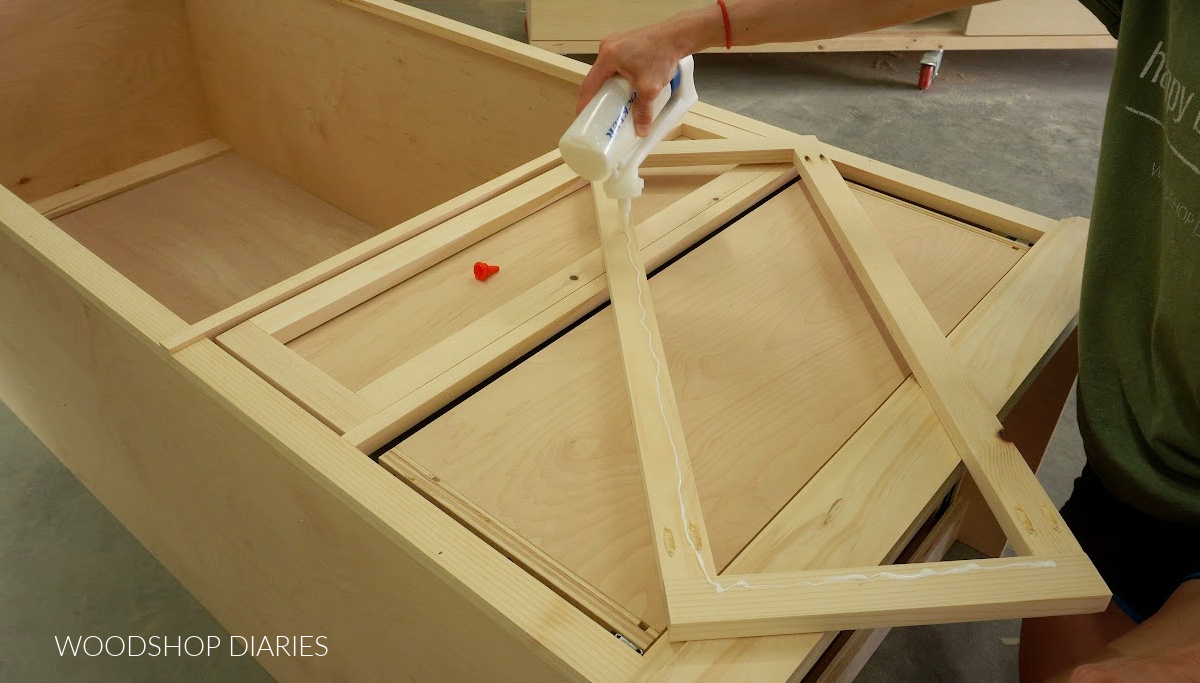
Then, I laid my cabinet box (with drawers installed) on its back, arranged my fronts on my boxes, and carefully glued and brad nailed them in place.
Laying it on it’s back made it easy to ensure my gaps were even on all sides (⅛″ gaps) while gravity helped hold everything in place.
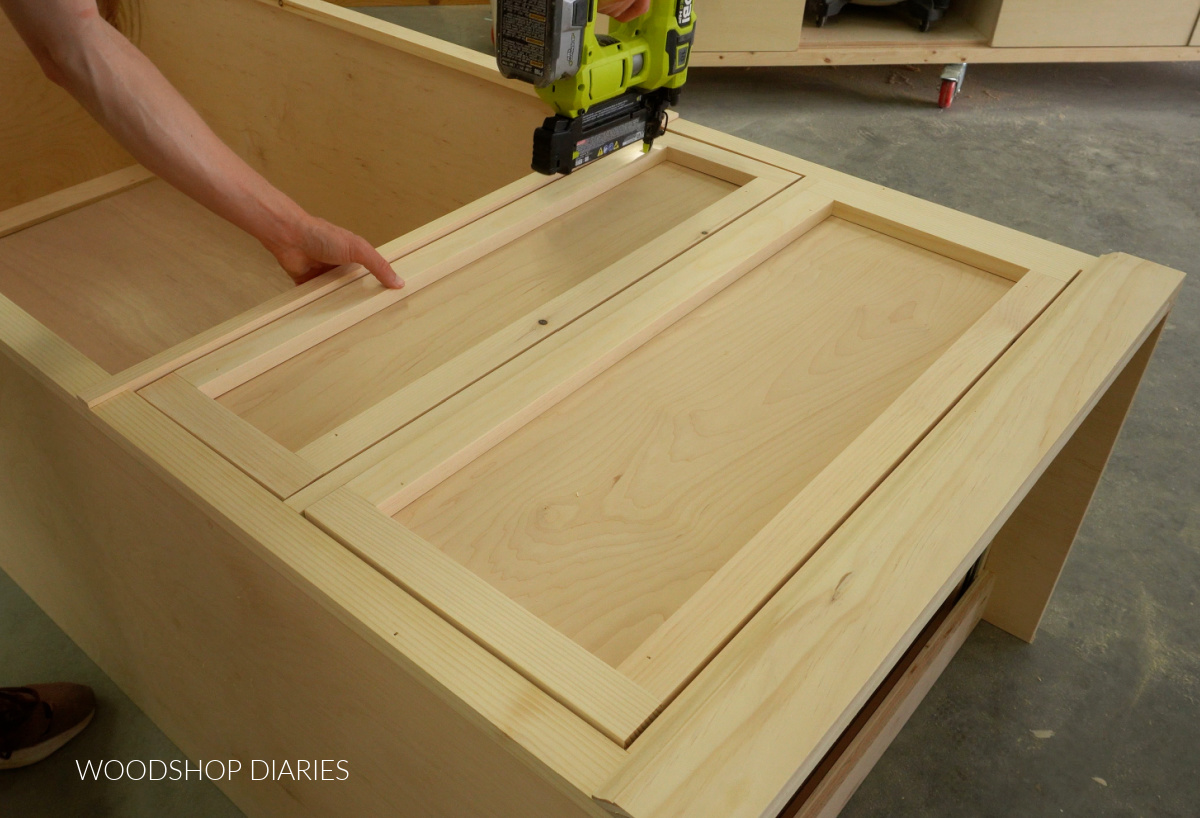
By the way: This is why I didn’t use pocket holes to assemble the drawers. These small frames wouldn’t have covered the holes.
Step 5: Add Cabinet Doors
Next, I needed to add doors into the top section of the armoire. There are plenty of ways to build a cabinet door, but for these, I built two door frames from 1x3s using dowels and wood glue.
RELATED: How to use a dowel jig
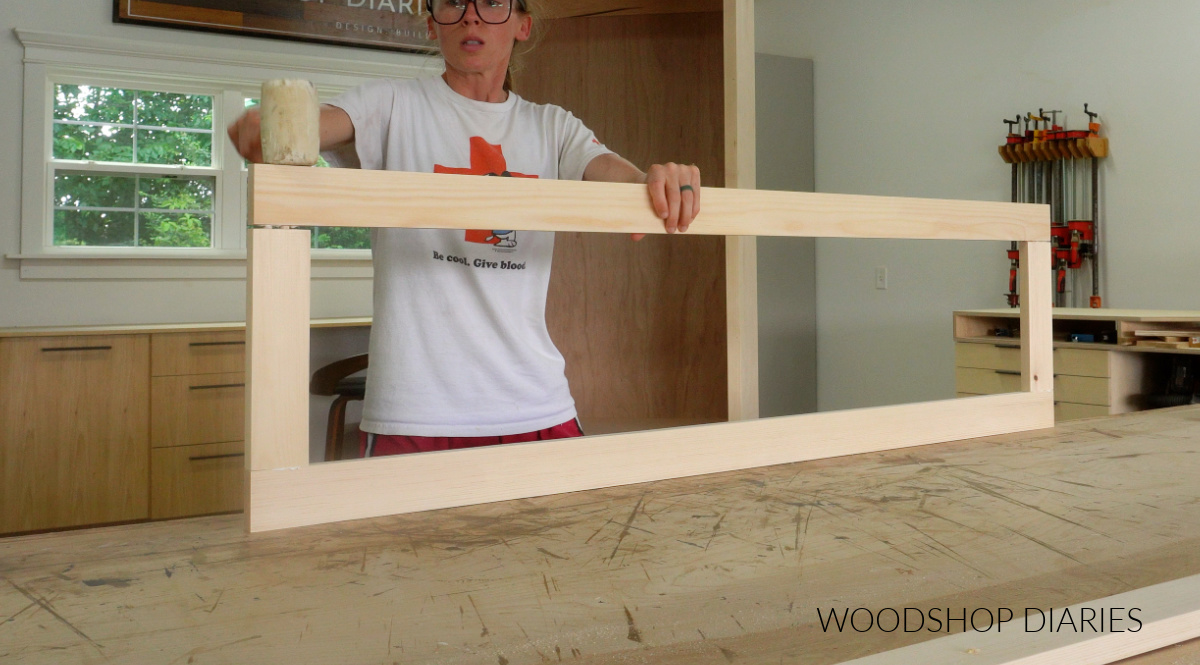
Pocket holes and screws would also work for assembling the door frame if you didn’t want to use dowels.
Then, I used a router with a rabbeting bit to route a rabbet around the back side of the opening.
This allowed me to cut some ¼″ plywood panels to glue inside this rabbet to give me a simple shaker style door.
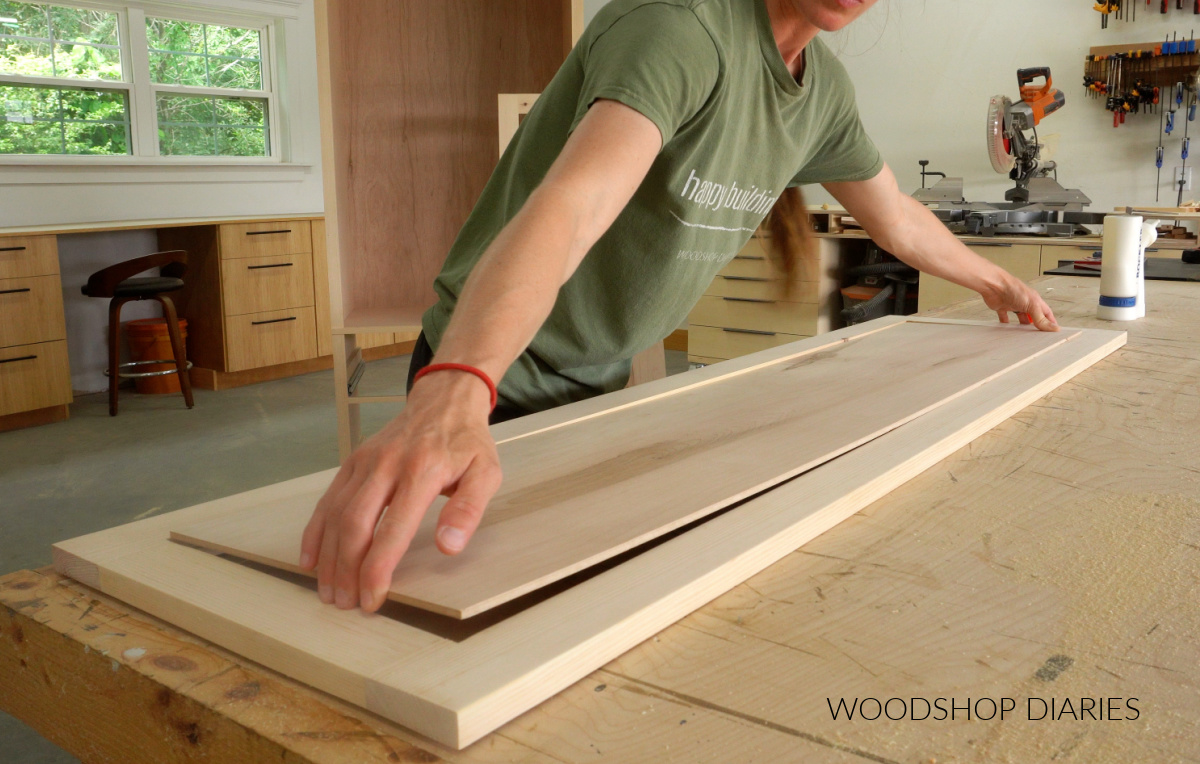
Of course, you could make your cabinet doors other ways, too. As long as they’re the right size, you can build them however you’d like!
RELATED: 7 ways to build a cabinet door
If you’re familiar with concealed cabinet hinges, you know that inset face frame hinges are expensive and kind of a pain to install. Learn more about hinge types here.
So a simple workaround is to use inset FRAMELESS hinges and add some spacer blocks behind them. I glued and brad nailed some small 2″ x 2″ plywood blocks just behind the face frame on each side of the cabinet–one toward the top, one toward the bottom and one in the middle.
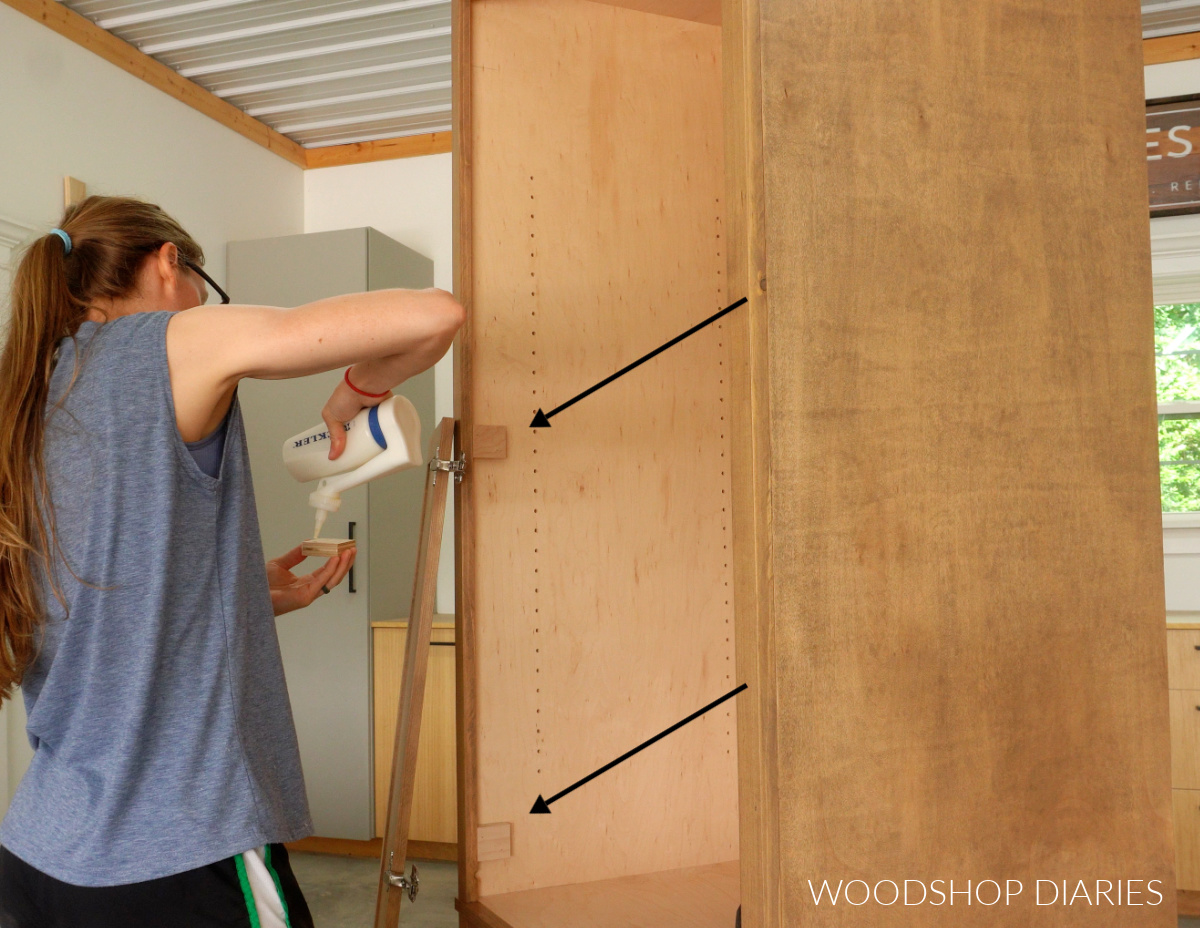
Then, I installed my inset frameless hinges to the doors so that the locations corresponded to where my blocks were.
RELATED: How to install concealed hinges
This allowed me to install my hinges right onto these spacer blocks. So while it’s not a frameless cabinet, with the spacer blocks, it acts as one as far as the hinges are concerned.
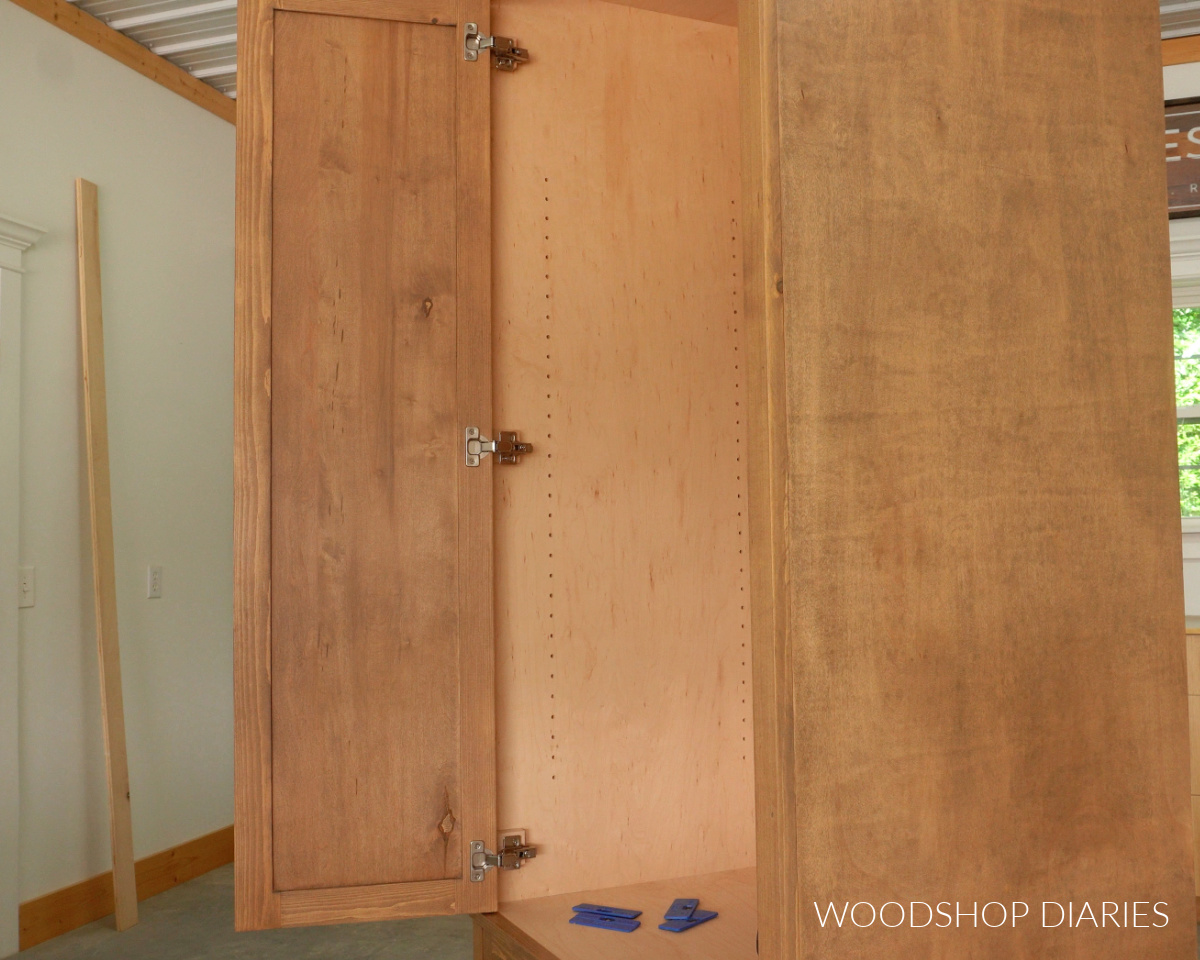
In the top cabinet, I opted to drill shelf pin holes to add adjustable shelves.
RELATED: How to add adjustable shelves
But, it’s deep enough and tall enough, that a hanging rod would also be a great option to hang and store clothing inside.
Step 6: Finish
Once the shelf pin holes are drilled and/or hanging rod is added (whichever you choose), it is ready to finish.
I stained this piece using a custom stain blend of 6 parts Minwax Provincial and 1 part Minwax Simply White. Then I applied a few coats of Minwax Polycrylic to seal it.
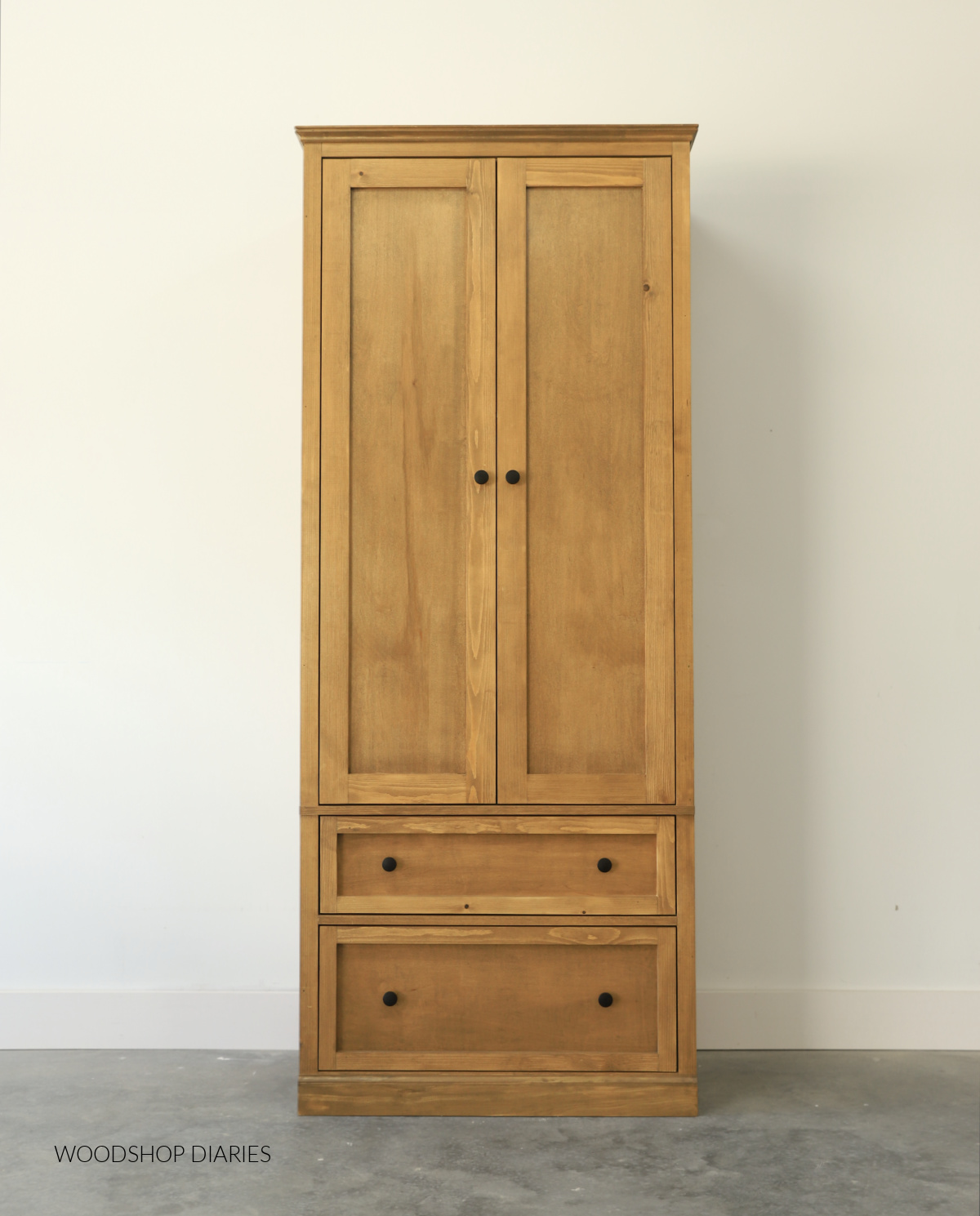
Then, I added some simple black knobs and placed my shelf inside using shelf pins.
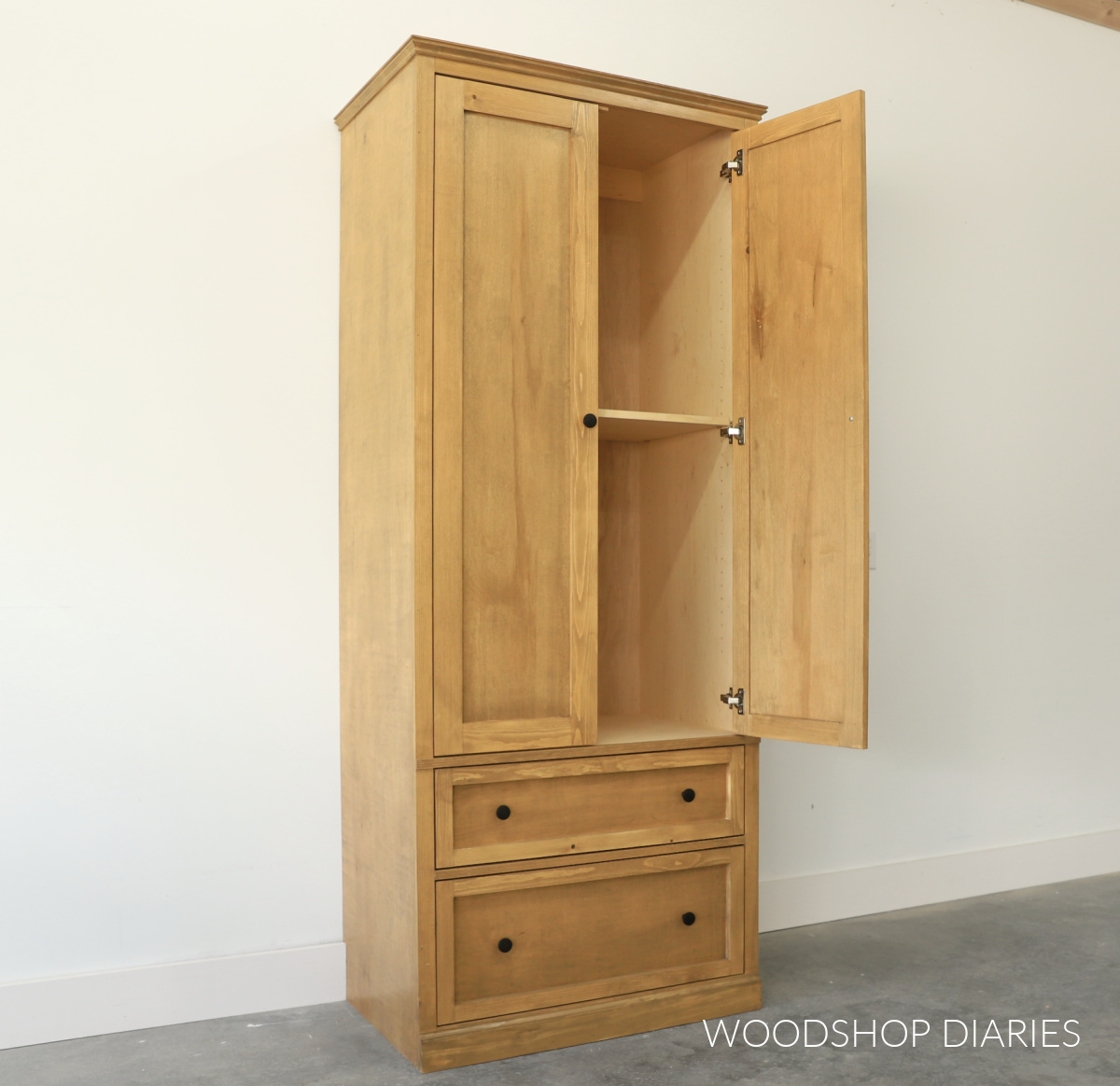
At this point this piece can stand alone (though it is recommended to be secured to prevent tip over), or be installed as a built in with other cabinets.
To install “built in,” cut away baseboard where cabinet(s) are going, place box flat against the wall and secure with screws to the wall studs through the top back support strip.
Ready to build your own? Grab the printable plans for this modular armoire cabinet with drawers here.
Looking for More Tall Cabinet Storage Ideas?
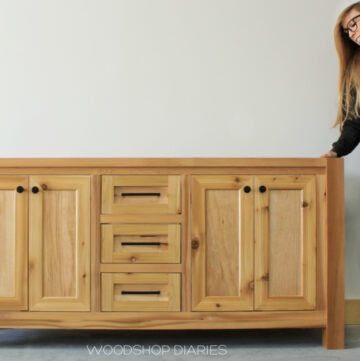
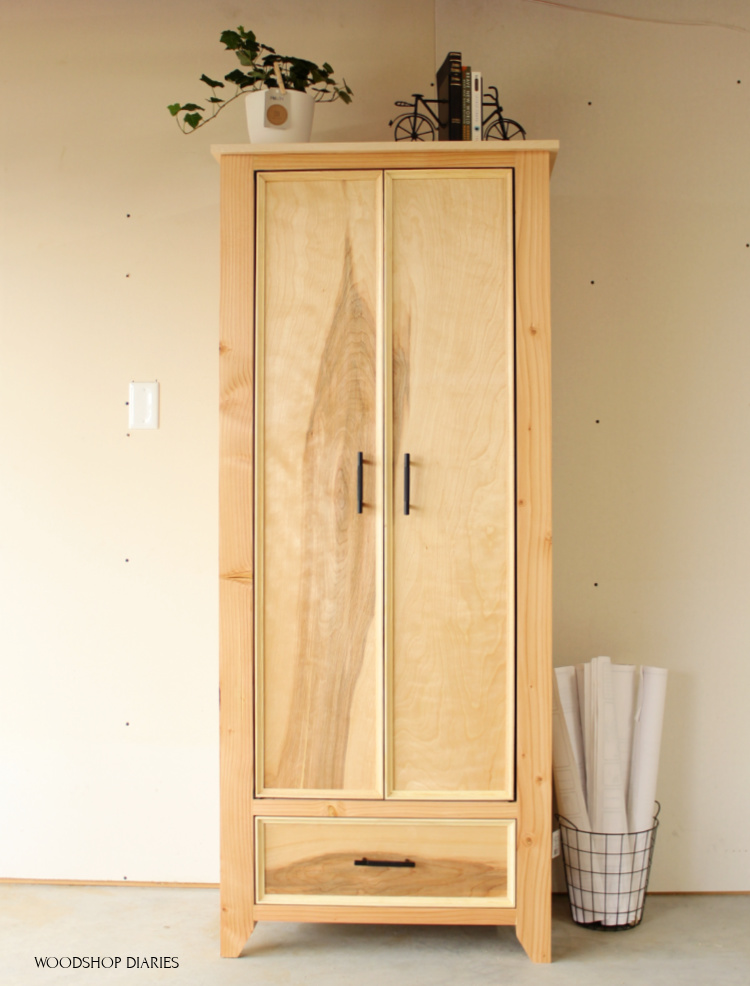
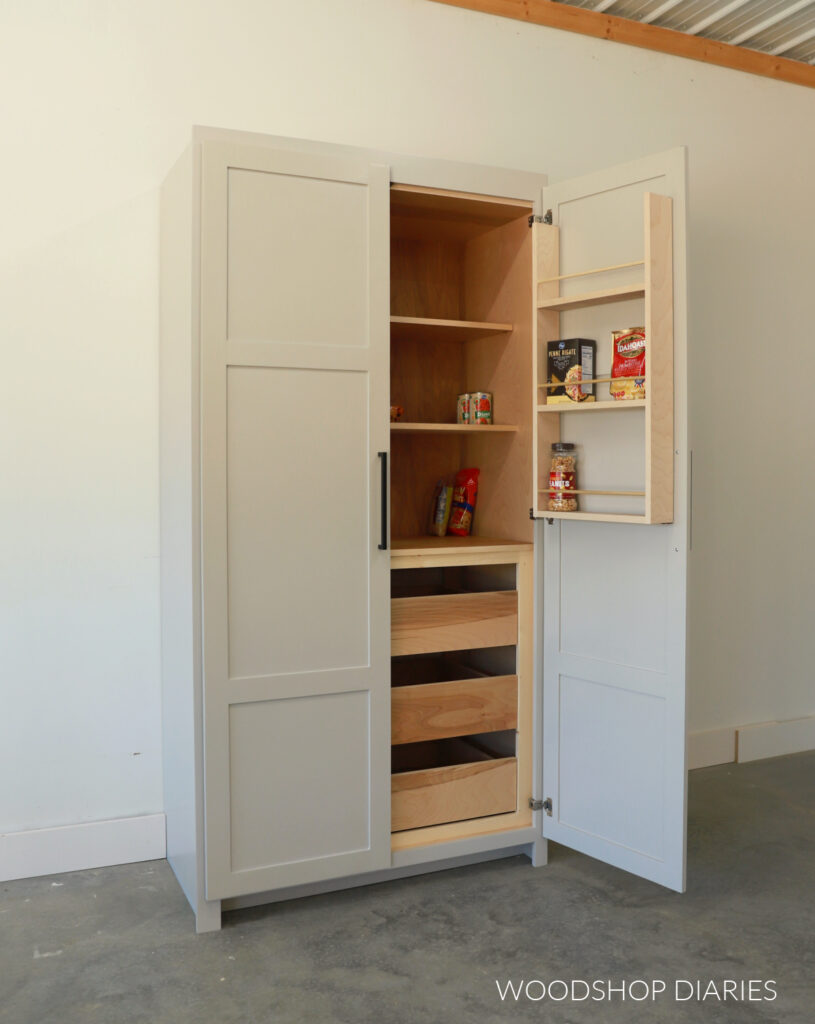
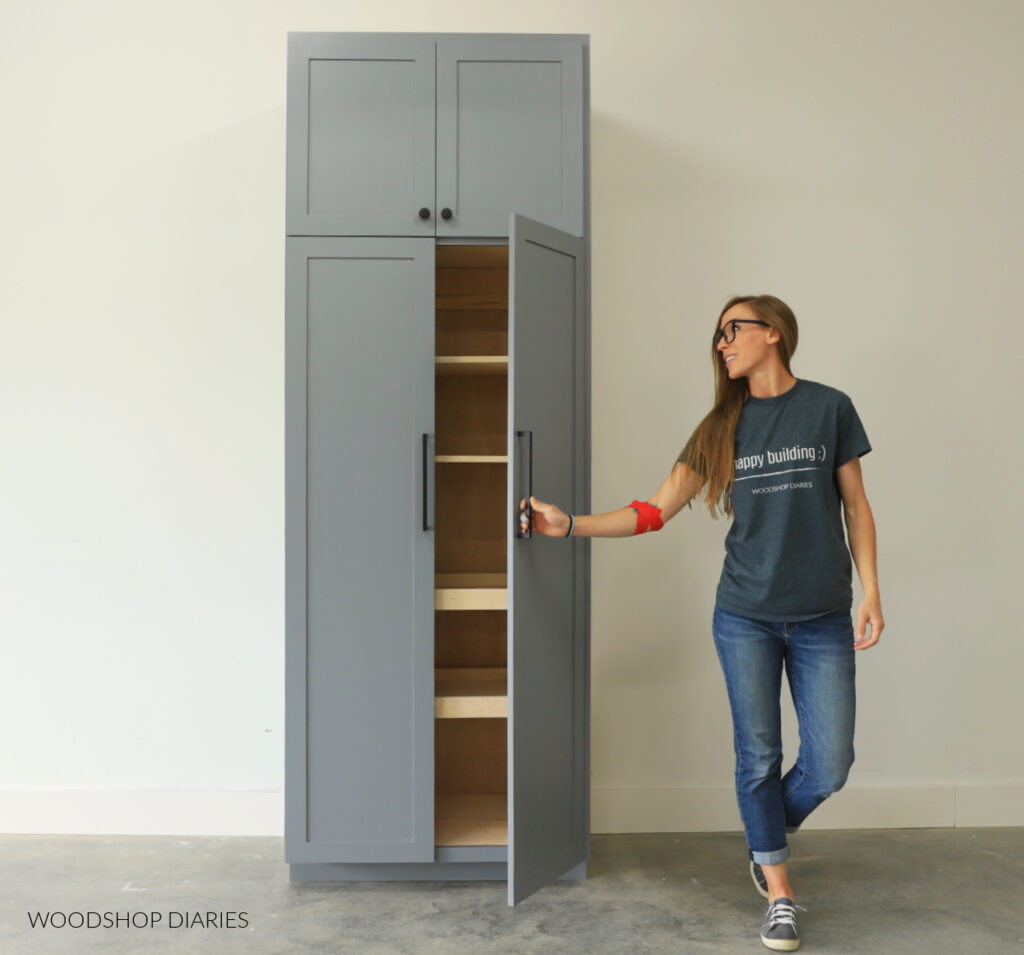
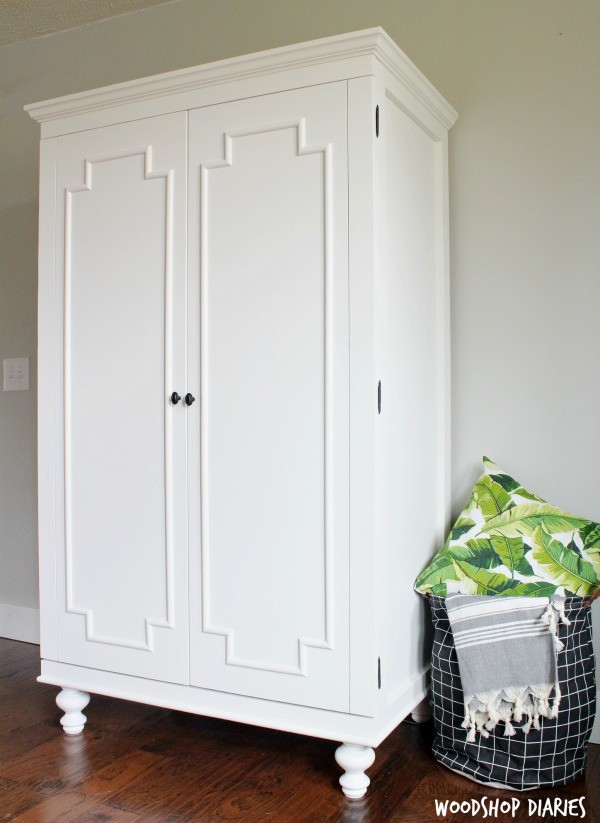
Enjoyed this project, but looking for more tall cabinet project ideas? Here are a few of my favorites you might enjoy browsing. Click the image(s) below to see how to build each one:
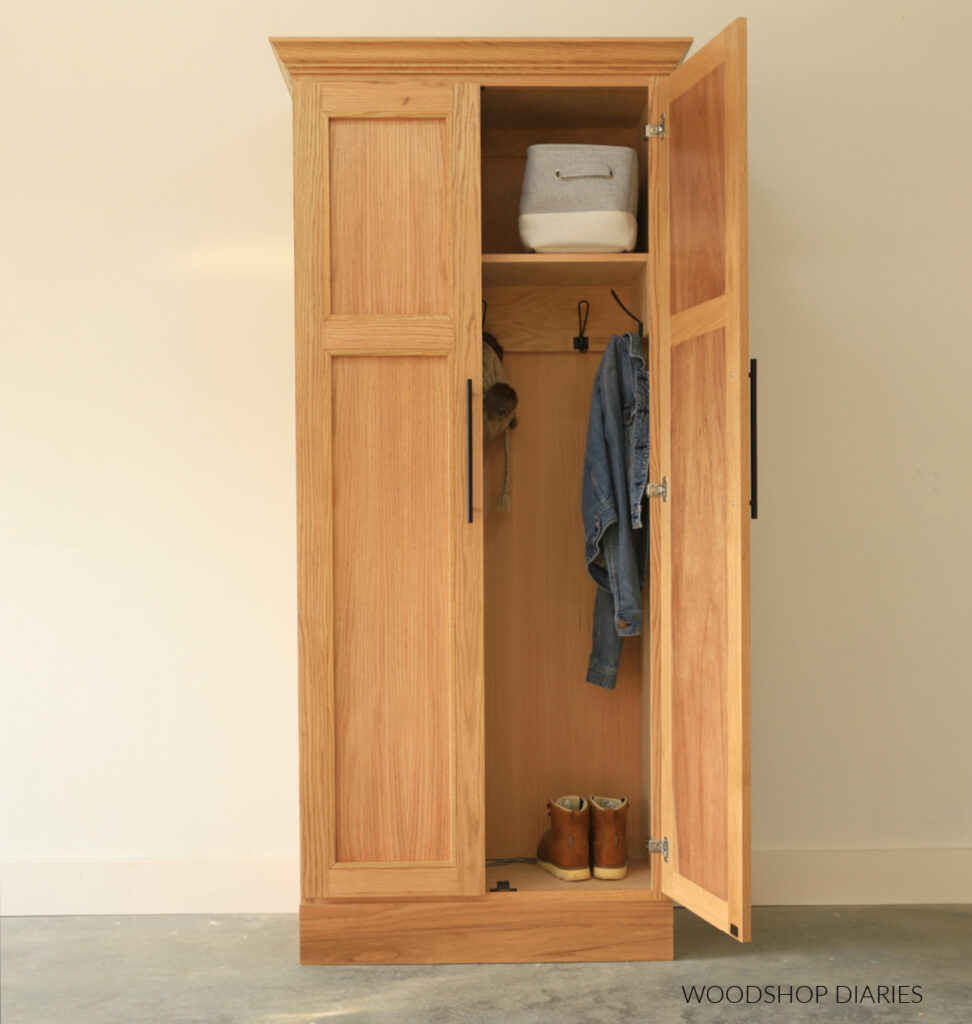
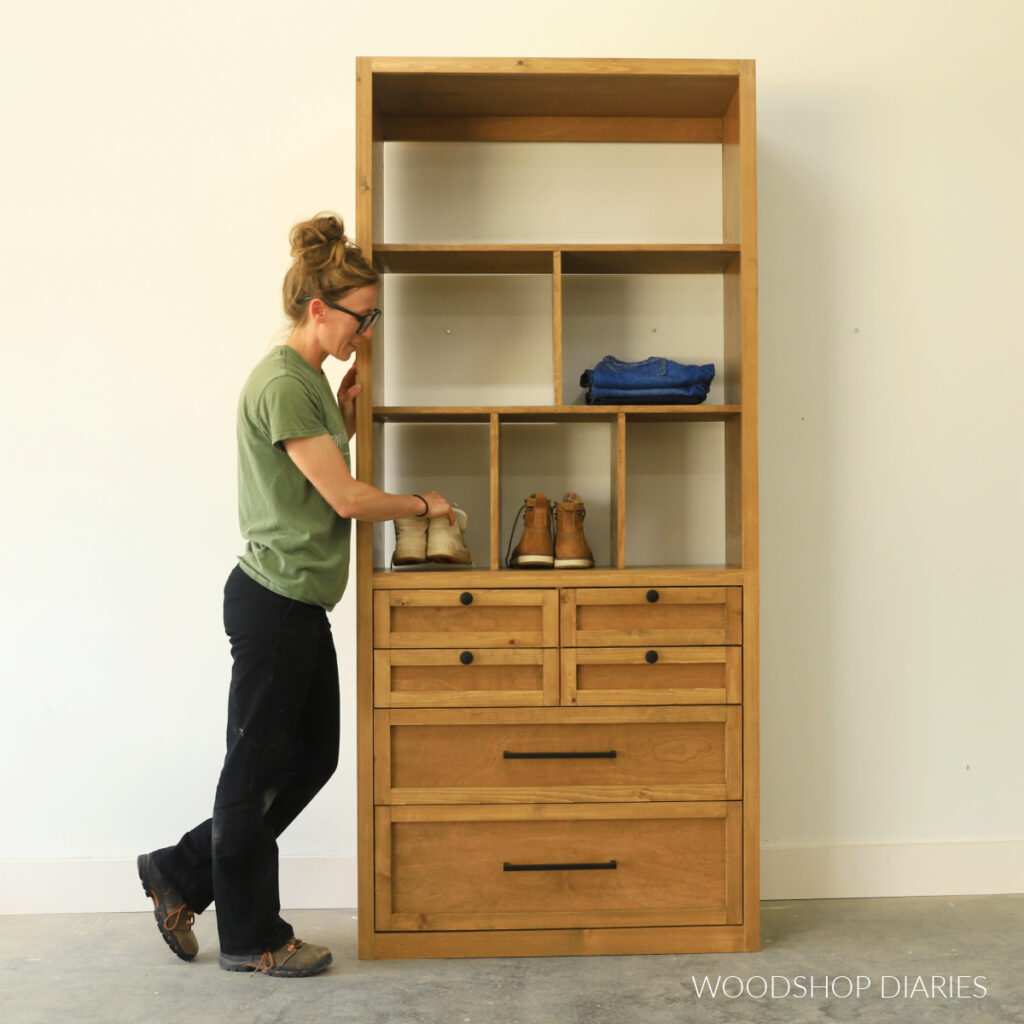
If you enjoyed this post, be sure to save it for later by pinning or sharing to your favorite social channel!
Until next time, friend, happy building!