
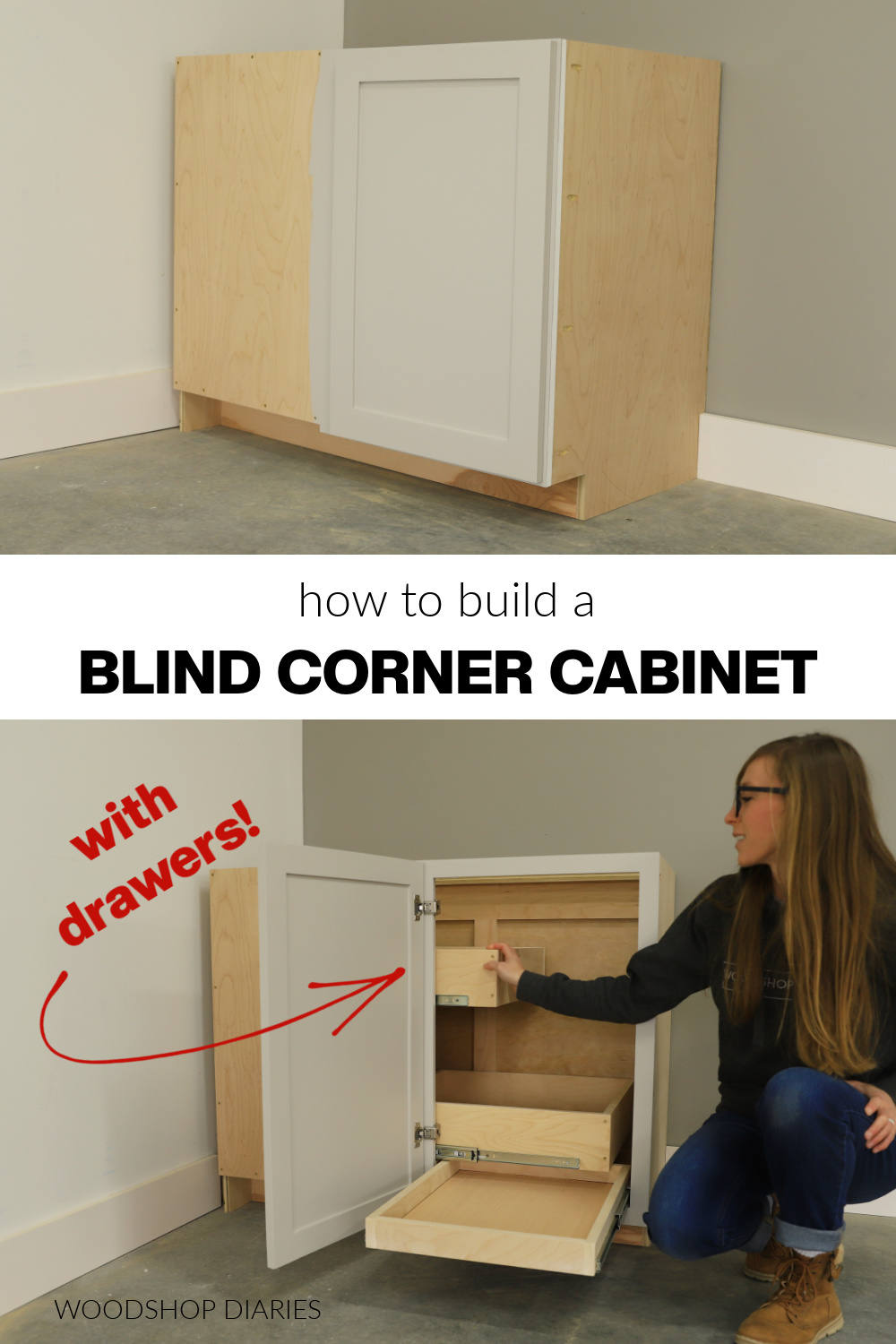
In this post, I’m showing you how to build a basic DIY blind corner cabinet with optional drawers to make accessing that hard to reach space easier!
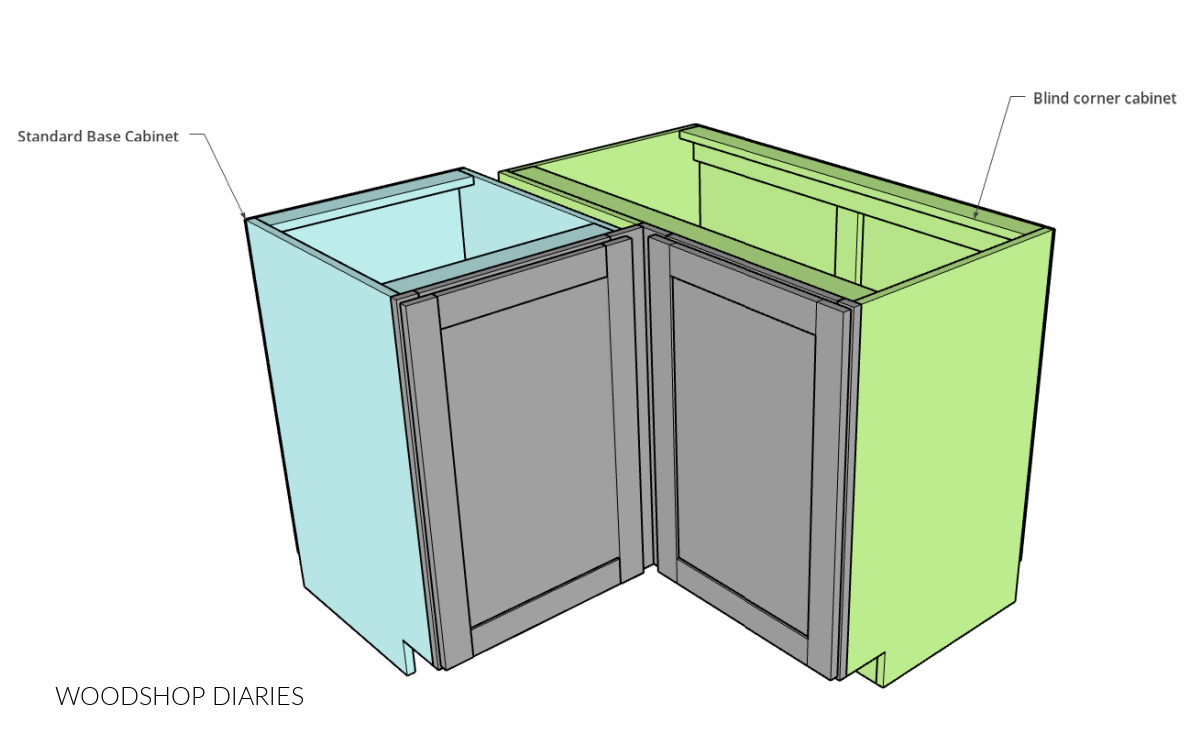
If you’re not familiar with what a blind corner cabinet is, it’s essentially a really wide base cabinet where one half (roughly) has a door and the other half is covered. Like this:
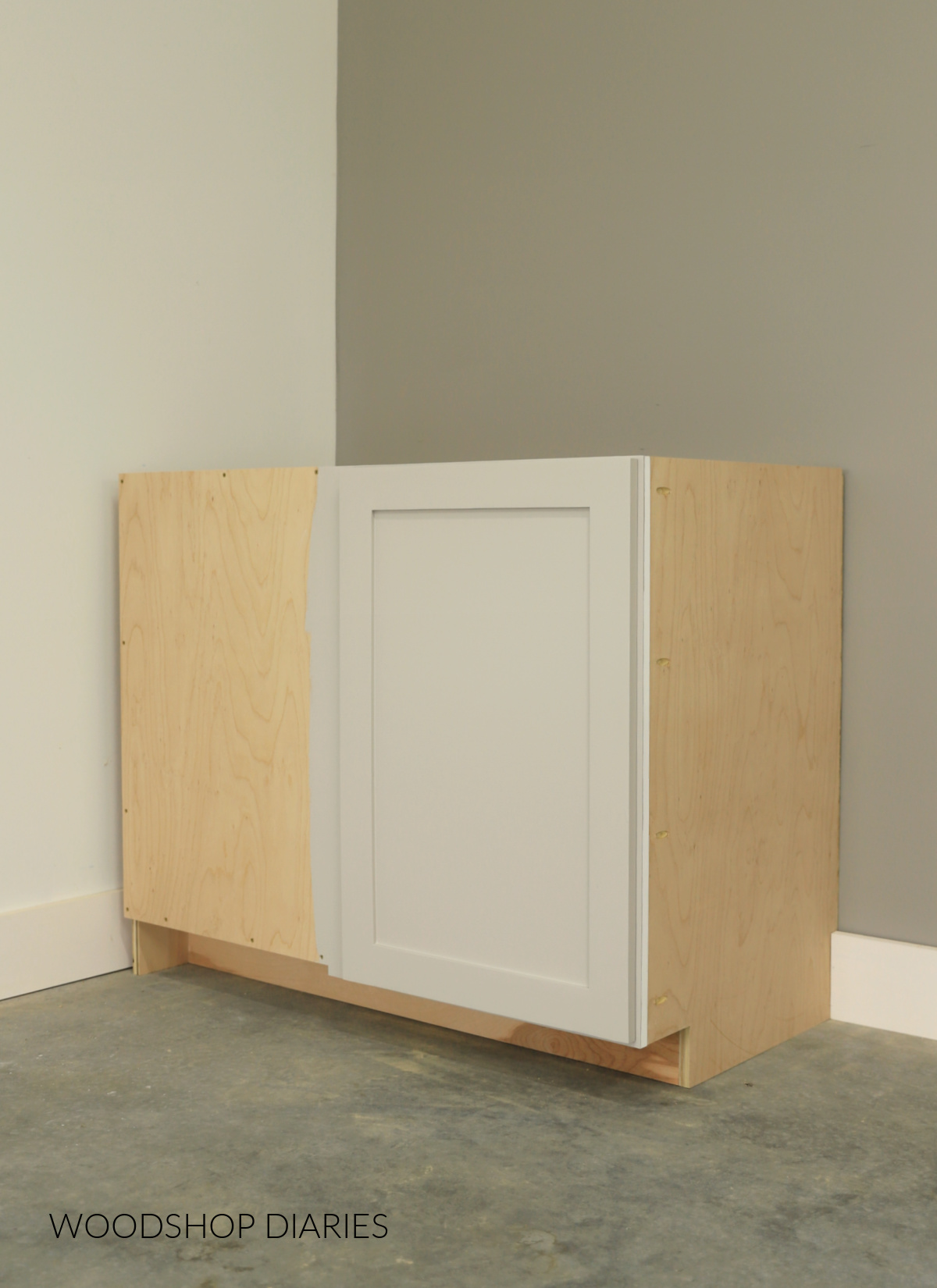
Once a blind corner cabinet is installed, another base cabinet butts up to this covered section.
This allows that space in the corner to be utilized for storage–it’s just not super easily accessible. Pros and cons, you know?
Looking for other corner cabinet solutions? Check out how to build a corner base cabinet with bi-fold doors here.
There are lots of premade shelf kits to help make that blind corner cabinet space easier to get to, but most of them are upwards of a few hundred bucks. Yikes!
So in this post, I’m sharing a much cheaper way to utilize that corner space with some custom drawers.
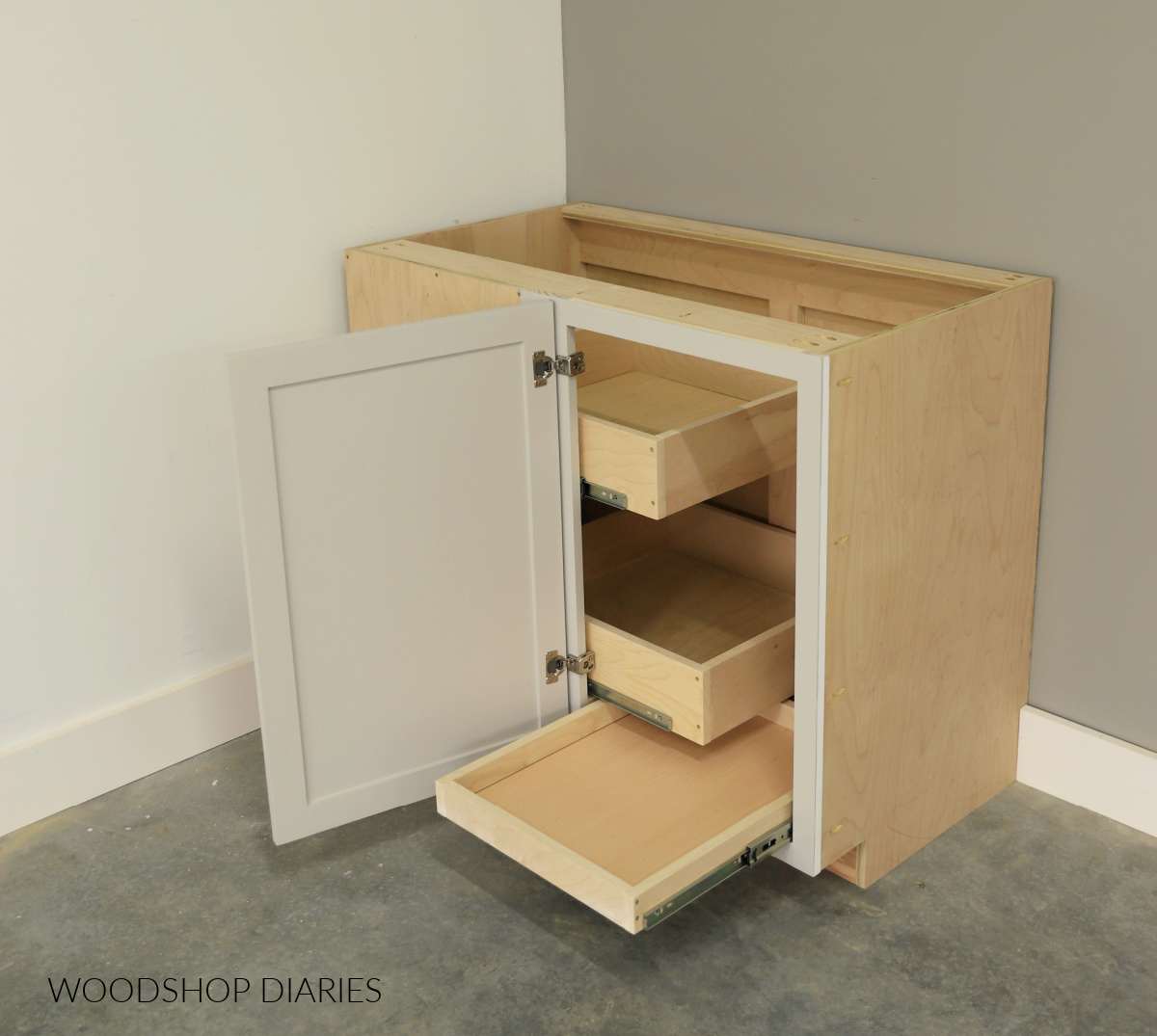
Of course, if you just wanted to keep it simple and add a shelf, you certainly can. Either way, if you’re ready to get building a DIY blind corner cabinet, let’s dive in.
*This post contains affiliate links. See website policies.
What to know before building
Blind corner cabinets can be built in either orientation–with the door on the left side or the right side. It just depends on your layout and room design which side you’d prefer the door to be on.
In my case, the door is on the right side. If you wanted it on the left, the dimensions and plans don’t change, you just assemble the pieces so that they’re mirrored what’s shown here.
Overall Size
The dimensions of this blind corner cabinet are 23″ deep (not including the door) x 34 ½″ tall x 42″ wide. The door adds an additional 1″ to the depth making it 24″ deep overall.
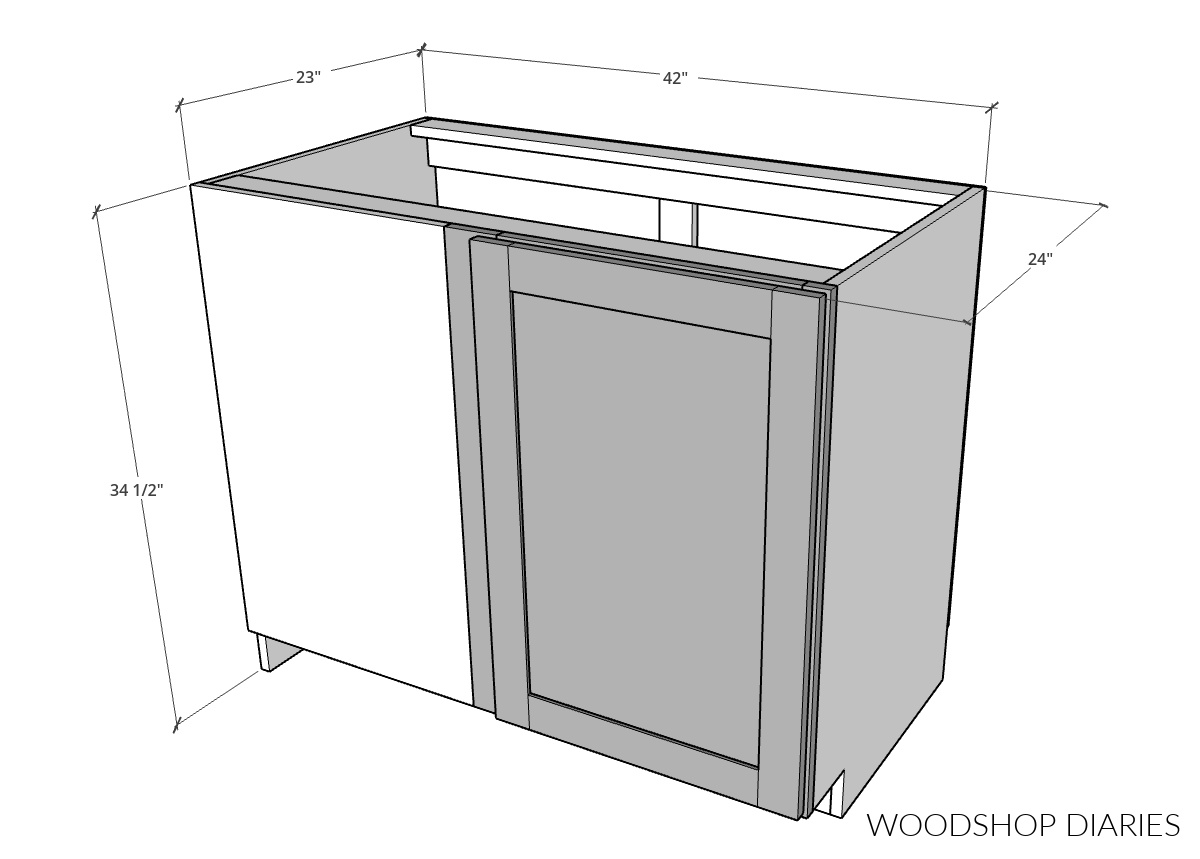
Blind corner cabinets can come in various widths (there’s no one standard size), but they typically range from 36″ – 42″ wide.
While you can customize to any size you need (within reason), the typical cabinet opening falls between 15″ – 18″ wide.
Installation considerations
While blind corner cabinets are installed into the corner of a room, they are not installed ALL THE WAY in the corner.
Normally, they’re pulled from the side wall a few inches to avoid running into issues with unsquare or heavily mudded drywall corners.
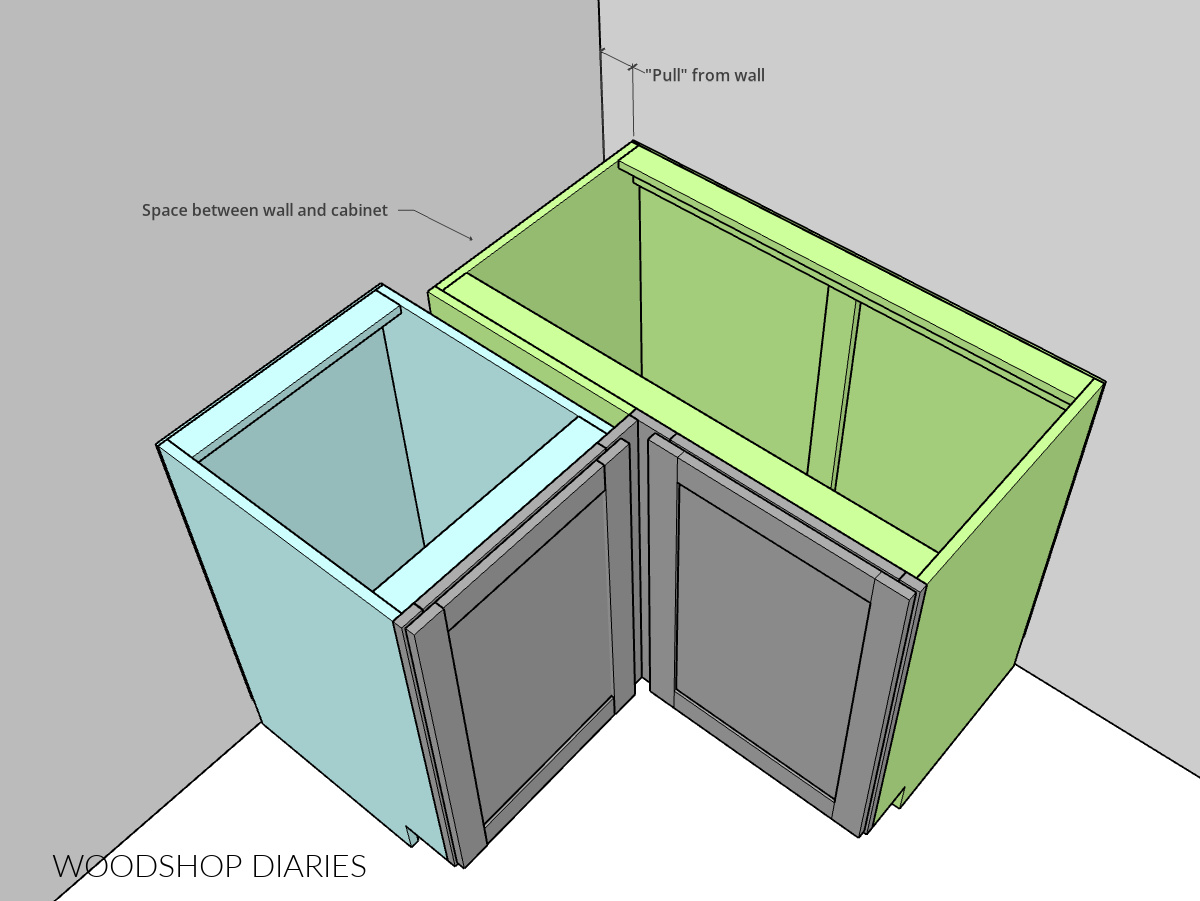
That’s an important consideration when laying out your cabinets and figuring their dimensions to fit your space.
Another thing to consider with blind corner cabinets is that the cabinet that butts up to it in the corner will need an additional filler strip in order to allow the doors/drawers to open without obstruction.
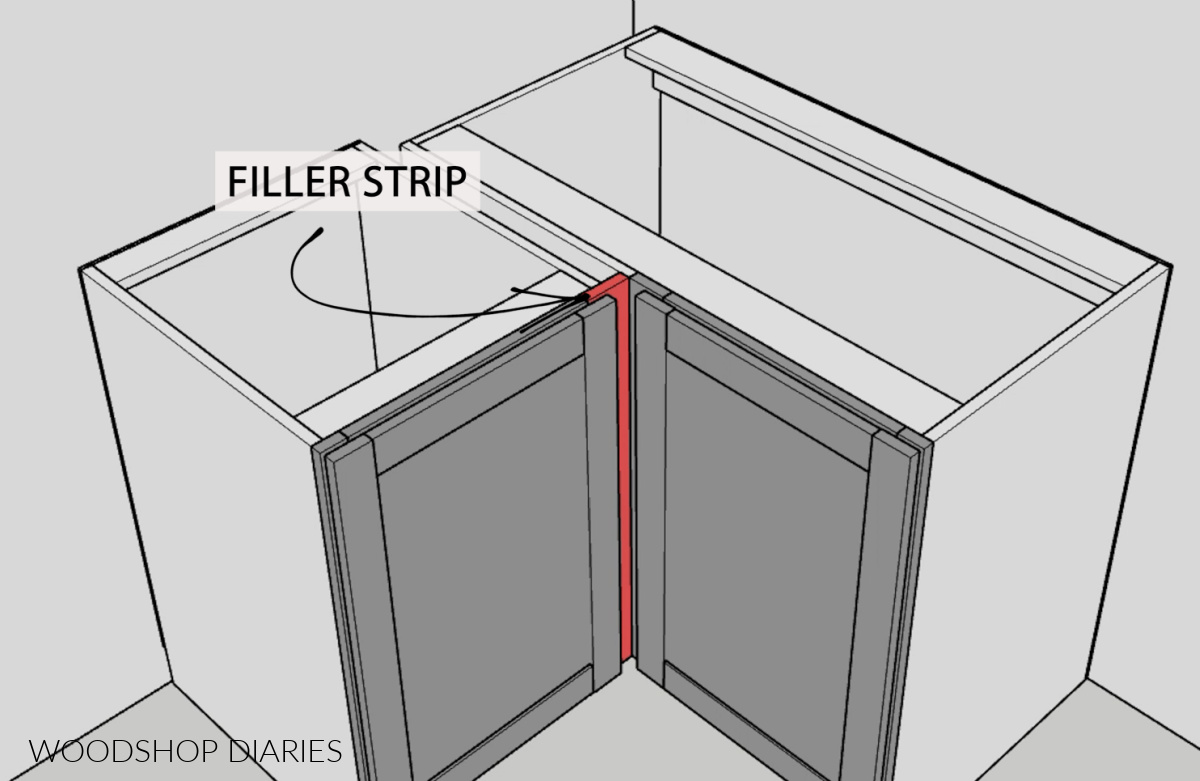
The amount of filler needed will depend on the overlay and what type of cabinet is going there (drawers, doors, etc), but this is also important to consider when laying out your cabinets.
Enjoy DIY projects and woodworking plans? Sign up for priority access for the latest posts on Woodshop Diaries!
How to build a blind corner cabinet
If you prefer to watch, I’ve shared the full build video with tons of tips, behind the scenes, and additional details on my YouTube Channel here.
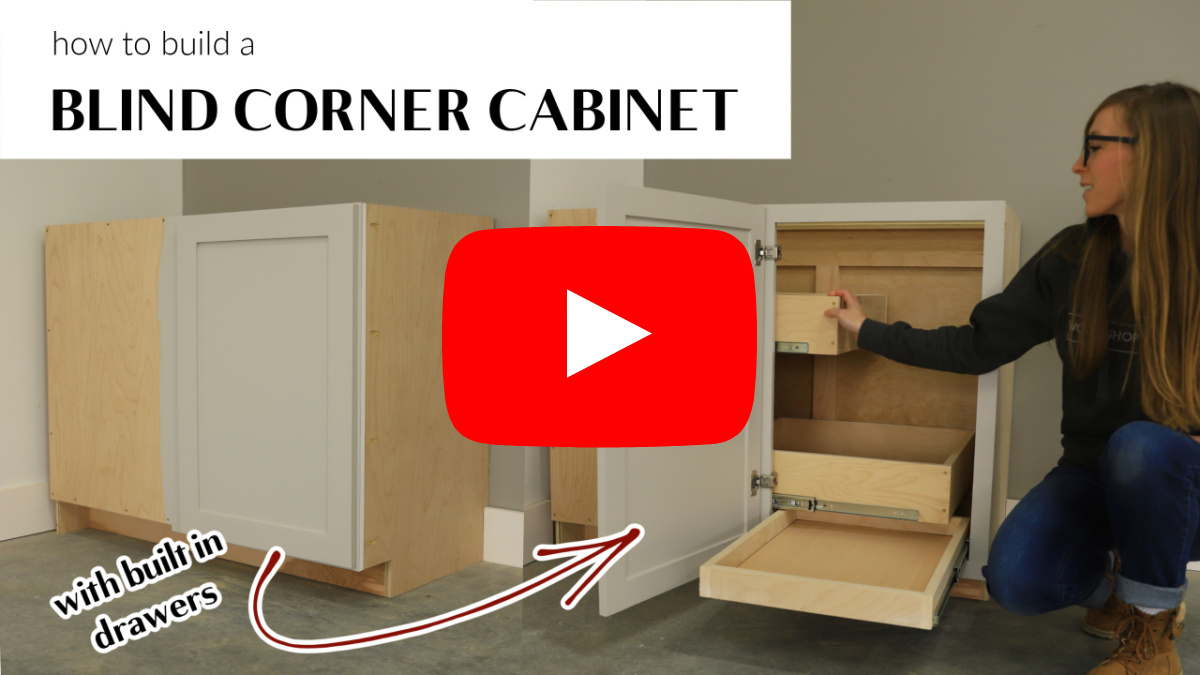
Love watching how-to videos? Subscribe to my YouTube channel for plenty more where that came from!
Prefer to print? Grab the printable built in cabinet building plans available here:
You may find these resources helpful throughout the build:
Tools & Materials
Tools:
Check out this post for the top ten tools I recommend for cabinet building
- Drill/Driver
- Circular Saw
- Cutting Guides–Kreg Rip Cut & Kreg AccuCut (optional)
- Pocket Hole Jig
- Jig Saw
- Miter Saw (optional)
- Concealed Hinge Jig
- Shelf Pin Jig (optional–only need if adding a shelf)
Materials:
- (1-2) 4’x8′ sheet ¾″ plywood (only need the second sheet if adding drawers)
- (1) 4’x8′ sheet ¼″ plywood
- (1) 1x2x8 board
- (1) 1x3x8 board**
- (1) 1x4x8 board
- 1 ¼” pocket hole screws (100 count box)
- (40) 1 ¼” wood screws
- (4-5) 2 ½″ wood screws (to install)
- Wood glue
- (1) pair 1 ¼″ overlay concealed hinges for face frame cabinet
- (3) pair 18″ ball bearing side mount drawer slides (optional)
- Edge banding (optional)
- Dowel pins (optional–used to make door)
**You can build your doors hundreds of different ways using hundreds of different materials. I built mine using 1x3s for the door frames and ¼″ plywood for the door panels. For more information, see 7 ways to build a cabinet door.
Not sure what type of lumber to use for this project?
- PLYWOOD: I recommend using cabinet grade hardwood plywood (like birch, maple, oak, etc). Check out this post to learn how to choose the right plywood for your project.
- 1x LUMBER: If painting, preprimed pine, spruce, or poplar are great budget friendly options. And if staining, usually, you want to use the same wood type as your plywood so that they match once stained. Check out this post to learn how to shop for and purchase lumber for your project.
Step 1: Assemble Cabinet Box
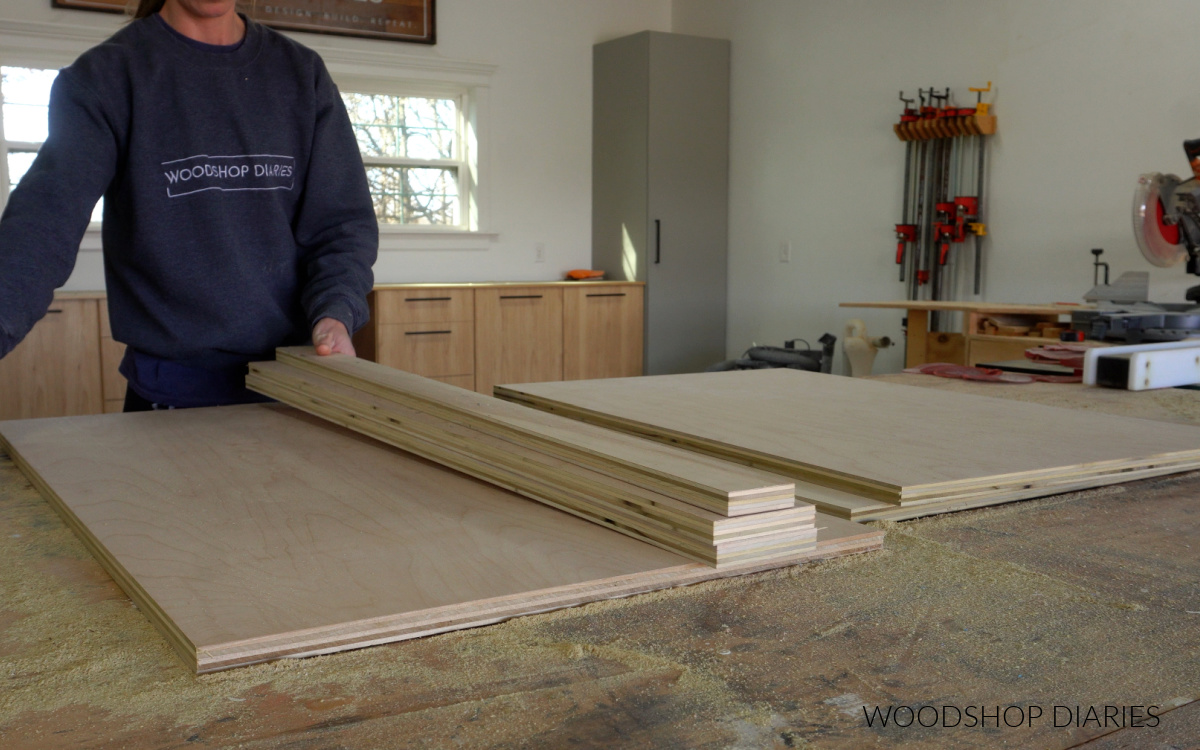
The blind corner cabinet box is built from ¾″ plywood. So to get started, I cut down my plywood sheet into:
- (2) side panels (22″ x 34 ½″)
- (1) bottom panel (22″ x 40 ½″)
- (3) support strips (2 ½″ x 40 ½″)
The cut diagrams and exact cut list can be found in the printable plans.
Learn how to cut down plywood sheets here.
Most base cabinets have what’s called a “toe kick.” This is basically a notch out of the front corner to prevent your feet from kicking the cabinet when you’re standing at it.
Usually, you cut the toe kick out of the front bottom corner of both the side panels. But, on a blind corner cabinet, you really only need to cut the toe kick out of the side where the door is going.
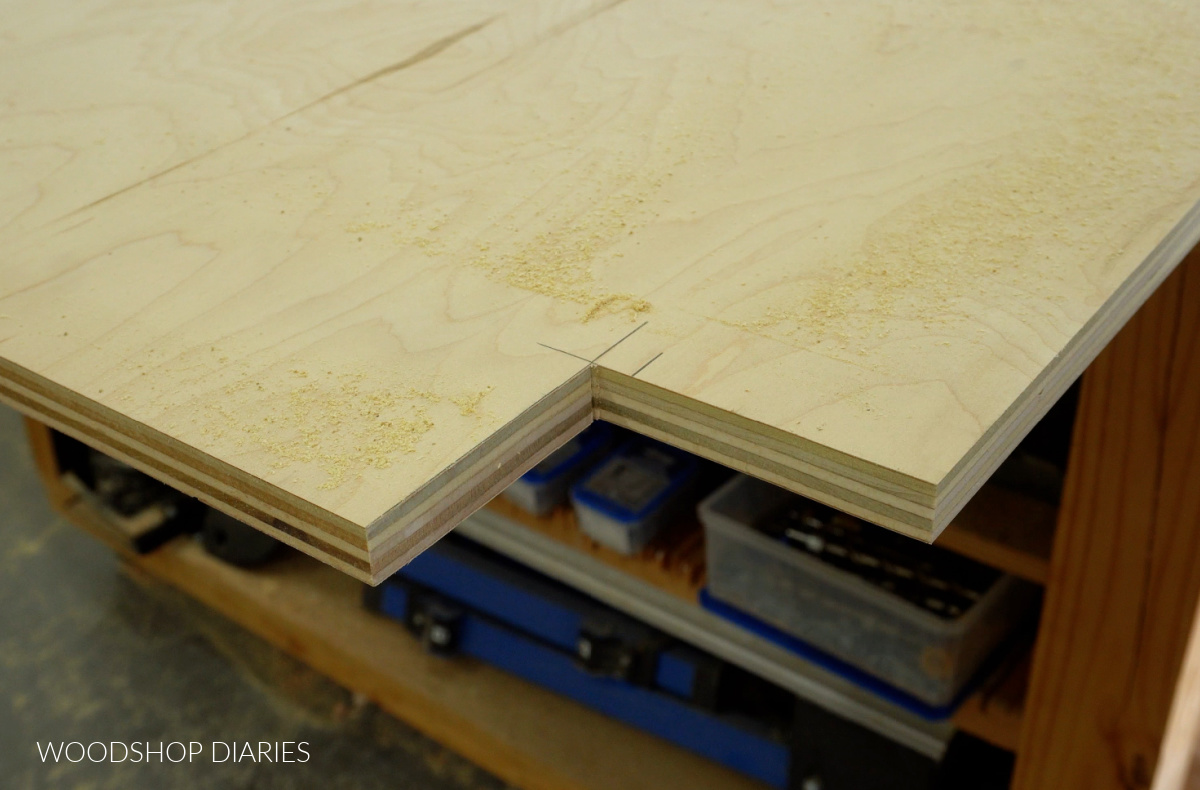
You can certainly cut both sides with a toe kick, but it’s not necessary.
Once the toe kick was cut, I drilled pocket holes into the ends of the top supports and bottom panel and assembled the cabinet box like shown using pocket holes and screws.
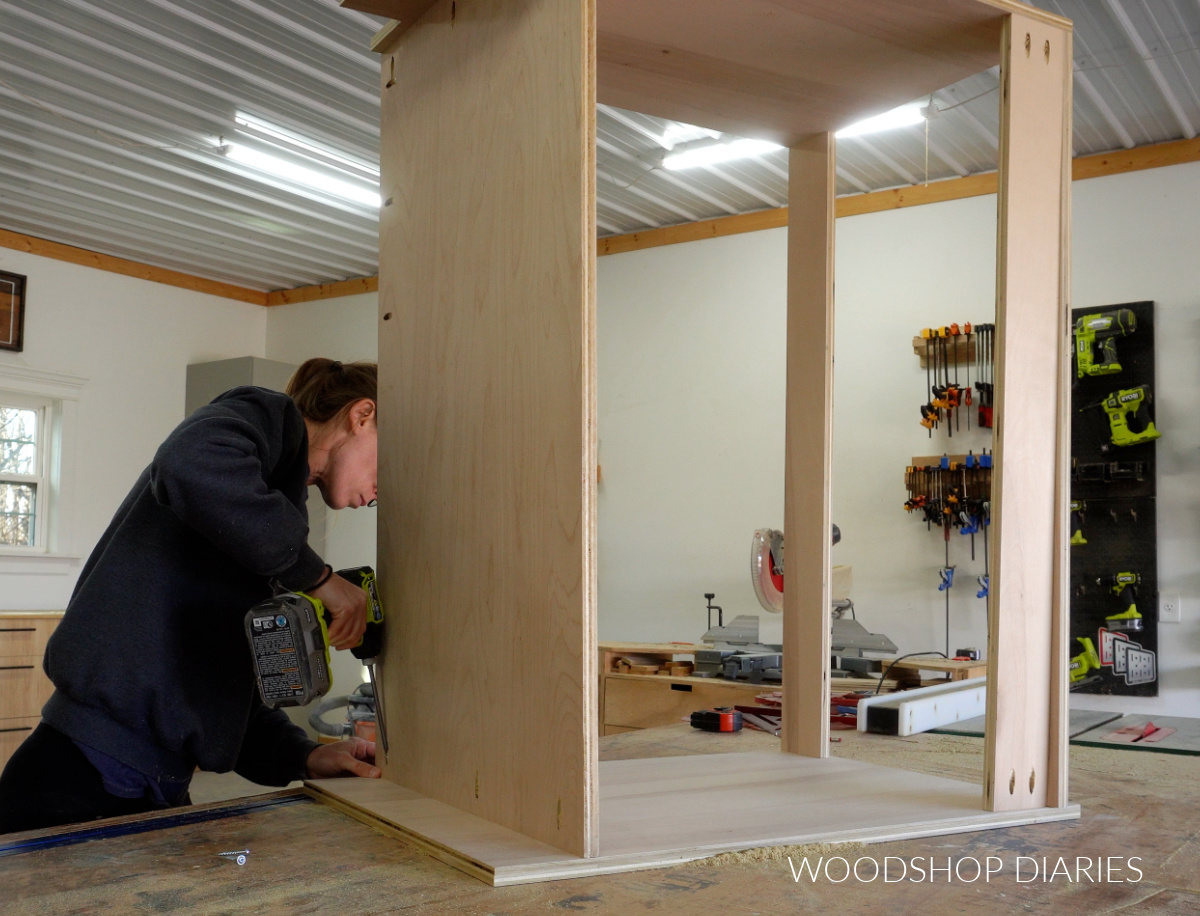
RELATED: How to use a pocket hole jig
Prefer to print? Printable plans for this blind corner cabinet are available here.
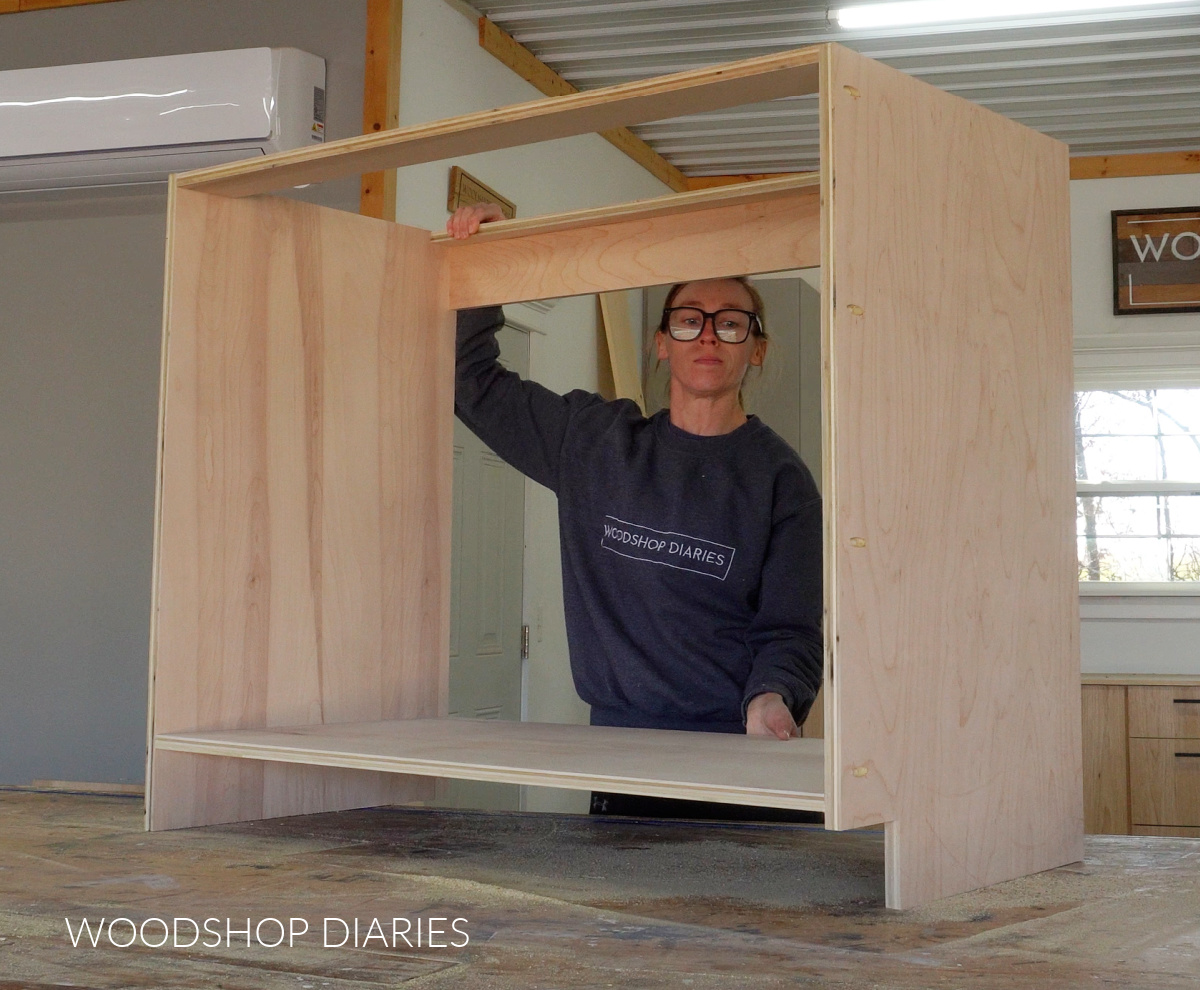
Step 2: Install Front Panel and Frame
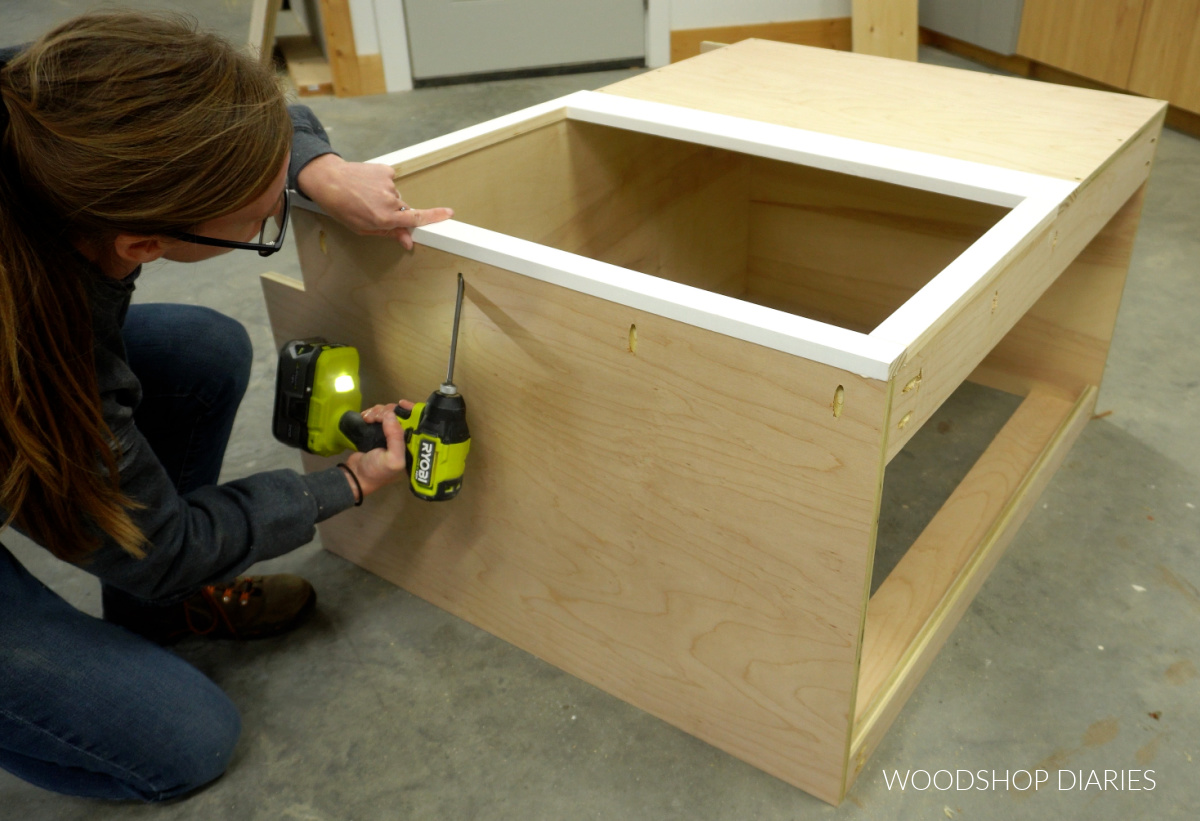
For the front of the cabinet, one side will be completely covered with a piece of plywood and the other side will have a face frame where the door will be going.
So, first, I cut a piece of ¾″ plywood and screwed it onto the front of the cabinet box on the side that doesn’t have a toe kick–which should be the side where the door is NOT going.
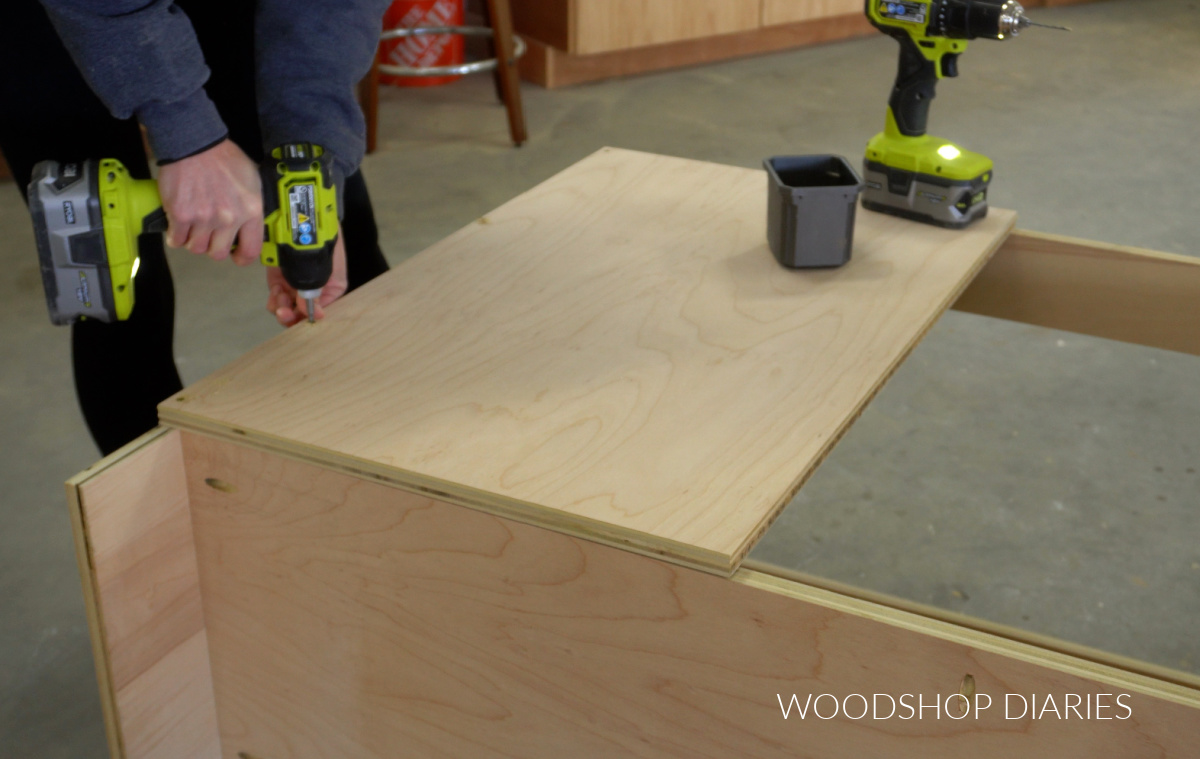
Then, I assembled a face frame to cover the rest of the front of the cabinet. This face frame was made using 1x2s for the top, bottom, and one side, but a 1×4 for the other side.
I assembled it using wood glue, pocket holes and screws.
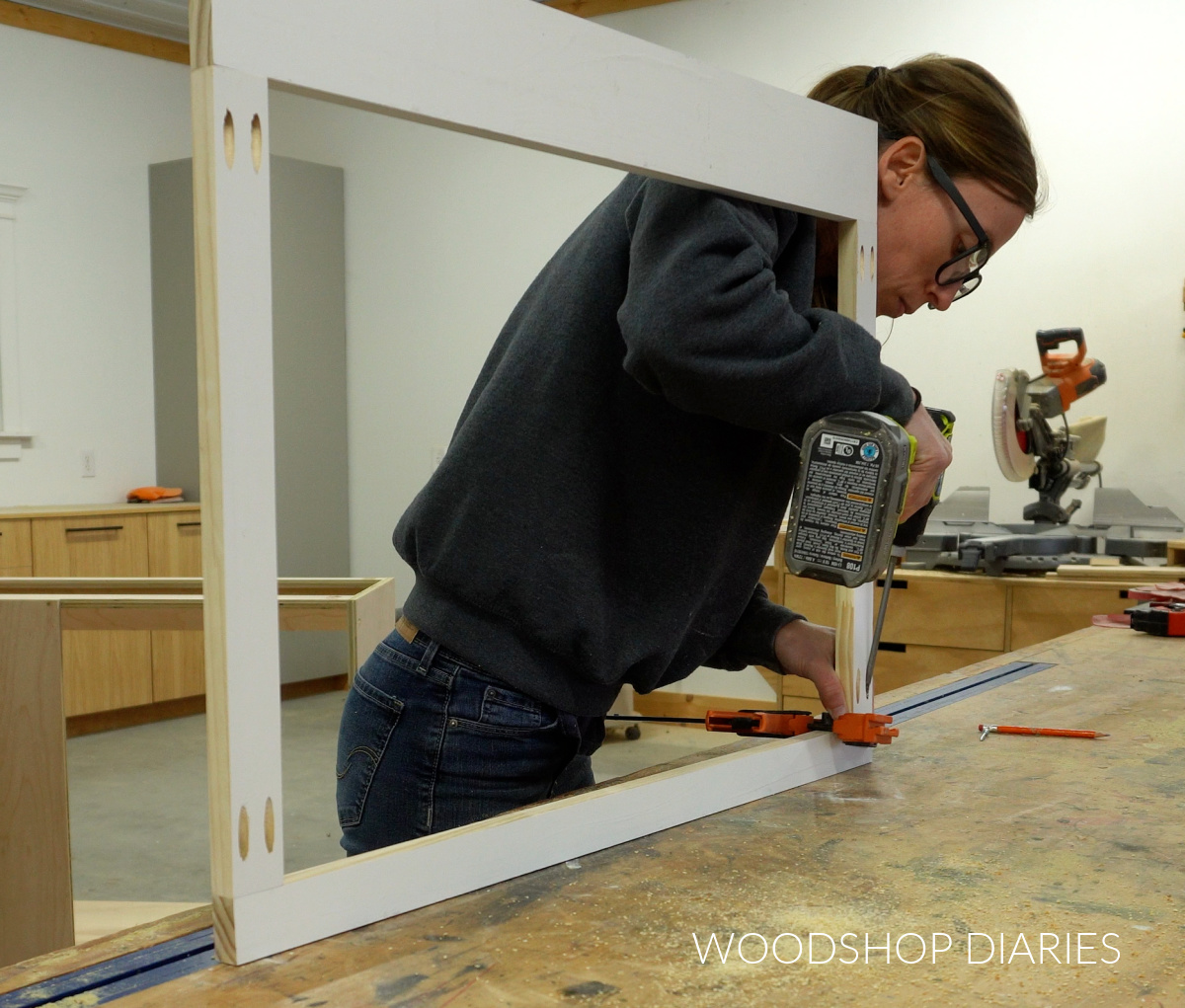
FYI: A standard size pocket hole jig can work if you’re careful, but I recommend using a Kreg Micro Jig for these thin pieces with pan head pocket hole screws. The smaller holes and screws are less likely to cause splits.
Learn how, when, and why to use the Kreg Micro Pocket Hole Jig here.
Then I drilled pocket holes and applied wood glue along the top, side, and bottom edges of the cabinet box where the face frame will be going and placed it on so that the 1×4 side is toward the center.
I used screws through those pocket holes to secure the face frame in place.
Step 3: Install Drawer Slides
Now–this step is completely optional. I added drawers into my cabinet to utilize some of that hard to reach space in the back. However, if you wanted to simply install a prebuilt kit or add a basic shelf instead, you can skip ahead to step 5.
For the drawers, I needed to add some framing into the cabinet to mount the slides onto. To do this, I added a vertical ¾″ plywood strip along the back that’s in line with the face frame opening.
Then, I ran a strip of plywood between it and the face frame on one side and a spacer block behind the face frame on the other side.
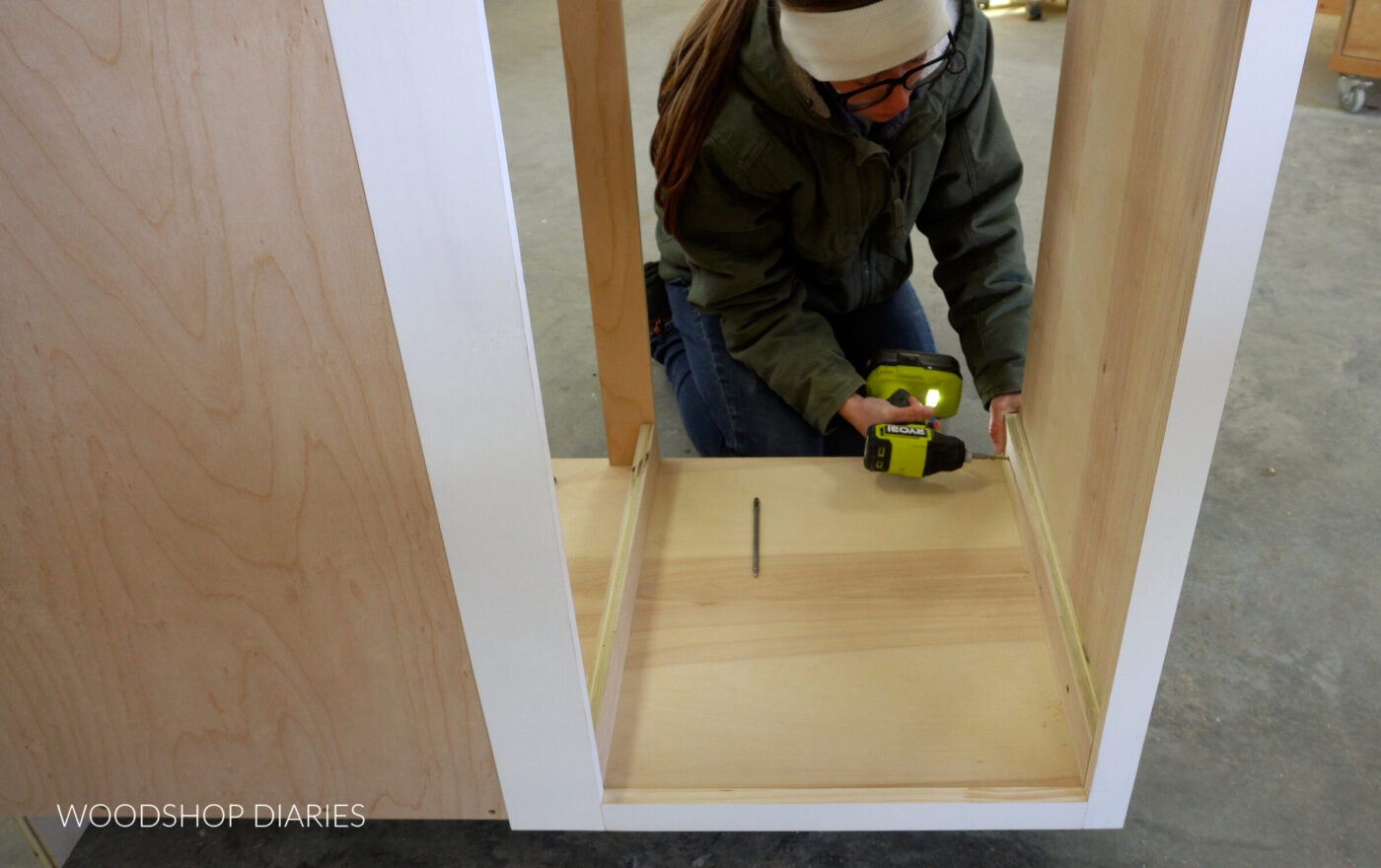
Then, I installed two more strips across the back between the vertical support and the side panel. This is where I will mount my drawer slides.
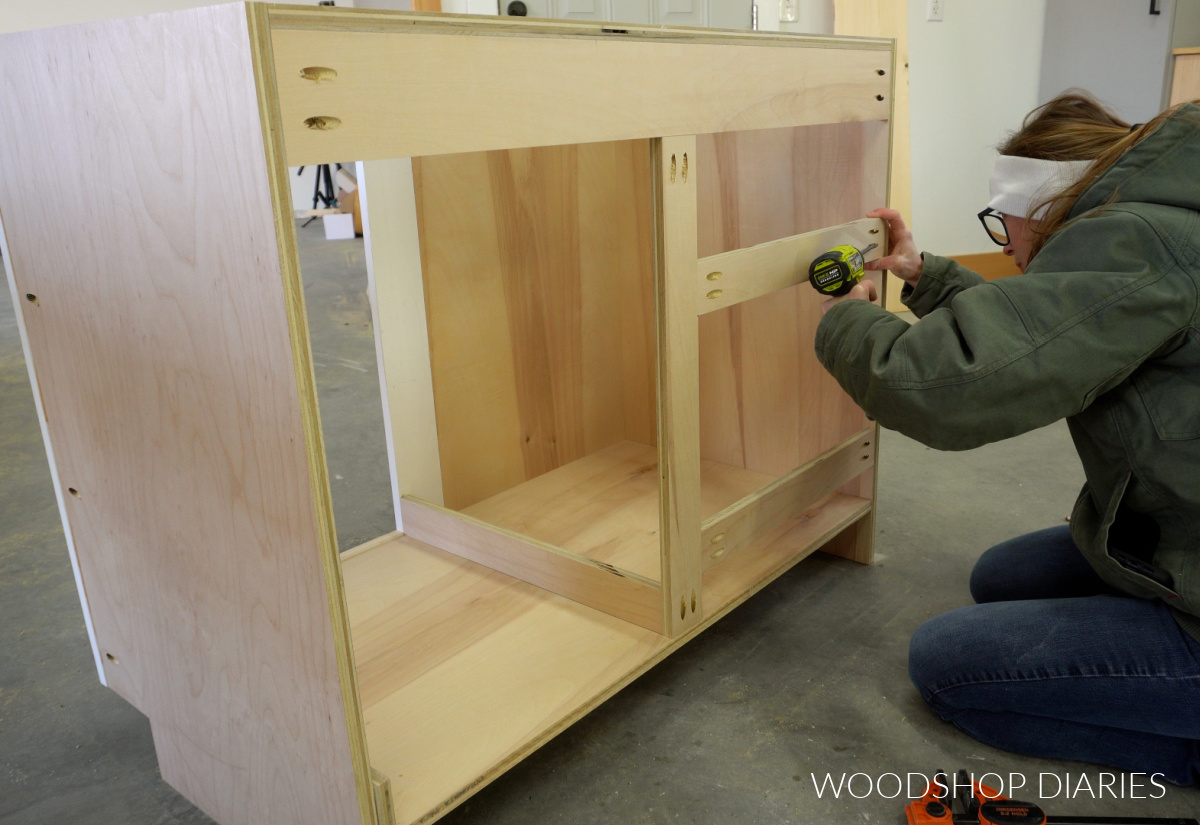
Once the framing was in, I added two drawer slides on the two braces across the back 2 ½″ inset from the edge.
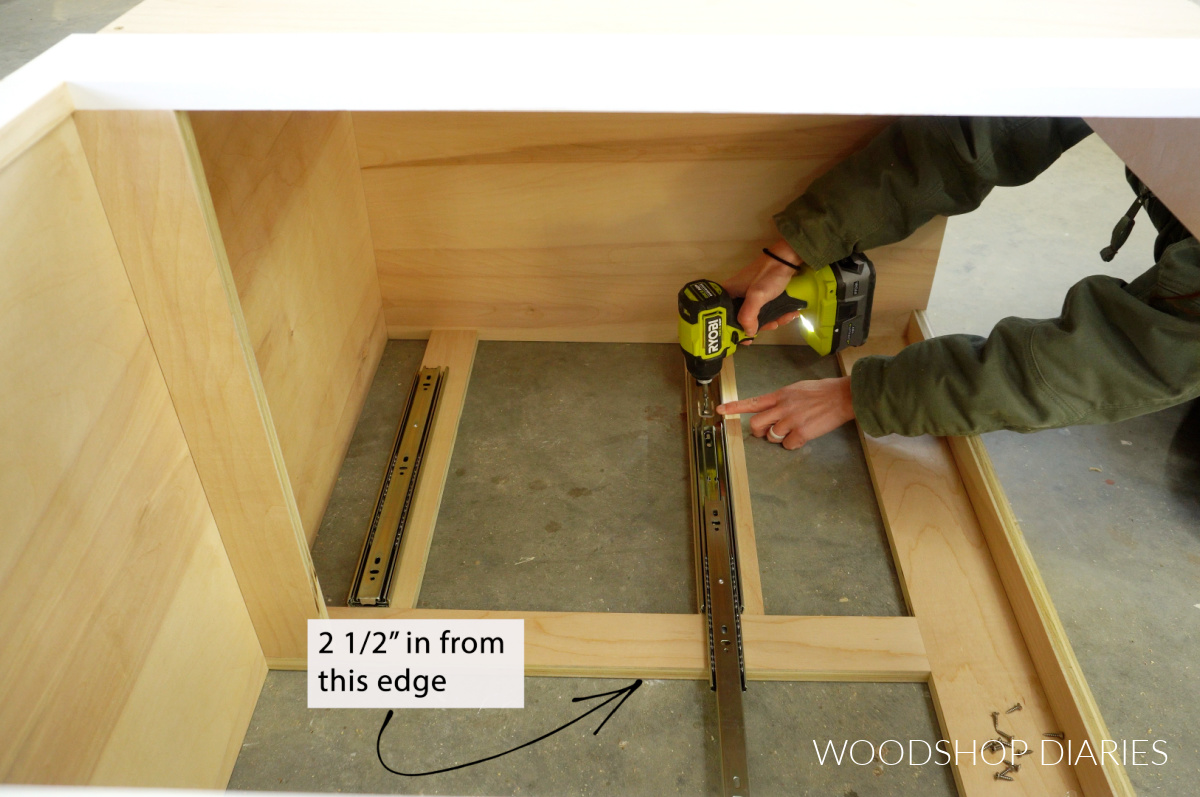
Then, I flipped the cabinet over and installed two corresponding drawer slides inside the cabinet on the front panel. These should align with the slides on the back braces.
RELATED: How to install drawer slides
Finally, I added a pair of slides onto the strips just inside the cabinet opening.
Step 4: Build and Install Drawers
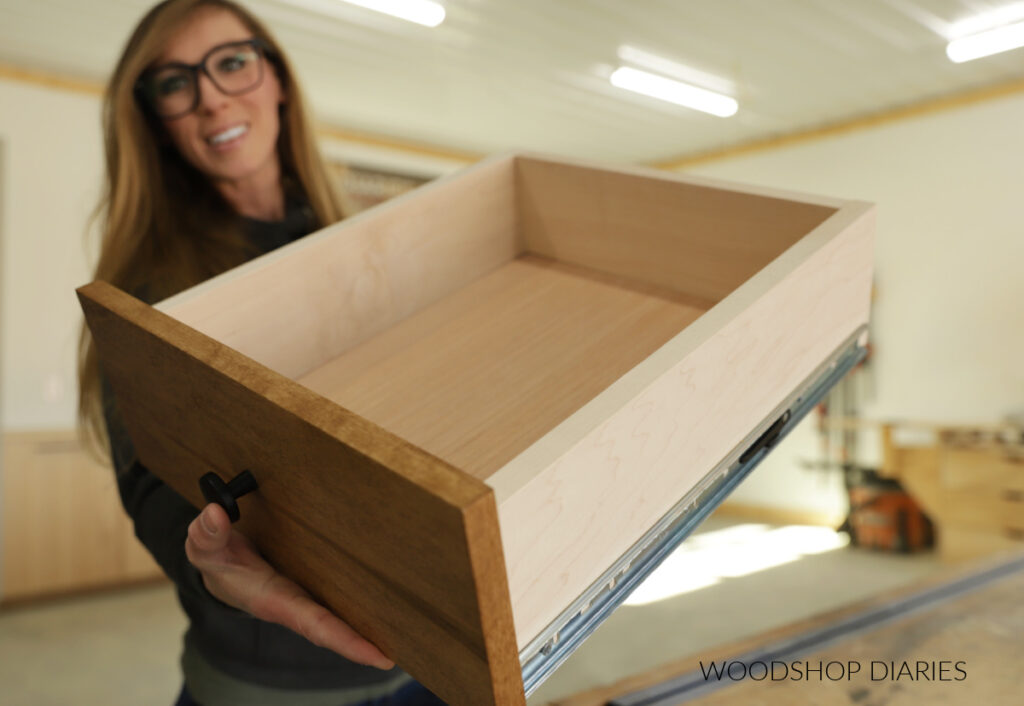
Once the three pair of slides were in, I built three drawer boxes to install onto them. The two in the back, I made about 5″ deep. But the one in the opening I made pretty shallow so the other drawers would clear it when they slid open.
Check out this post to learn how to build a drawer box.
I usually assemble my drawer boxes using pocket holes and screws, but since these drawers wouldn’t have a drawer front to cover the pocket holes, I opted for simple wood screws instead.
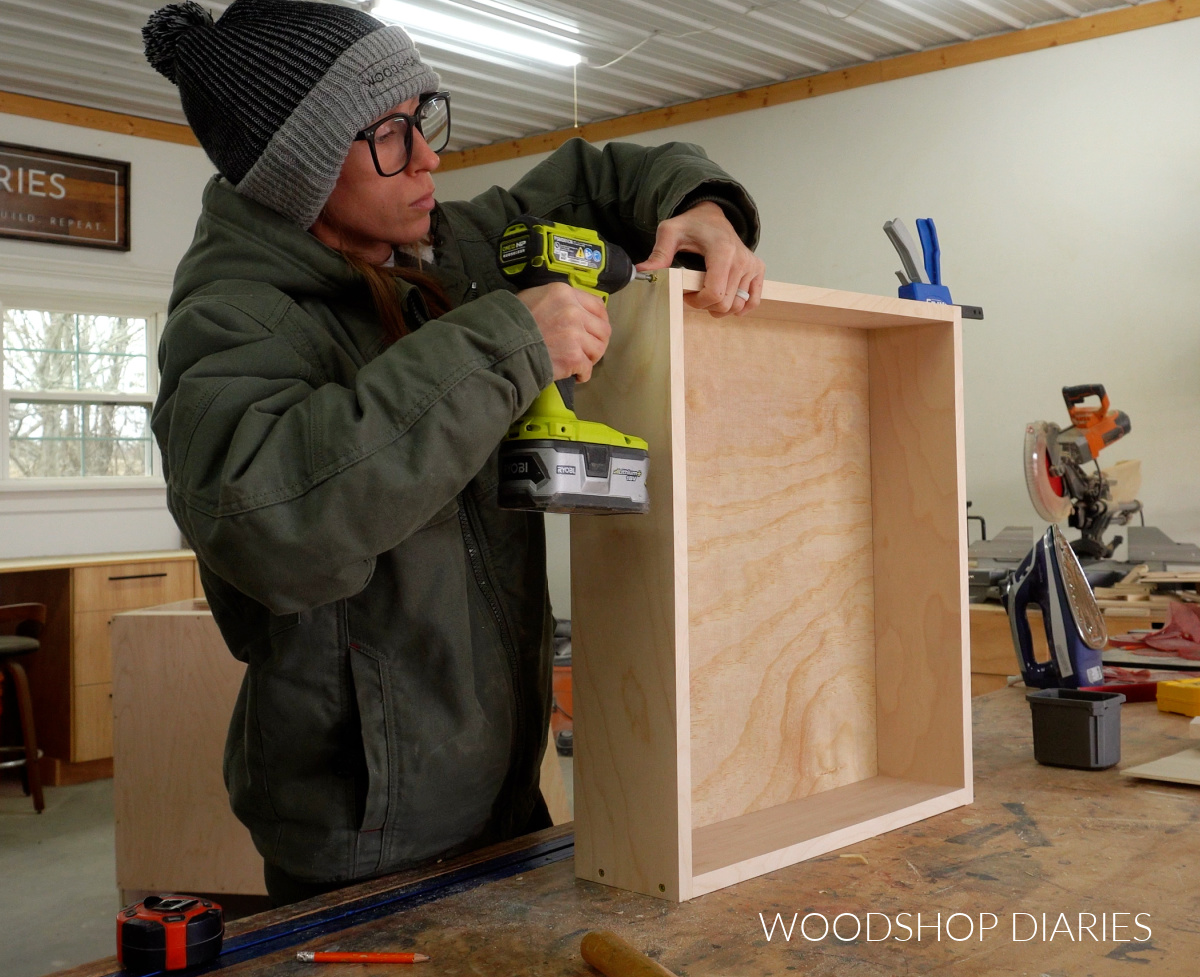
Prefer to print? Drawer box dimensions and cut diagrams can be found in the printable plans here.
I used iron on edge banding to hide the plywood edges of the drawer boxes so they’d look a little cleaner. Learn how to apply iron on edge banding here.
Then, I installed these into the cabinet onto the slides. I found it easiest to remove the part of the drawer slide that mounts to the drawer box and screw that directly onto each box.
NOTE: I attached these 2 ½″ inset from the front edge.
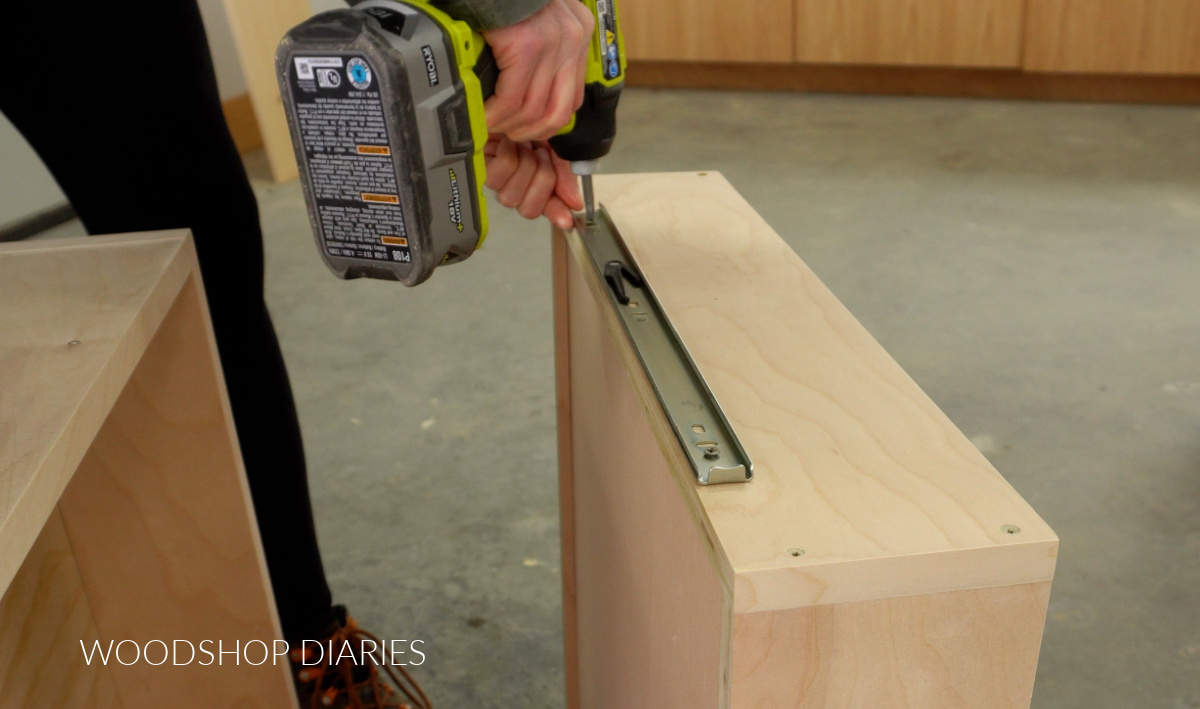
Then, I slid them into the cabinet.
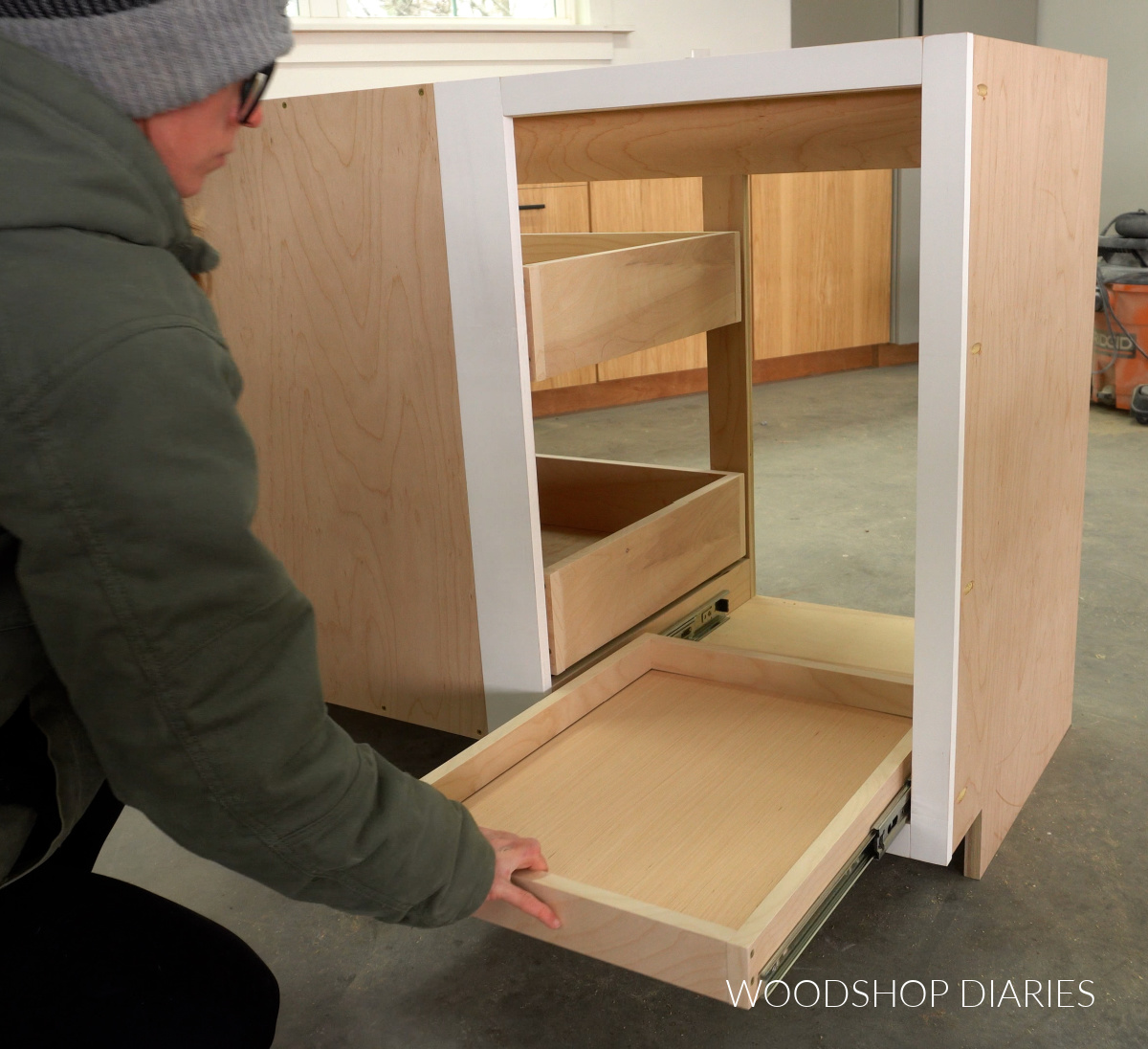
Step 5: Add Cabinet Door
Finally, it was time to add the door, but first, I stapled a ¼″ plywood back panel onto the cabinet to seal up the back side now that the drawers were in.
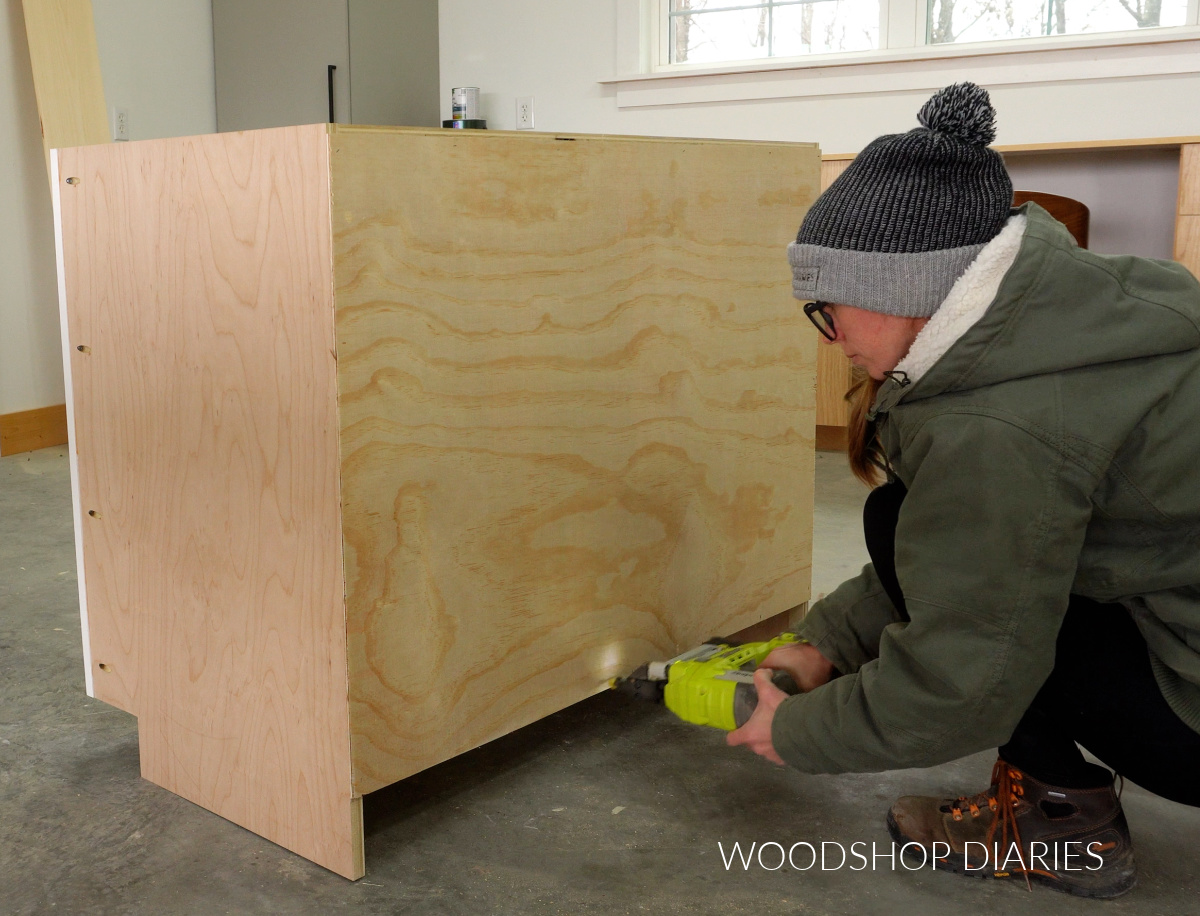
Then, I assembled a simple shaker style cabinet door for the front. I made this door using 1x3s for the door frame and ¼″ plywood for the panel.
I glued the frame together first using wood glue and dowels, then routed the back side out and glued the plywood panel in it. This process is detailed in this post about 7 ways to build a cabinet door.
But, you can assemble the door using any method you’d like and with any overlay (or go inset!) you’d like.
Once it was assembled, I painted it and the cabinet’s face frame, then proceeded to hang the door.
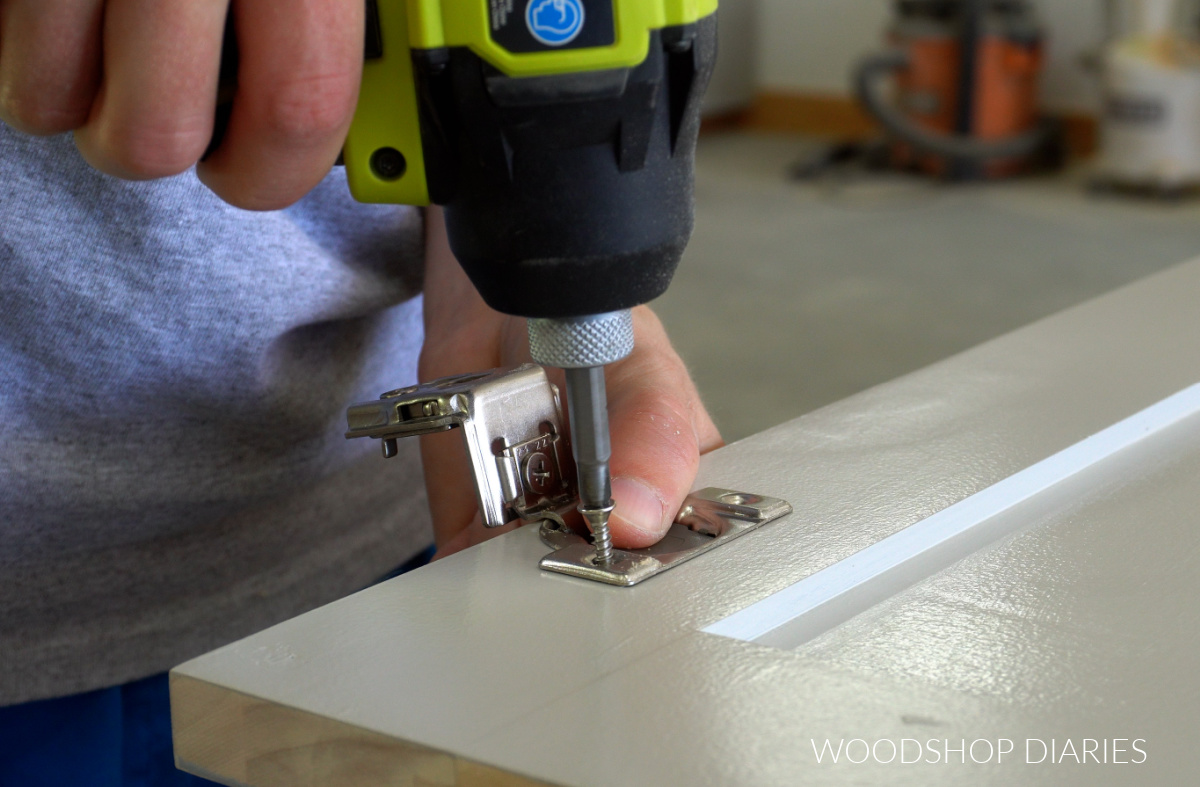
I drilled hinge cup holes and installed concealed hinges onto the door. Check out how to install concealed hinges here.
Then I installed the door onto the cabinet. Check out the video for more tips on installing the door and placing the hinges.
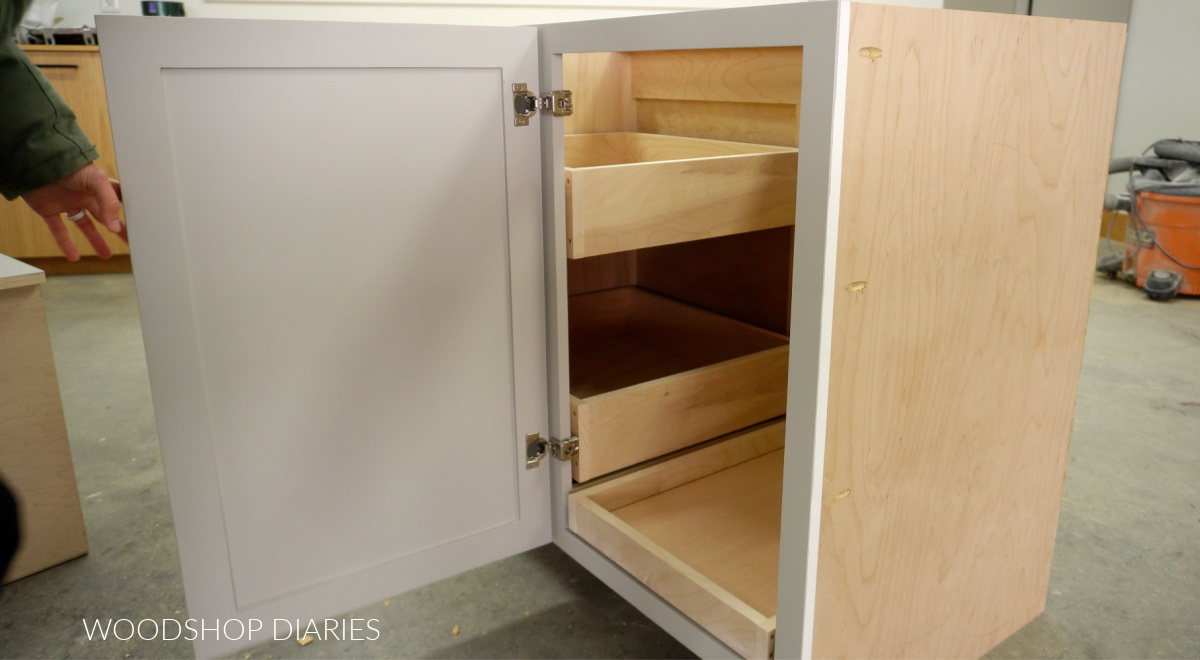
And with that, this cabinet is ready to install into your kitchen, pantry, or wherever you need a simple corner cabinet.
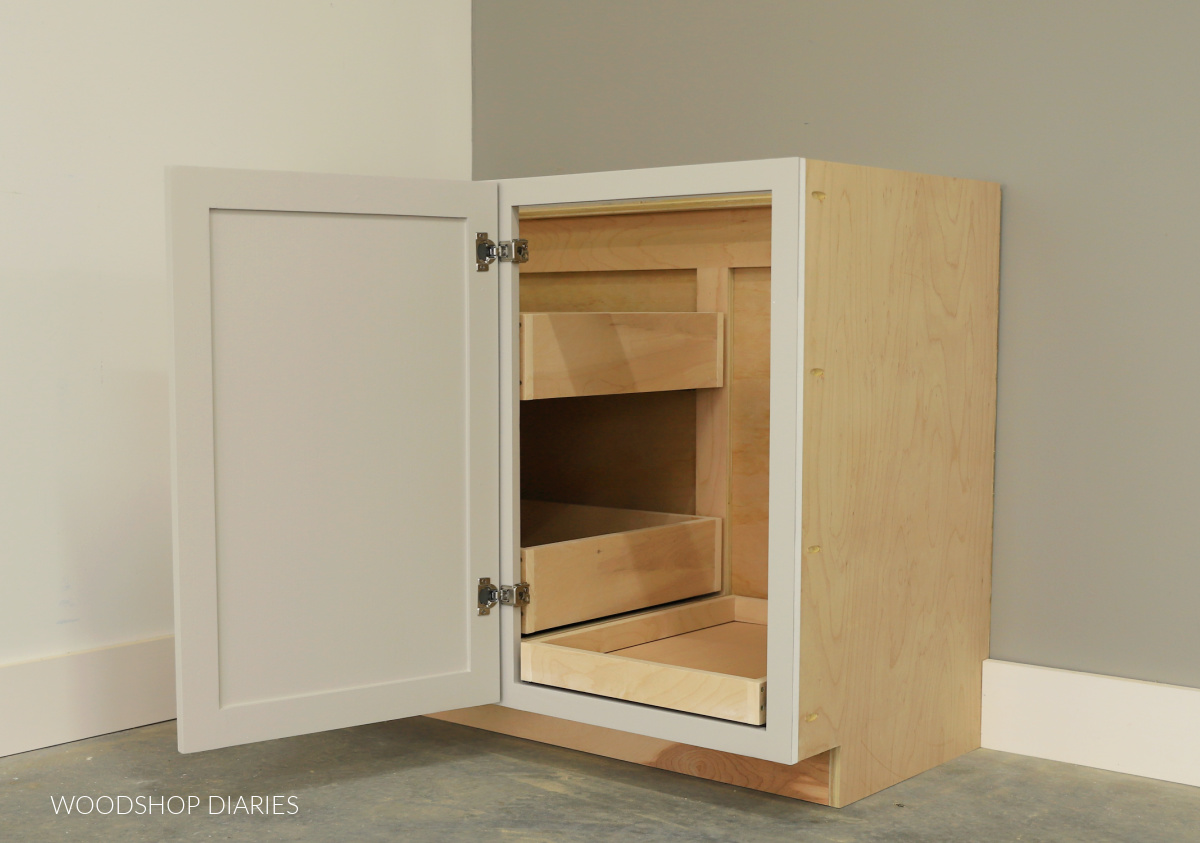
To install, level with shims as needed, place adjacent cabinets to ensure fit, then secure to the wall studs through the back top support. Also screw to adjacent cabinets/filler strips once in place.
Looking for more cabinet building resources?
Looking for more information and helpful tips and guide on building your own cabinets? These great resources can help you get started!

If you enjoyed this post and want to save it for later, be sure to pin it or share to your favorite social channel!
Until next time, friends, happy building!